Personal
What It’s Really Like To Rent Out Your Home For Photo Shoots
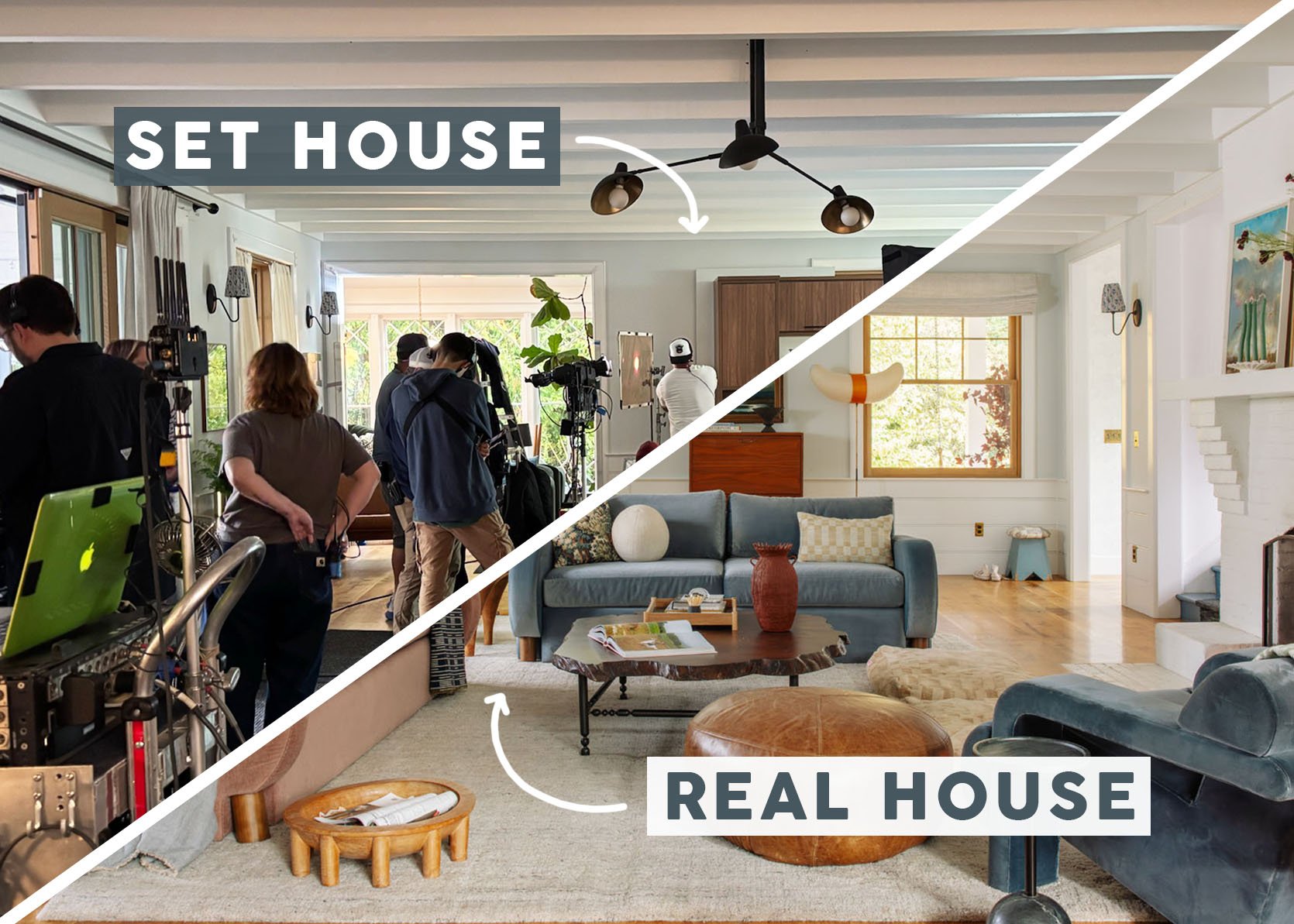
One might ask why you’d let 100+ strangers take over your house (inside and out) for 3+ days, rearrange all your furniture, roll up your rugs, move all your stuff, bring in truckloads of other stuff while you and your family (and pets) leave (during the school week!). It’s very atypical, and yet this is the 4th time that I’ve said yes with enthusiasm. Is it a sick thrill? A lot of money? Or am I just really amenable? The truth is, I designed this house for this eventual revenue stream, so when I get these calls, I’m THRILLED. Brian, IT WORKED!!! I thought it would be fun to give you the inside scoop on how renting your house as a “location house” for photo shoots works.
A few months ago, California Closets, a client of mine (have you seen my gorgeous closet?), reached out to see if I’d be open to them shooting our house for a photo and video campaign, but unlike most of my shoots, they didn’t want me on camera or involved at all. Our house would be a set, the background for their vision, and my only job was to get the house ready for the takeover, then disappear. Most people couldn’t handle what is about to happen; they’d want to look away, but after 22 years of working in production, I’m oddly comfortable with it. I wouldn’t say my family enjoys the disruption, but it’s just part of having this house, this life, of having this mom who has this job. My kids have grown up with it (on a smaller scale), and they get it (but no, they don’t love that their rooms were turned into the wardrobe and hair and makeup rooms). But my kids need more grit and resilience, so they are fine.
How Does It Work? How Do You Get Into This?
It’s actually pretty hard to become a location house, especially outside of LA, where there are just fewer production shoots. Here is what makes it attractive to production companies:
- The right architecture, style, design, and colors to create the background to whatever story they are trying to tell, with minimal construction changes (although they might re-paint walls or put up peel-and-stick wallpaper). Obviously, our house is pretty traditional, leans farmhouse, and feels bright, etc. But every style of house could be the right location/set house if done well. While a lot of Hollywood productions build sets, often for budget reasons, if one matches the needs/wants, then renting it is easier, cheaper, and faster.
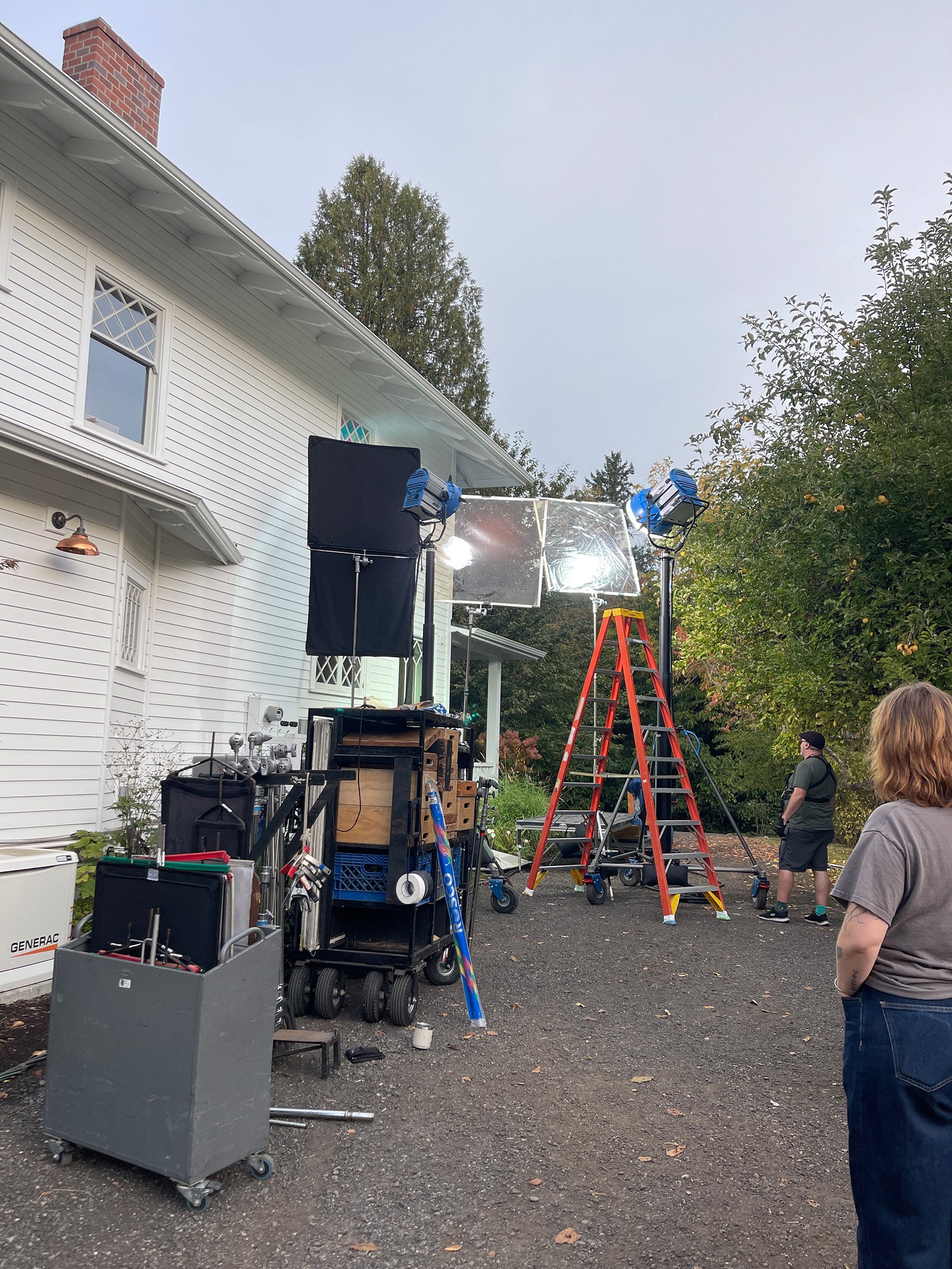
- Production-friendly amenities – think ample parking, high ceilings for C-stands and equipment, big windows to blast fake light through. Exterior space for storage (our porches, the guest house, and the pickleball court were all used). Just big-scale rooms so they can get wider shots. Bonus points for not being on a noisy street or near an airport (our property is so quiet).
- If you have cool furniture, decor, and rugs, that’s a huge plus in many cases. A smaller budget job might just use what you have if it tells the right story, but a bigger budget might clear everything out and bring in an entirely new house.
I have a public persona/house so companies know that I exist and that I do this, but if you wanted to do it its honestly really hard to get on the list. There are a lot of location companies, scouts, and agencies that have inventories of houses throughout the country, but I’ve had very little success with these thus far. (I’m also not interested in doing it frequently while the kids live here; this was meant to be a post kid-graduation revenue stream). We’ve rented the mountain house maybe 4-5 times now when we haven’t been there, and we can make way more than with Airbnb guests and mostly mid-week, which is great (I give my property management a cut to be the on-site managers).
Do You Have To Be There During The Shoot?
Yes, someone who knows the house and property really well needs to be very nearby or on-site. When I rented it out last year for Velux, I took my family to the mountain house, and Gretchen house-sat and was our on-site point person. They will have questions and need someone who knows the house to answer them quickly. You don’t get to just bail.
Can You Sleep At The House?
It depends. If they want to use your bedroom as the set, then not really. For smaller magazine shoots or the Rugs USA shoot, we slept here, but for larger ones, they often would rather pay for you to stay in a hotel or Airbnb. This California Closet shoot was 2 days prep and build, and then one day shoot (until 10 pm), and I told them that we’d much rather just come home really late and sleep in our guest room instead of staying at an Airbnb (mostly because of the dogs). So we rented a dog-friendly hotel nearby to hang out until they were done (Brian took the kids to a late movie, and I got room service in the hotel with two barking dogs). It was late when they wrapped, but we were able to come back at 11 pm and crash in our beds.
How Much Can You Charge?
The bigger the shoot, the more the risk, the more you charge. A “location house” is rented on a daily rate, usually for at least 2+ days. Many professional location houses have standard rates, but since we live and work here and it’s not currently the main business we are promoting, it’s negotiated on a case-by-case basis – how many bodies, how much equipment, and how “gone” does my family need to be. Honestly, it’s what level of disruption will it be, and therefore, how much do we need to make to have it worth it? I don’t know what’s normal up here, but in LA, you wouldn’t ever charge less than $1-2k a day for a small photo crew, but a huge big budget film production company could be 10k+ a day for a big fancy house (maybe more, no idea).
How Come You Make Less Money For Photo Shoots Than Film Shoots?
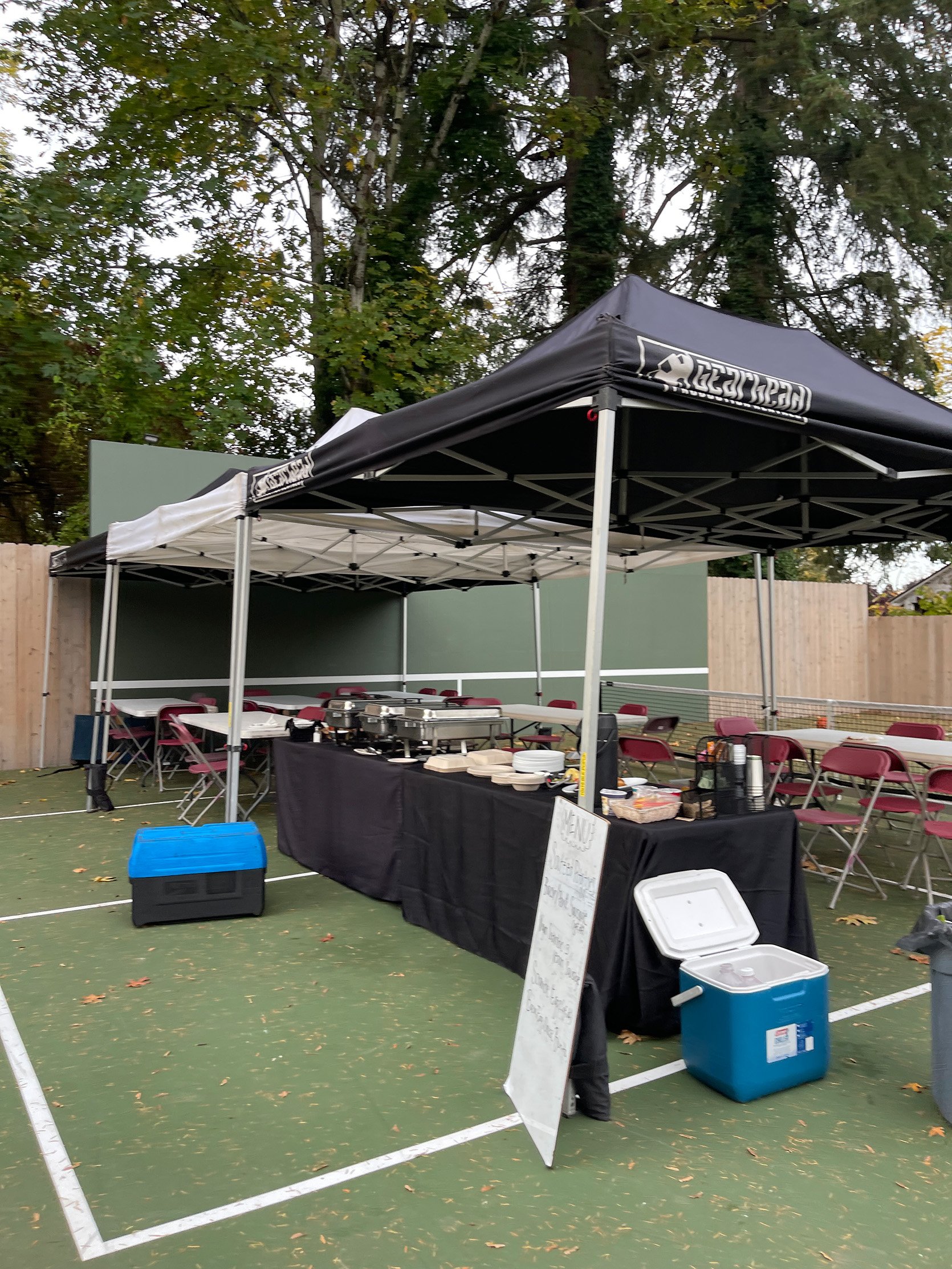
The number of people + wear and tear is exponentially greater for film/video. Normal photo shoots require some C stands, basic lighting packages, maybe a small crew of assistants, and a prop team. Photo crews are usually in and out in 8-9 hours. But video or film requires massive grip trucks, semi-trucks full of furniture and props, generators, huge C stands that hold lights from the inside and outside your windows, a large art department with so much stuff you couldn’t believe. A whole room called “video village”. This requires a catering crew, porta-potties that are brought in, and yes, strangers galore looking in your nightstands. They are usually 10-12-hour days, minimum, sometimes 16. If you rent them your house, it is THEIRS for the day, and you’d better be prepared for the risks.
Why Do You Rent It Out? What’s In It For You?
For me, it’s two-fold. 1. Money, but not just any money. While it’s super disruptive to our family’s school week, it’s worth it financially, and it takes zero of my creative time and, even better, none of my team’s time. There are so few opportunities for me (or anyone in life) to make money without actually taking on more jobs, using more brainspace, more time, more physical and emotional labor, so this is thrilling to make a paycheck by NOT working at my house for three days. It’s not passive, but it’s close. The main lift for me was spending 15 – 20 hours the weekend before readying the house by de-cluttering, organizing anything visible (and inside any embarrassing drawers). This shoot was a 3-day rental + 3 days of 1/2 day pre-pro meetings. While I haven’t fully calculated our spring break budget, it’s mentally paid for by this shoot. So the disutpion to the family is in direct correlation to the enjoyment of the family.
But the other reason I do it is that I truly love it when people enjoy, appreciate, and really use our home. I’m proud of this home, and I like to share it and show it off to people who are into design. I get really excited and flattered when a company deems it pretty enough to pay to use it as their background. It’s such an inviting big home that every producer has said it’s a dream to shoot in, and that makes me really proud.
Are You Nervous They’ll Break Stuff? Damage Your House?
Ha. It’s not an IF, but WHAT. I have almost no stress about this because I go into it assuming that something will get broken or go missing (I should probably not future-produce this). It’s just the risk you take. But know that they’ve ALWAYS paid for the damage (unless I haven’t noticed it), and it’s not awesome, but it’s what we signed up for. I’ve had crews in the past break vintage windows with a C-stand, scratch the hell out of our wood floors (our house in LA), but they fixed it or paid the quote. I obviously hide anything that feels priceless to me (or I remove anything oddly expensive that they’d freak out about if they broke). A good producer (and huge shout-out to Max Solomon and the Revery production company) is on top of all of it, and they know they are liable, so it’s dialed in.
They actually hire a separate company that comes in first and then puts down ram board throughout the entire house to protect the floors (all rugs removed). They wrap every corner with these protective boards so that when they move furniture, they can’t nick the drywall (this is ironically what ripped off our wallpaper, but it wasn’t their fault at all, it was the most fragile, stupid, delicate wallpaper ever, and they’ve been so great about helping us re-wallpaper with more durable paper). But yes, production creates a lot of wear and tear on your home, regardless of how careful they are.
Do They Put Everything Back? Is Your House Totally Disheveled?
One of the first things they do is take pictures of every single angle of every single room, hoping to, yes, put everything back exactly how it was. But of course, not everything gets put away where it belongs, which is fine and just to be expected. Did we look for the TV remotes for 2 days, and were the kids losing their minds? YEP. Next time, we’ll tape them to the TV (you actually need to leave them out because often they might need things like this). Everything will be slightly off in your house. The rug under your bed is 6″ further to the right, and the curtains that were taken down now are off by two rings. These could be very annoying to you unless you lower your expectations and know it’s part of the job of giving over your house.
What About Insurance And Permits? Who Is Responsible For What?
Oh, there are a lot of those, but that’s on the production company to deal with – not the homeowner. As far as I know, you don’t have to be registered as a business, but everything has to be approved through the city (some sort of production permitting department). This usually doesn’t seem to be a problem (the city makes money). And the production company has all the liability insurance, not us (God, I hope that’s correct… I mean Brian and I have a large umbrella policy just in case).
Is It Worth It?
For the right amount of money, almost anything is worth it, right? I mean, you really have to talk about it beforehand because I’m telling you, it’s VERY disruptive to your daily comforts, and that’s coming from me, who is used to the chaos of production. We put some boundaries in place, like no one could come in til 7 am when we took the kids to their first pre-school pancake house. But they showed up at 6 am, and I had to wake the kids in the pitch dark and get the dogs in the garage and get them in the car. It was a thing. When Brian and I pursue this even more after the kids graduate, we’ll likely hire a location person to manage it, and we’ll travel or visit the kids, or hell, now just stay in the guest house (which would be an additional fee should they want to rent). I definitely wouldn’t do this more than 2-3 times a year right now unless it was only during the summer, but yes, it was totally worth it to us. I should also say that we’ve only worked with fantastic production companies who have been so respectful and easy to communicate with. No annoying interactions or bad creepy chemistry.
I thought it would be fun to show you some IRL BTS of the California Closet campaign (which was both TV commercials, digital videos, and still photography).
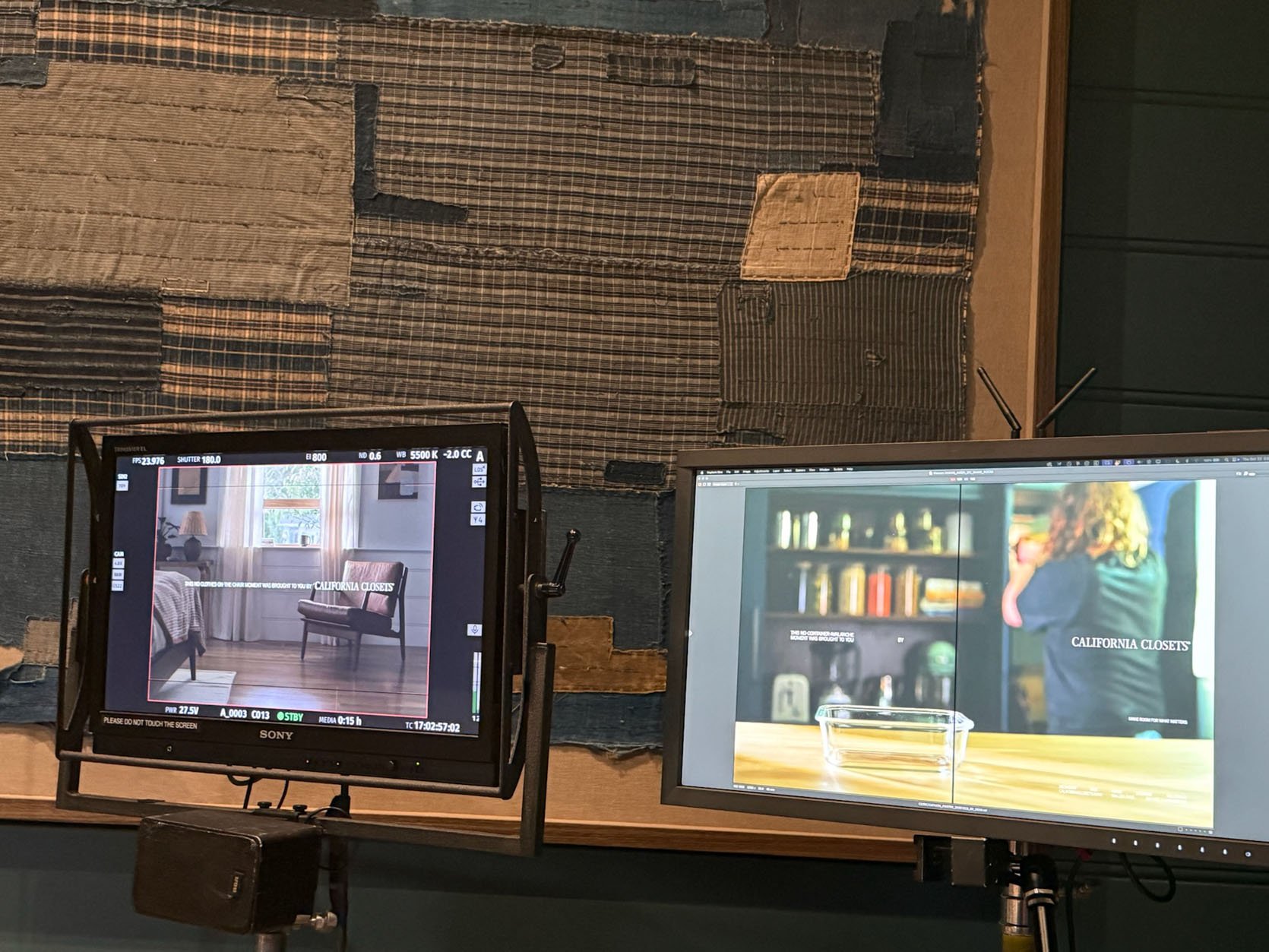
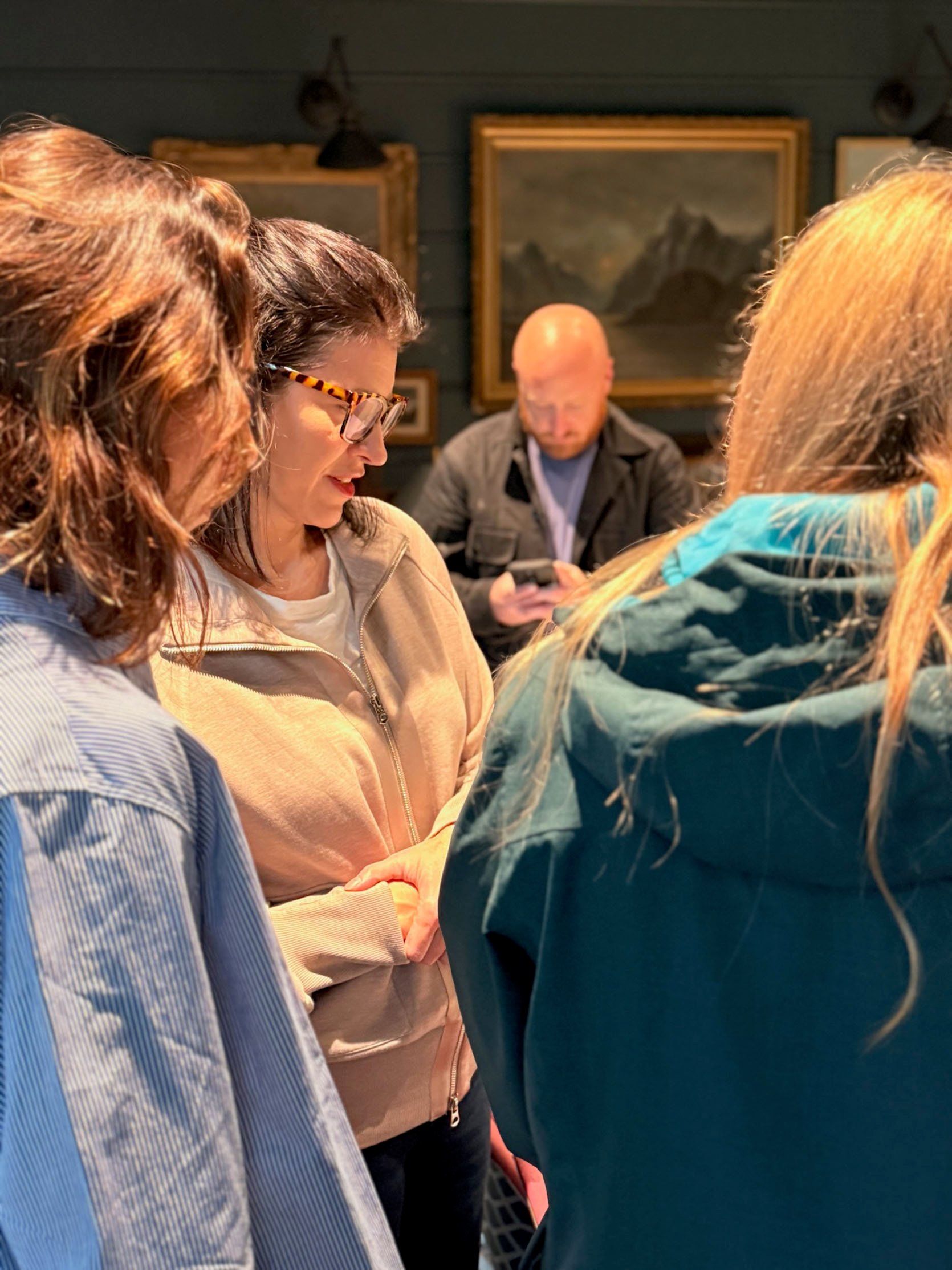
They turned the family room into a “video village” where the client and agency sit while the crew is producing the content. They watch each cut and tweak or approve.
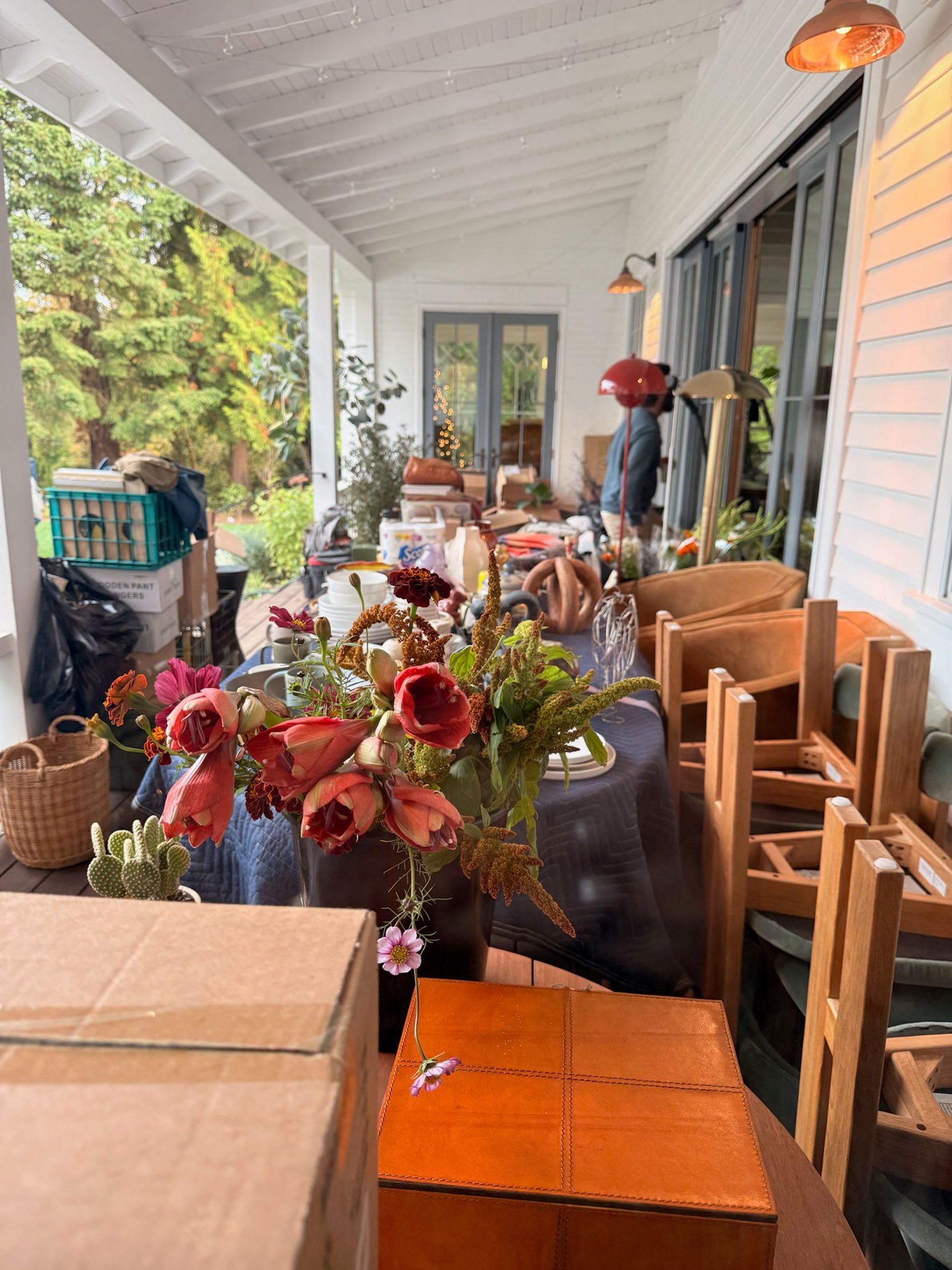
The back porch was a staging ground for all the props. Huge shout-out to Anne Parker, who was the stylist on this job, whom I had heard of and followed (see her incredible house tour here). You have zero control over what styles of things they bring into your house, but it was nice to see here have a lot of pretty options. 🙂
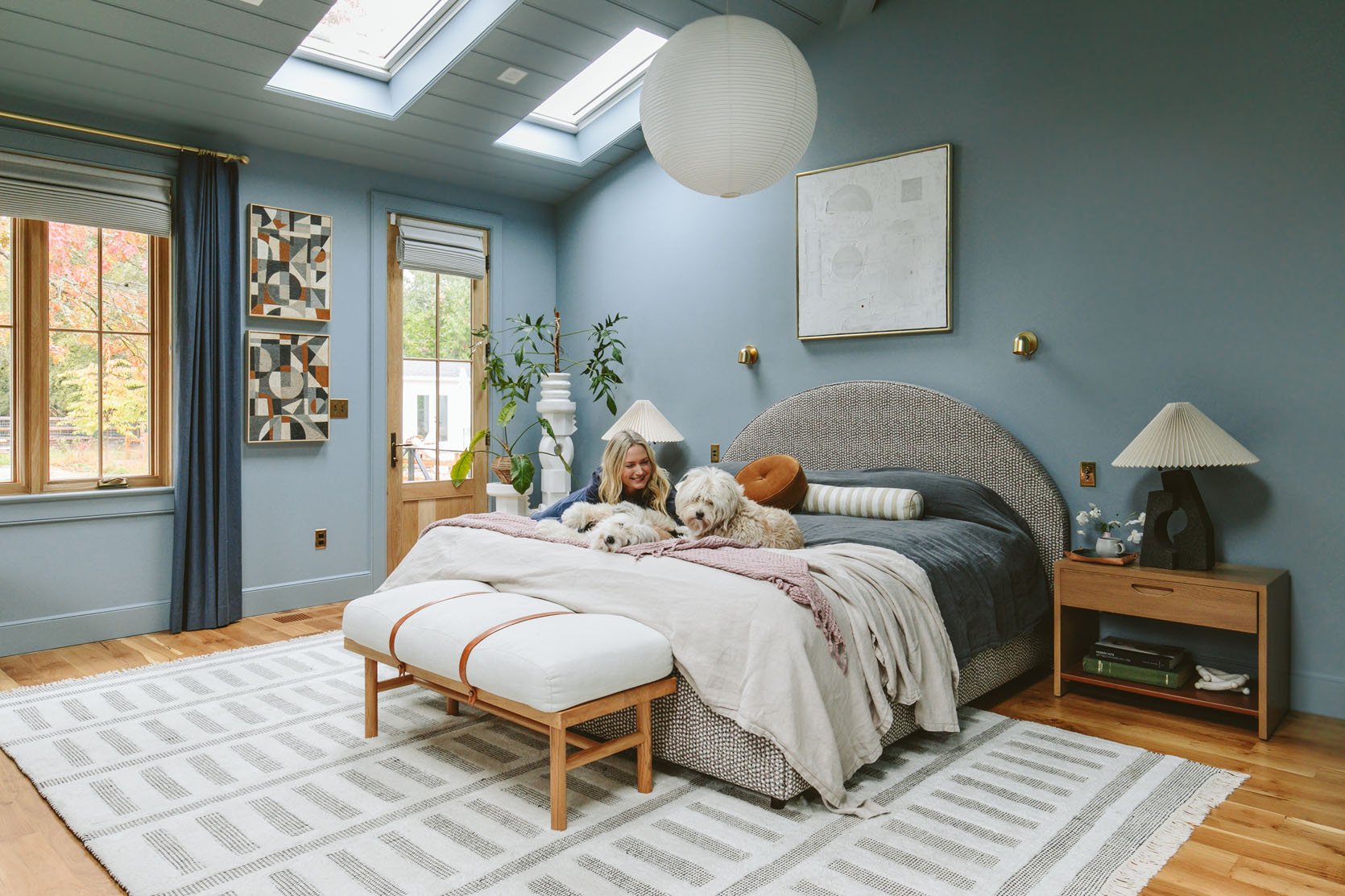
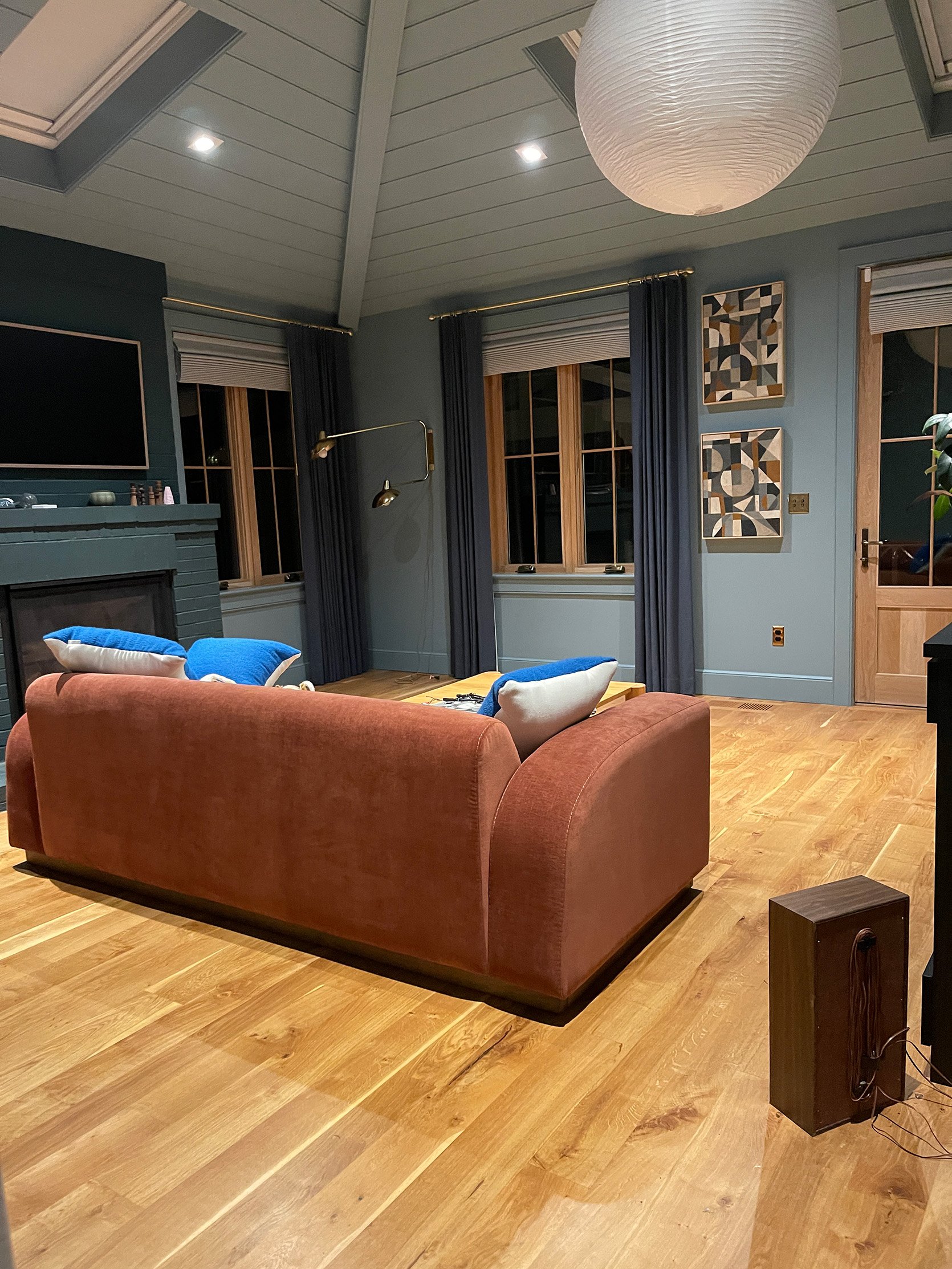
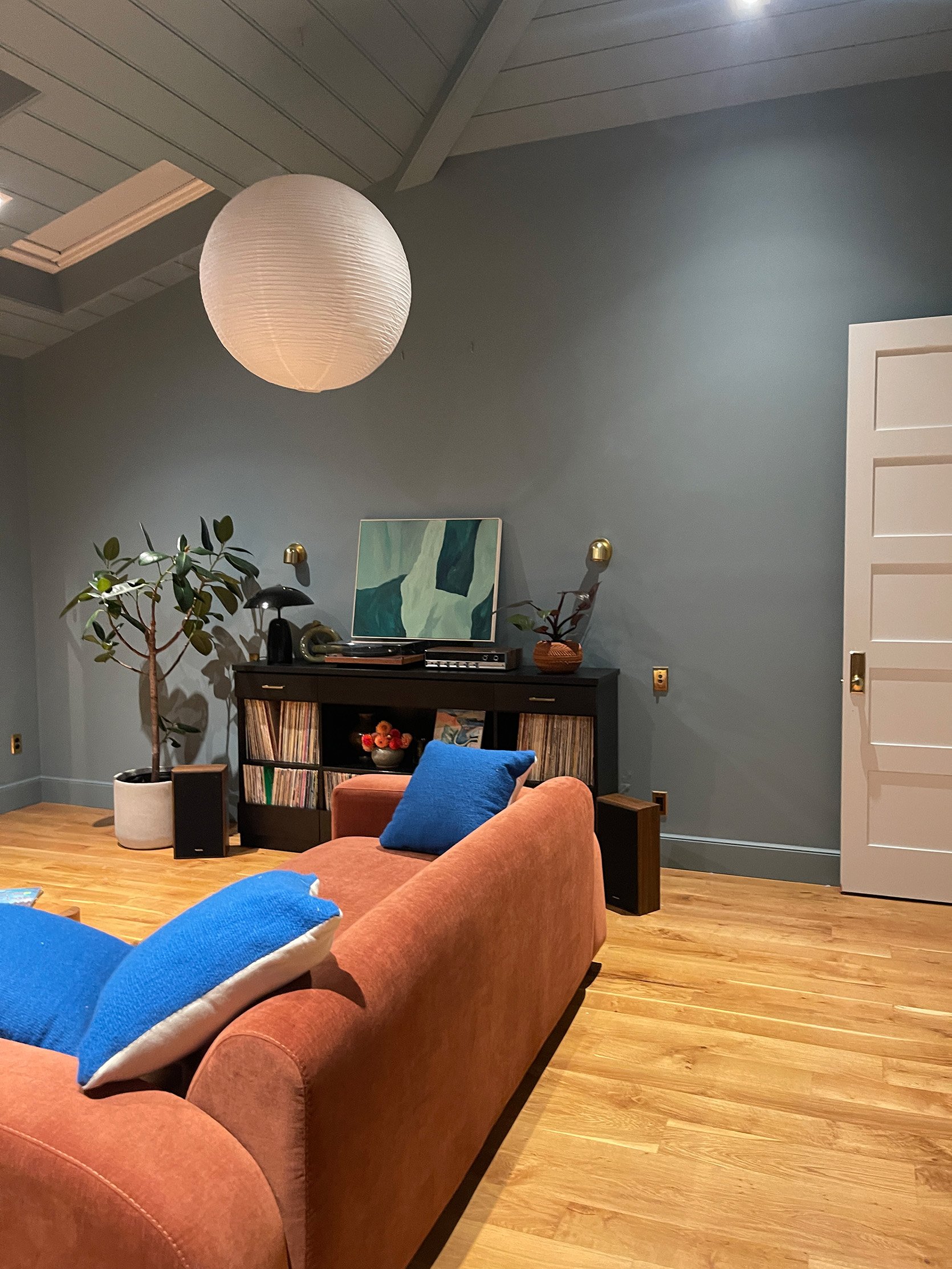
They turned our bedroom into a den, using our rust Otto sofa (which I don’t remember if I charged them or not – likely not, but in the future I could totally charge them for every prop they used from my prop garage).
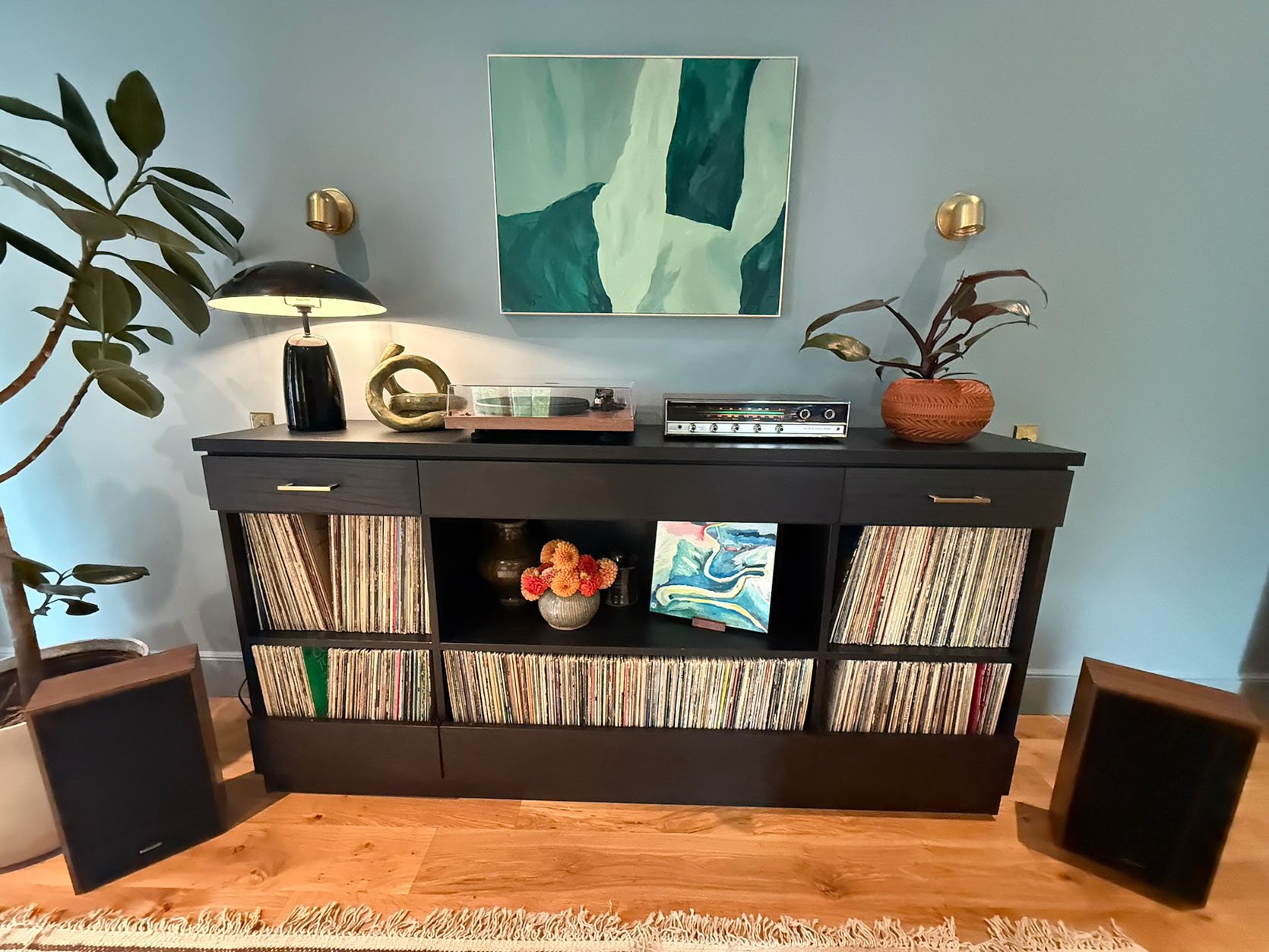
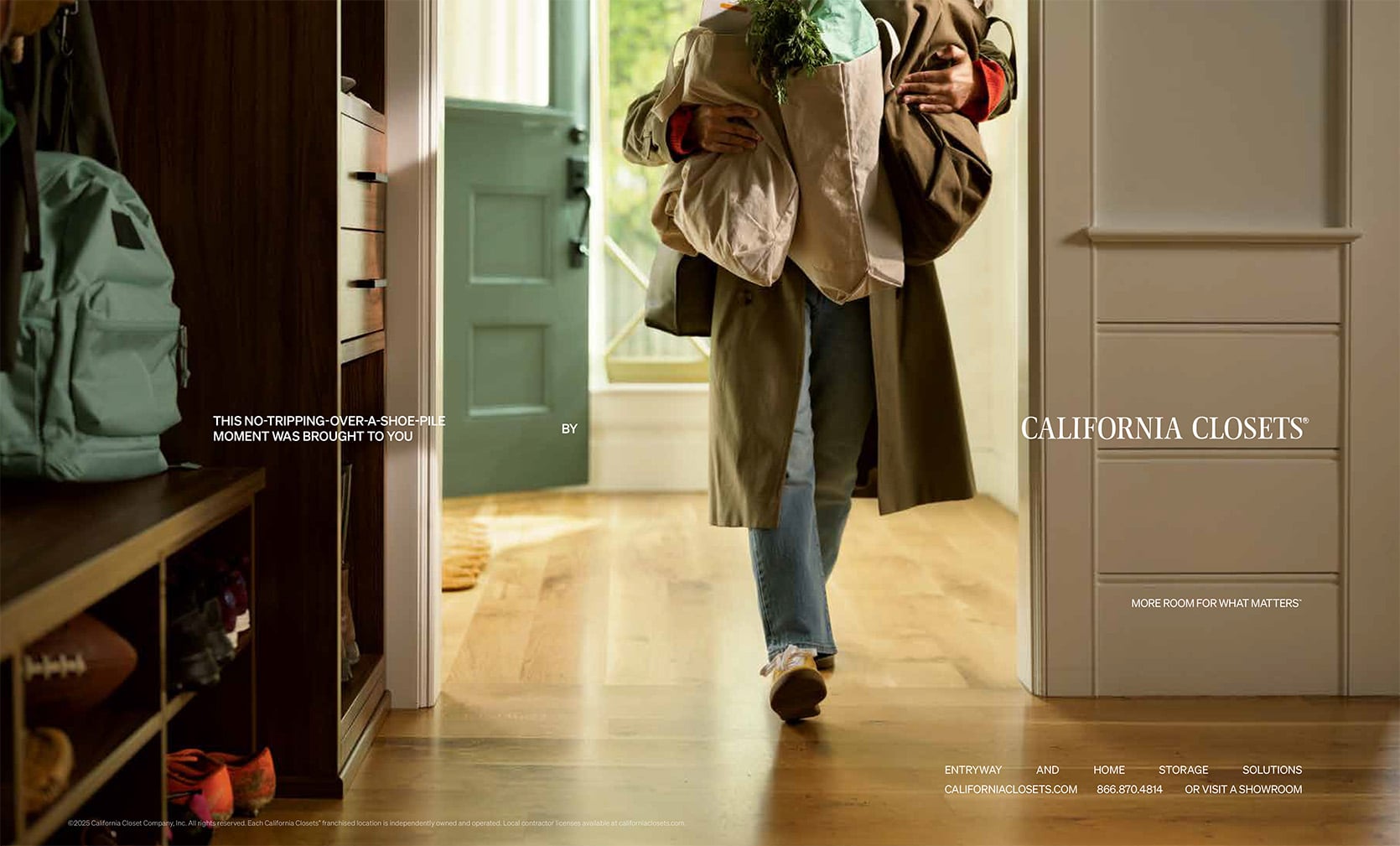
Final Print Ad

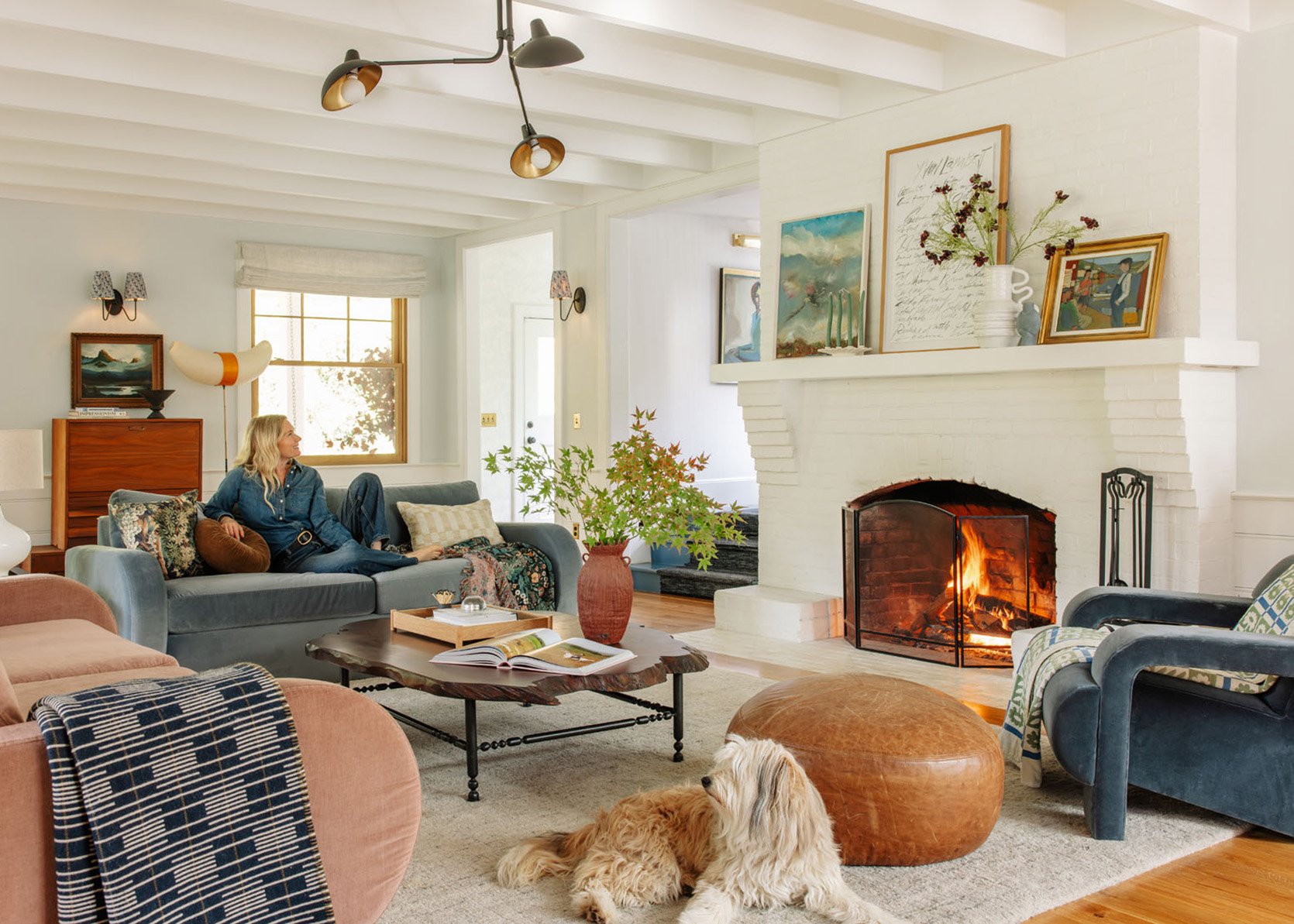
The Living Room
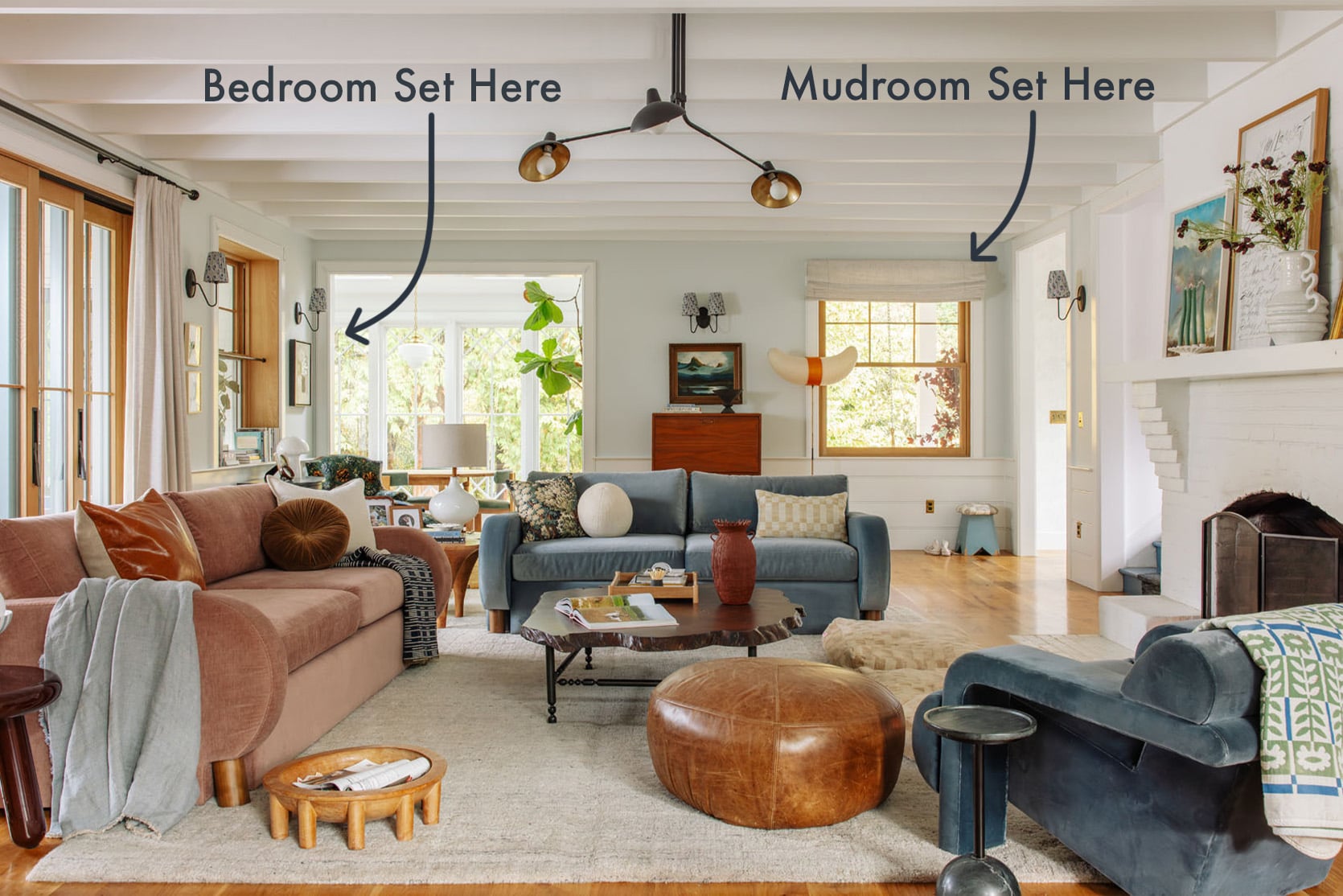
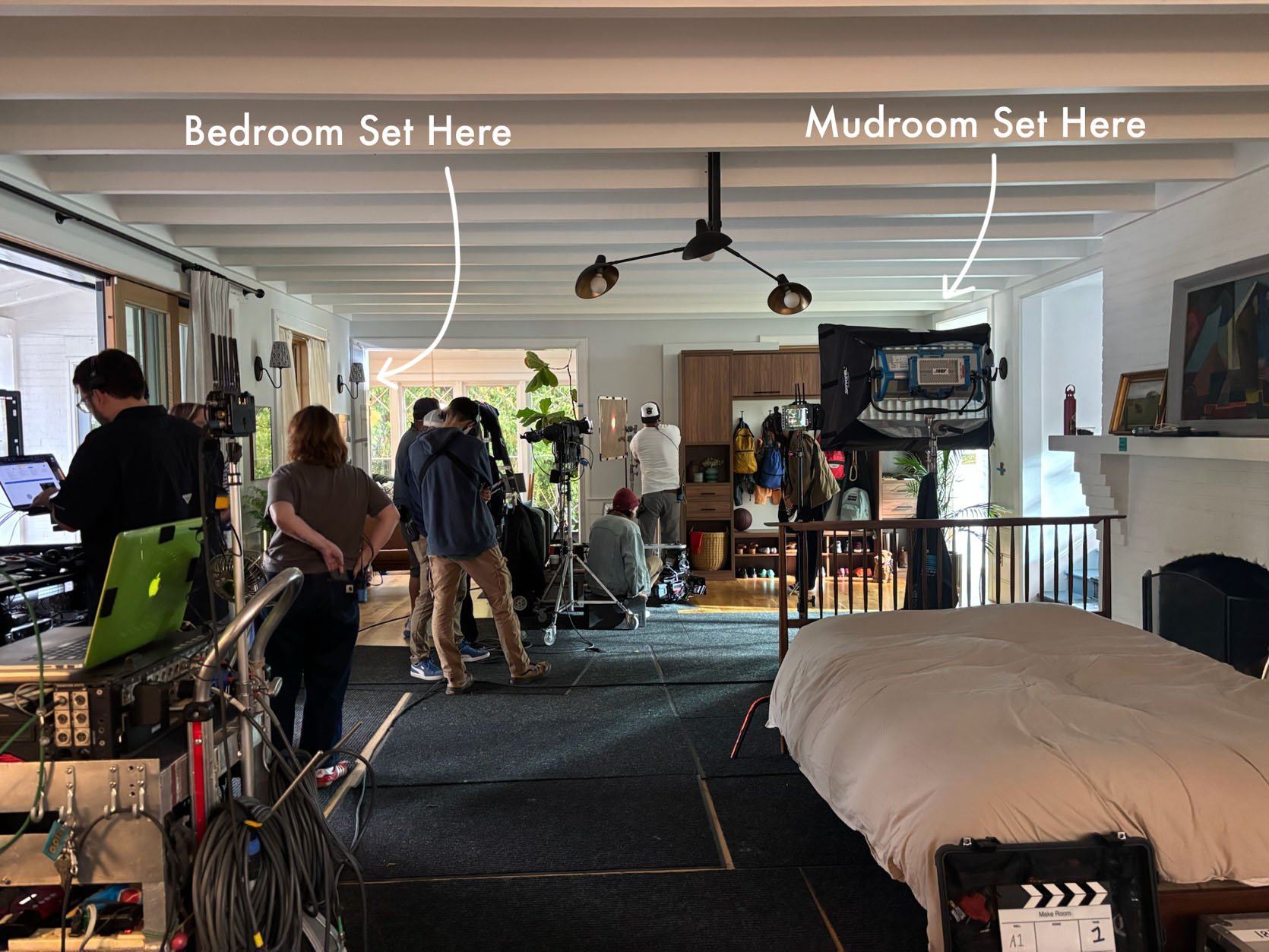
The New Mudroom
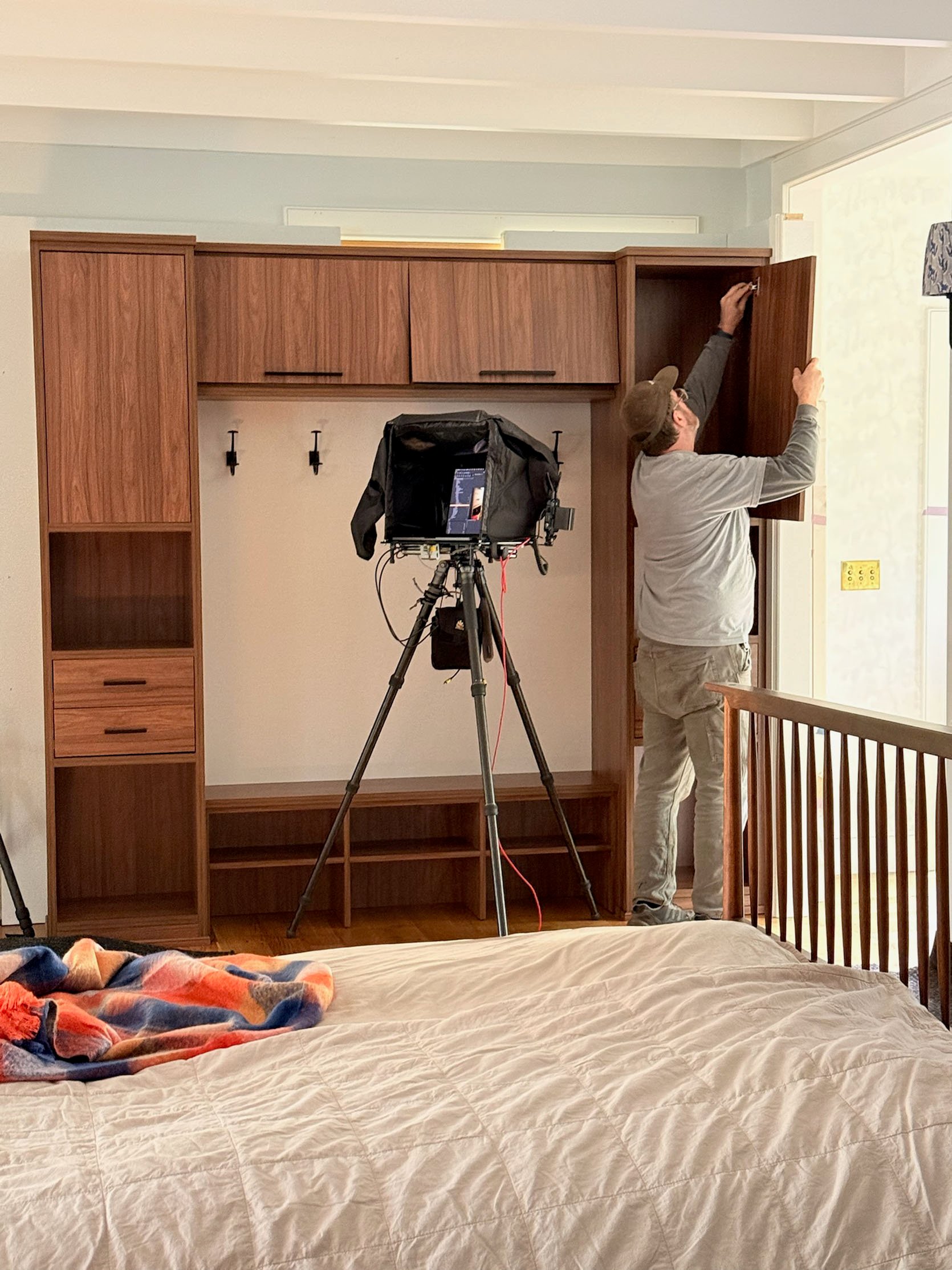
They turned our living room into both a mudroom and a bedroom.
The New Bedroom
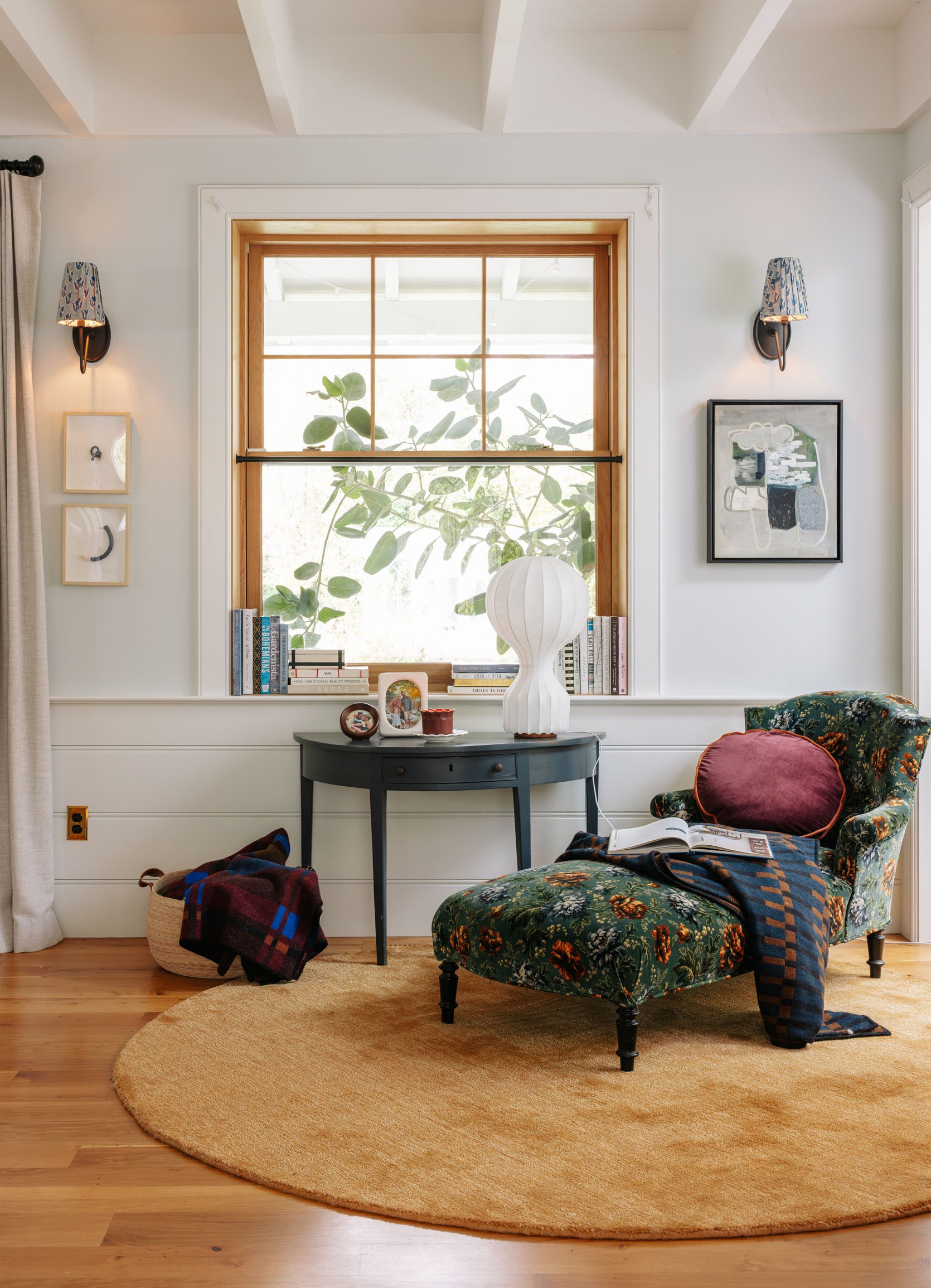
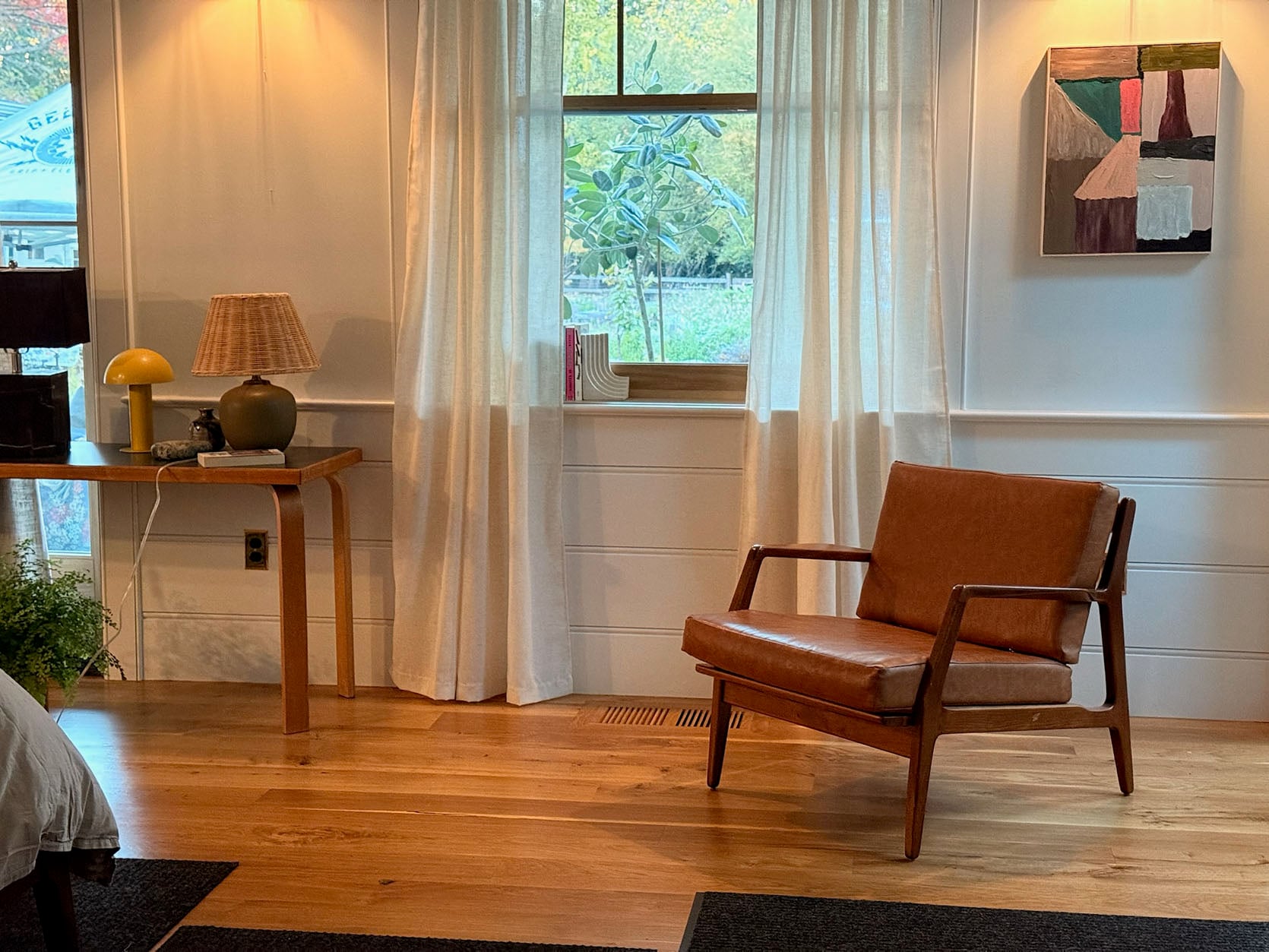
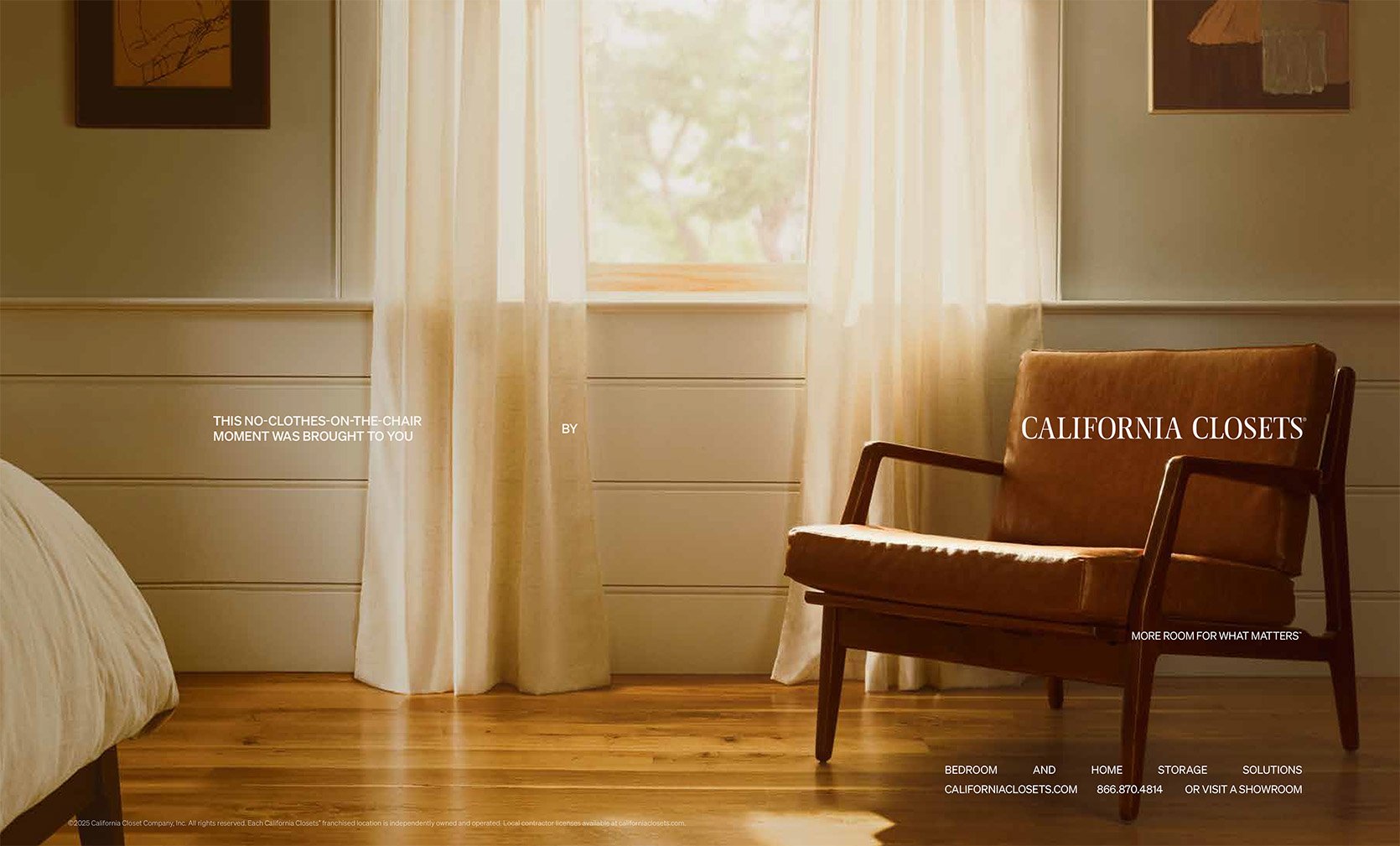
Wild, right? So many people have DM’d, emailed, or texted me, wondering if this is our house because of the paneling, the colors, the architecture. Yep!
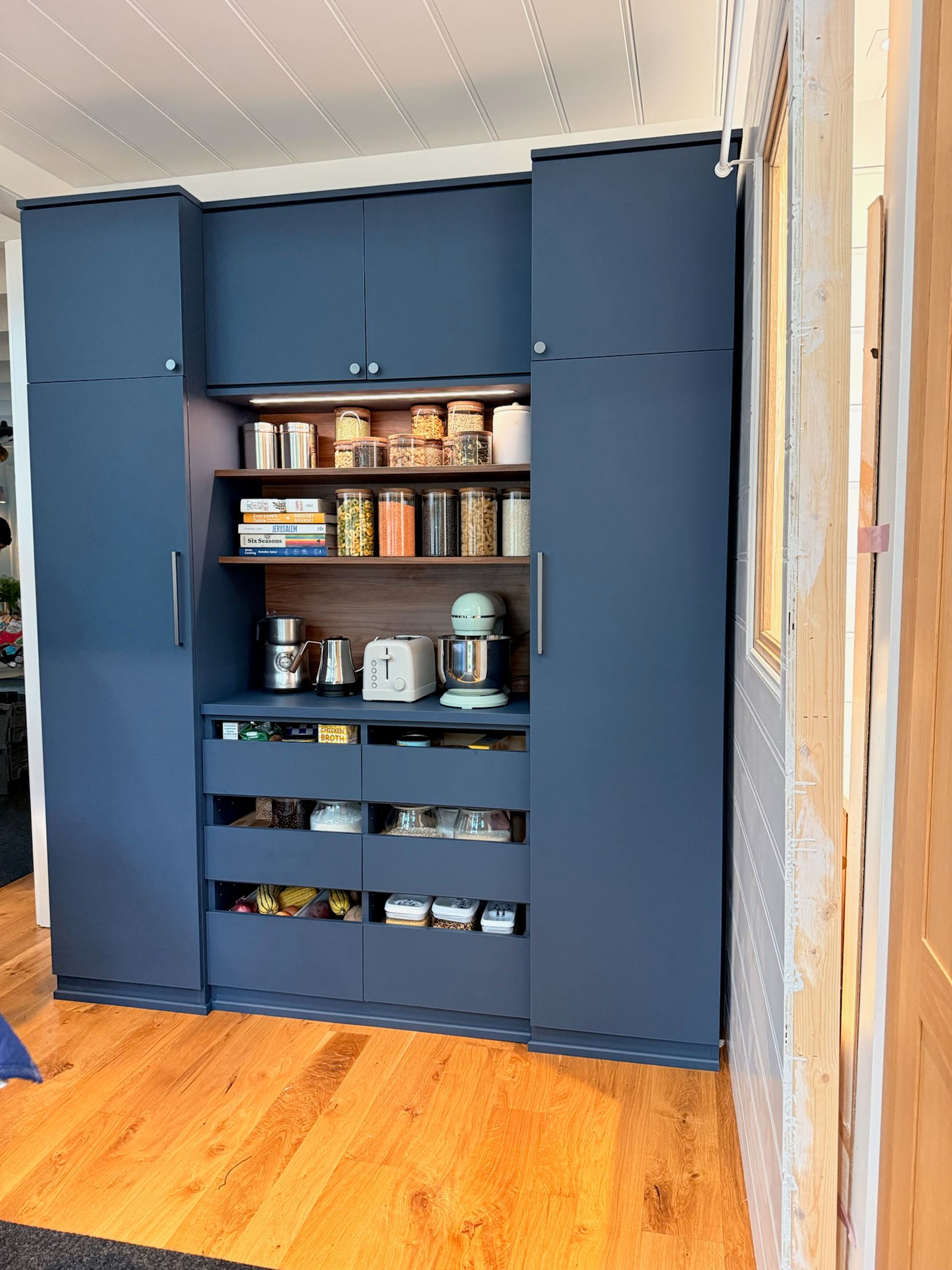
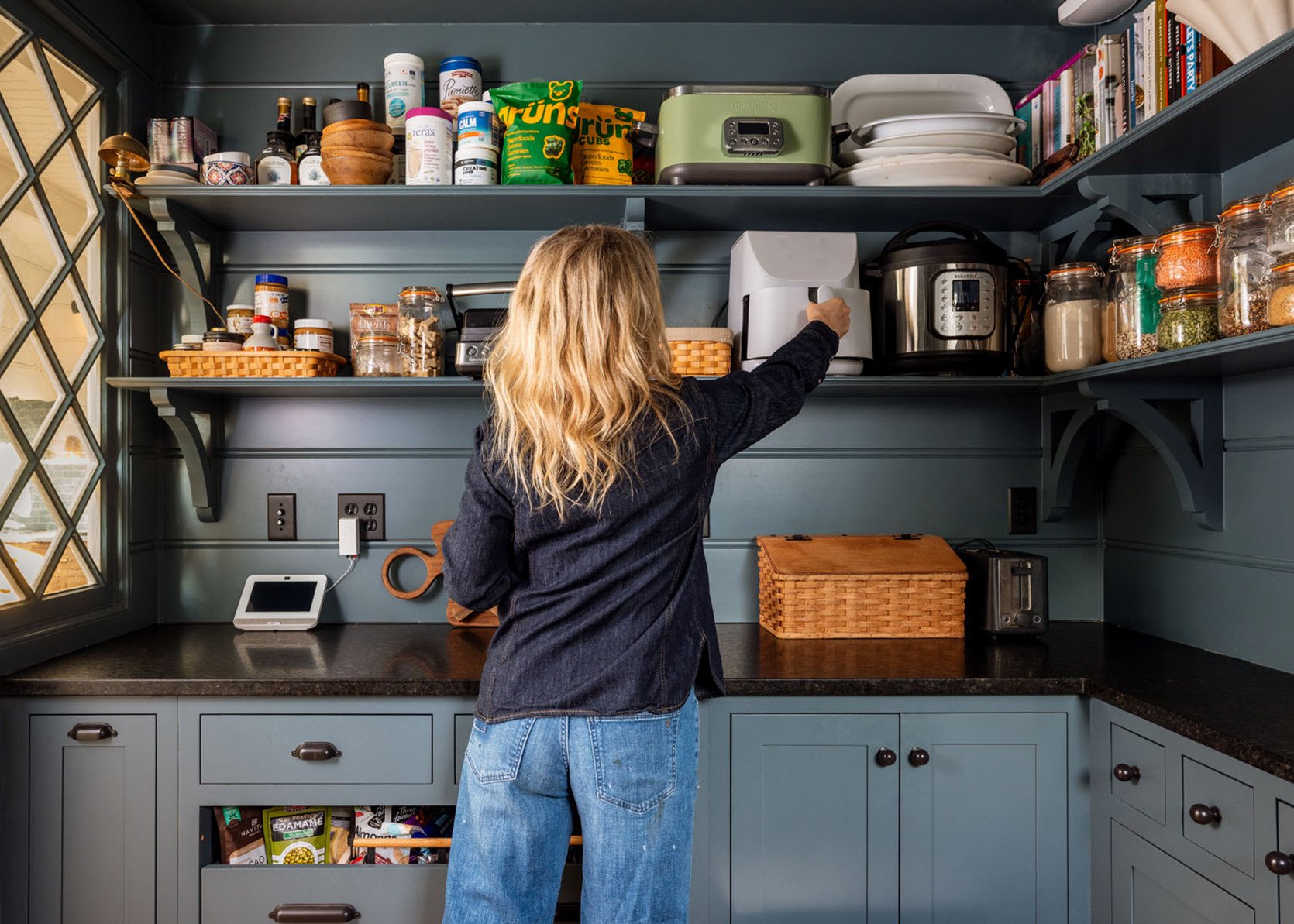
The New Pantry
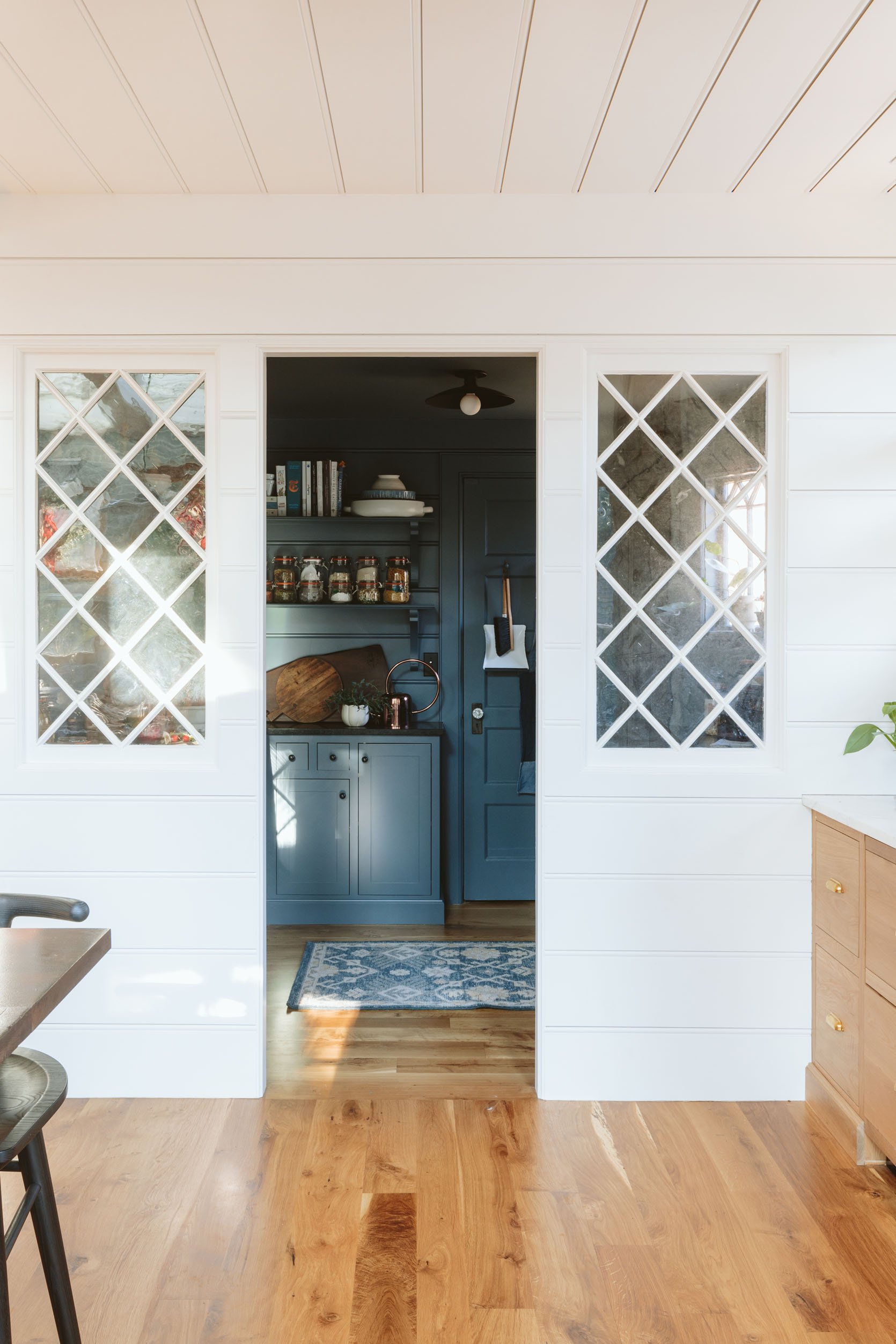
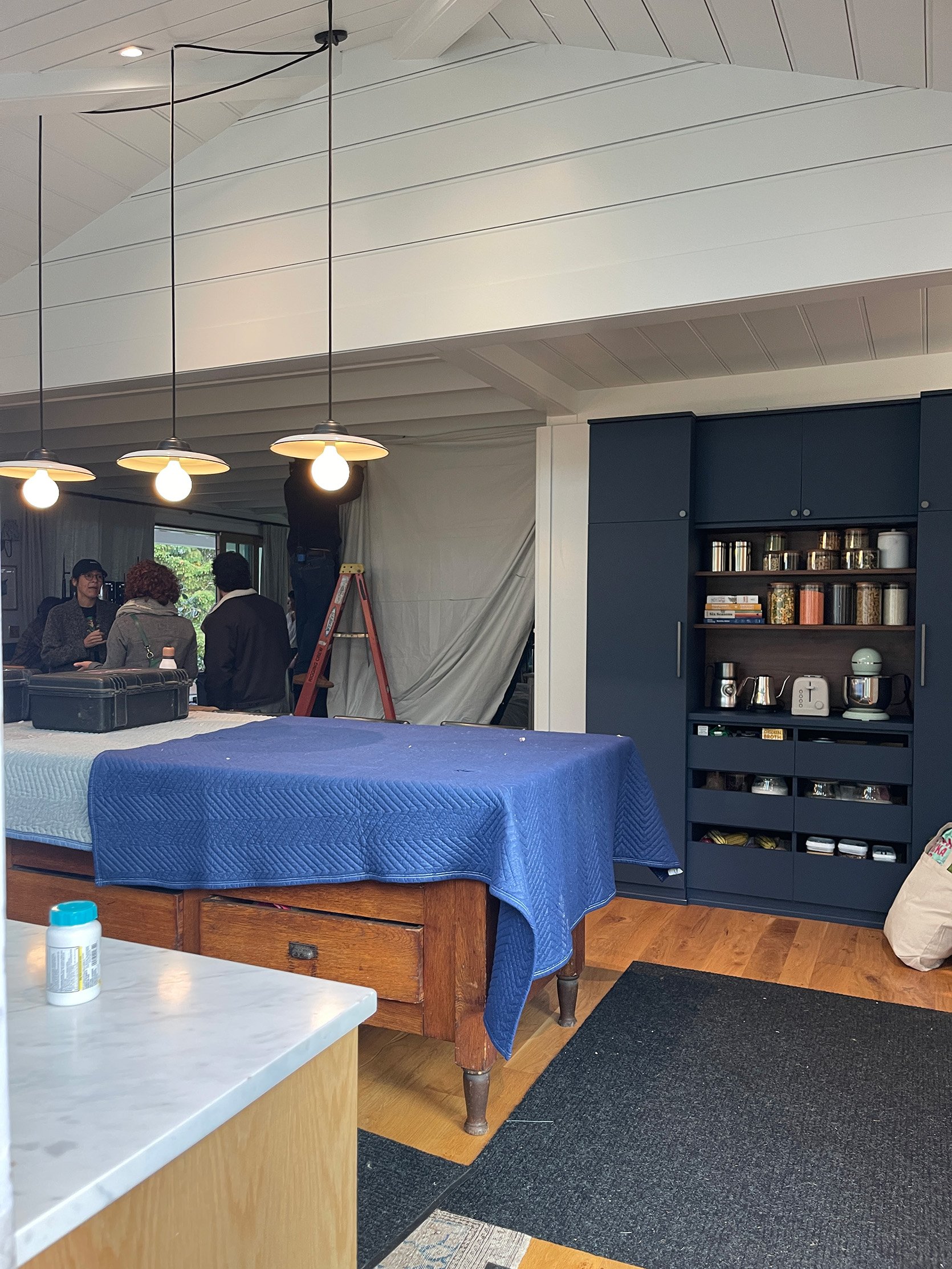
They actually built a pantry OVER our pantry, but heavily inspired by it. It was so fun to see (and the product is legitimately awesome).
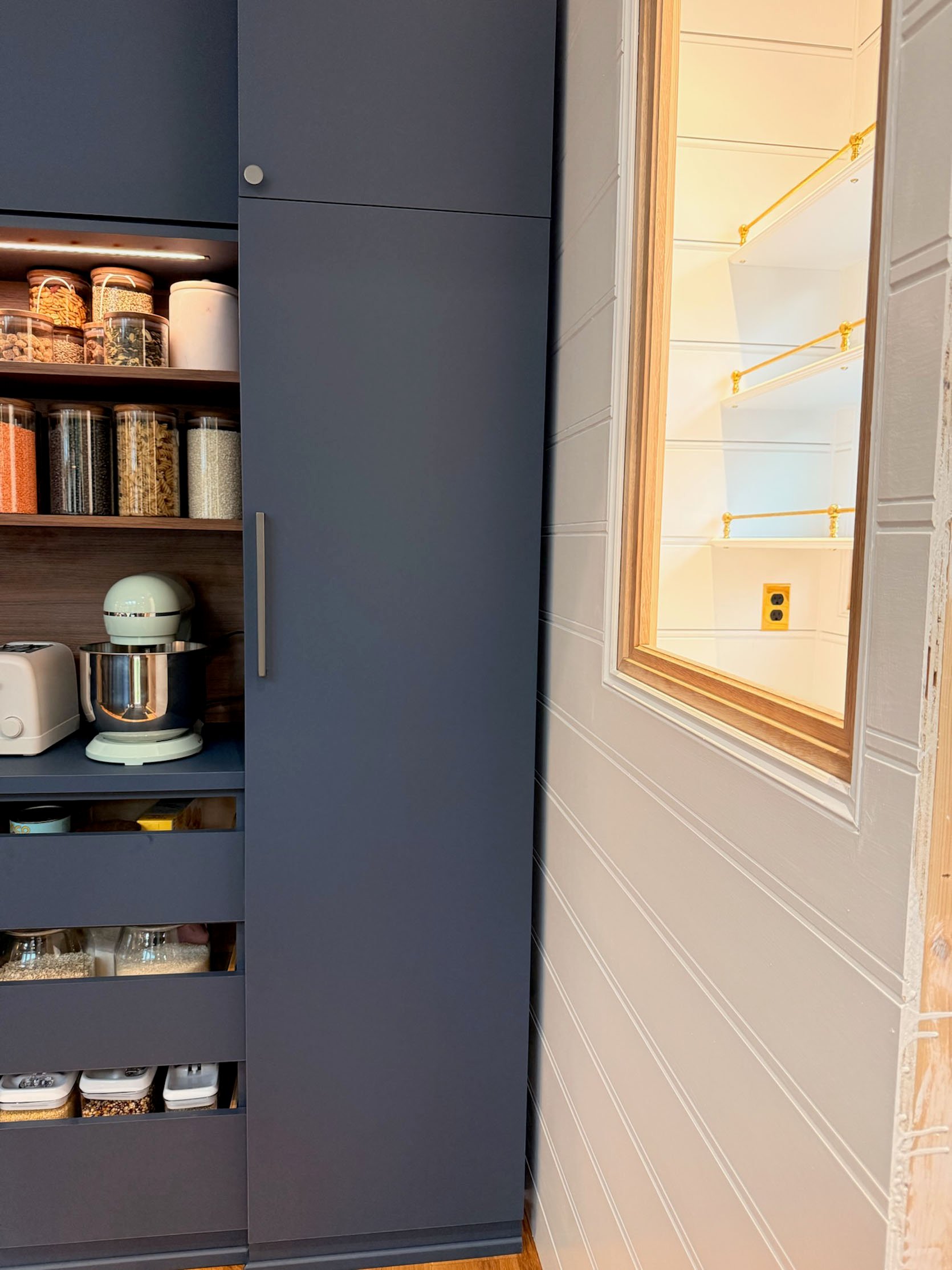

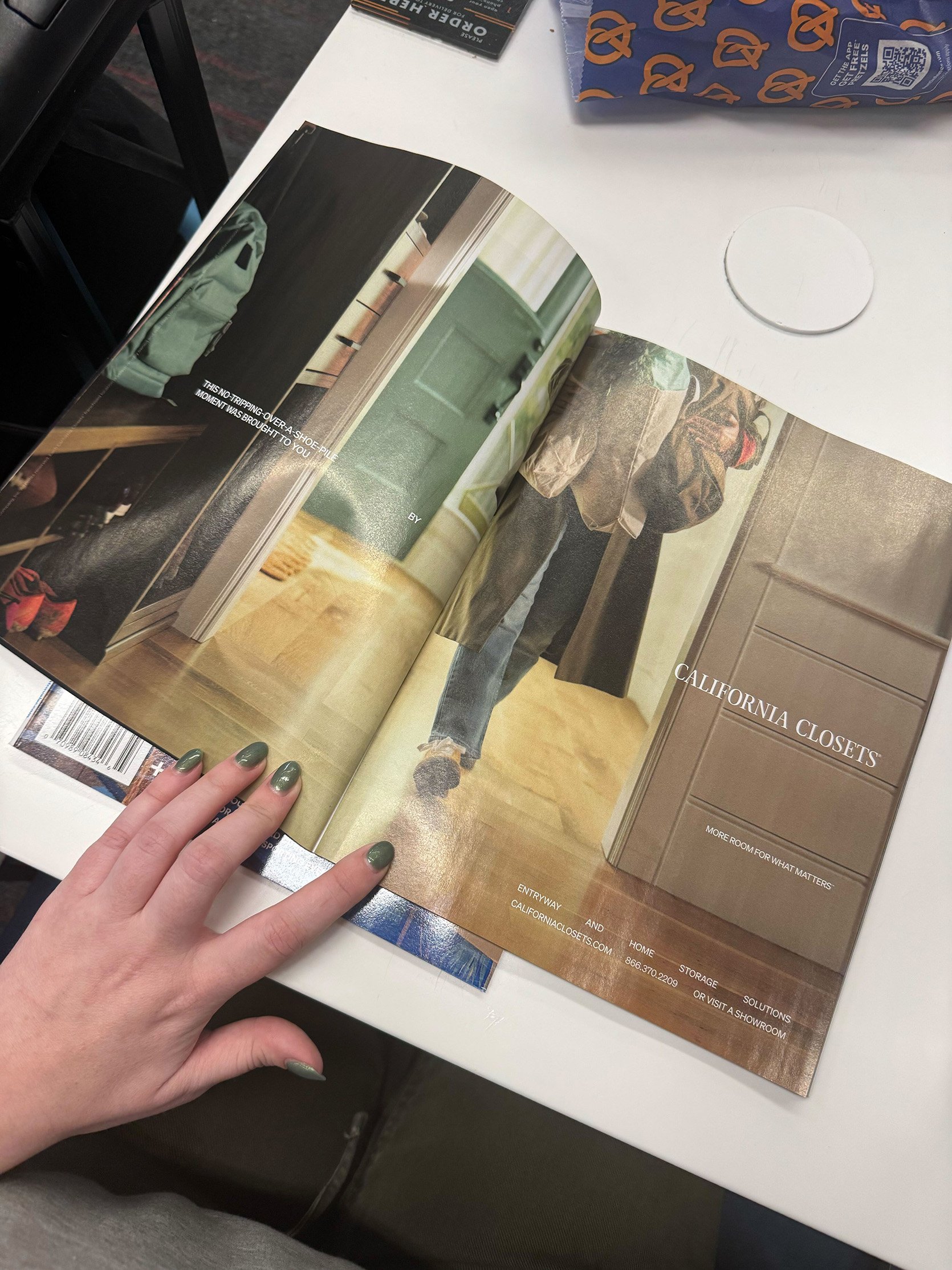
Check out the commercial spots below (they are all over TV in California, which is so fun). I knew that their concept was going to be a bit different than your standard “functional closet” tour, but I LOVE how they turned out. Shooting the lack of mess, rather than the organized stuff, is something that totally hits with me, but please check it out!
You may have seen our house (AND OUR DOGS!!!) on the Velux Instagram page. This one was a much smaller shoot, and Gretchen stayed here with the pups, and since Velux is such a great long-term client of mine, I said they could use the dogs for free if they could stay at the house. How cute is this?
A few other questions you might have:
- Do you charge for magazine shoots? Nope. Magazines have zero budget these days (rarely for even flowers and props). I don’t charge my time, flowers, and rarely a cleaning fee, but honestly, it’s just not that big of a deal.
- Do you charge if it’s your own line? I totally forgot to when we shot Rugs USA here, and I should have, but at a discounted rate. It’s simply too disruptive not to make some money from it. At the mountain house, I charged them the high Airbnb rate, not the full location rate.
- Do your partners shoot here? We mostly negotiate to shoot all content in-house (just my crew), but if they want to come in, that is in the contract early on and is dependent on the terms of the agreement. Rejuvenation shot here as part of our overall deal, no charge. Generally, I try to be really amenable and make everyone happy so they are eager to work with me again, but if it’s a full house takeover, I have to charge.
Remember when I was going to post the BTS stuff about the business over on the Substack? Well, you should totally go over there and subscribe for hyper personal stuff, but so far less business-related. I’m really enjoying bringing you guys behind the scenes. Let me know if you have any questions in the comments.

This is very cool to learn about and I have DEFINITELY seen the California Closets commercial with the chair a million times. Who knew?!
When I was little, a movie was filmed on my grandfather’s street. The house next to his was the main set and my grandfather’s house was where people (crew?) slept (he had passed so no one was living there). It was cool to be a part of, but it’s also the reason we have only one of his dining chairs remaining. 🙂
This was a fun read! I’m a caterer and we service a lot of these shoots in the Santa Barbara area. They’re incredible to witness.
Oh gosh, I’m so stressed out just reading about this! I am clearly NOT a candidate for renting out my house, ever. God bless all you flexible, laid back people.
Curious – have their been any styling/decor choices that were made for these shoots that you’ve been inspired to use yourself?
I’d be curious to know this, too!
Fun bts post, Emily! Thanks for sharing with us! Content production is such an interesting/crazy world.
What a fun read. Thanks for sharing the BTS and final products!
What a compelling Friday read! This was tons of fun to see, layered with your perspectives on how to make it make sense for your family. Another commenter just this week (I think) had asked about that photo shot with the entryway in the background so it is very gratifying to see that question essentially answered with this amazing post. Thanks Emily and team!
This was so interesting and fun to read! Love a behind-the-scenes look and hearing some of the decisions you make along the way to make this work for you and your family
Very cool to read your post. You clearly answered every possible question I could’ve had!!
We did this at our old house in the Chicago suburbs 3 times for commercials. The first time the buzz around town was that Matt Damon was filming at our house. No such luck, it was for a cheese commercial. Oh the stories I have about those times. CRAZY!! Our 3 kids were in elementary and middle school and one was 2 weeks before Christmas that I would never do again. We paid for Christmas that year with it and like you did family vacations with the money. You brought back memories with this.
This was so cool to read! Wow the photos with all of the crew look so chaotic and then the final images are so cool to see juxtaposed. Loved this post!
This was a great post! I’d love to do this with our home, how do you get your home out there for companies to see? Airbnb? Would love any tips!
What state are you in? The state of Georgia has it’s own website.
georgia.org/industries/film-entertainment/georgia-film-tv-production/list-your-property-as-a-film-location
Thank you! I’m in Washington state
Idea for future blog, kinda related to this topic. We purchased a condo in FL and plan on renting it out part of the year. This is a 2nd home. When styling the condo should we lean into the FL theme? Good idea to decorate based on where home is located? Regarding hard fixtures such as tile for floor, kitchen bath or paint color or carpet what can you recommend that would have the most aesthetic appeal for our guests and can withstand the most abuse? A little niche topic I know but I would think a lot of readers would have rented a home and have an opinion, as has your team. I appreciate any advice you have. Been a reader for 10? years and am on your Substack. Thank you.
I had California Closets build my custom bookcase wall because you featured them doing an office one time and I am SO happy with it!! I never would have thought California Closets but I’m thoroughly satisfied.
This a really interesting post!