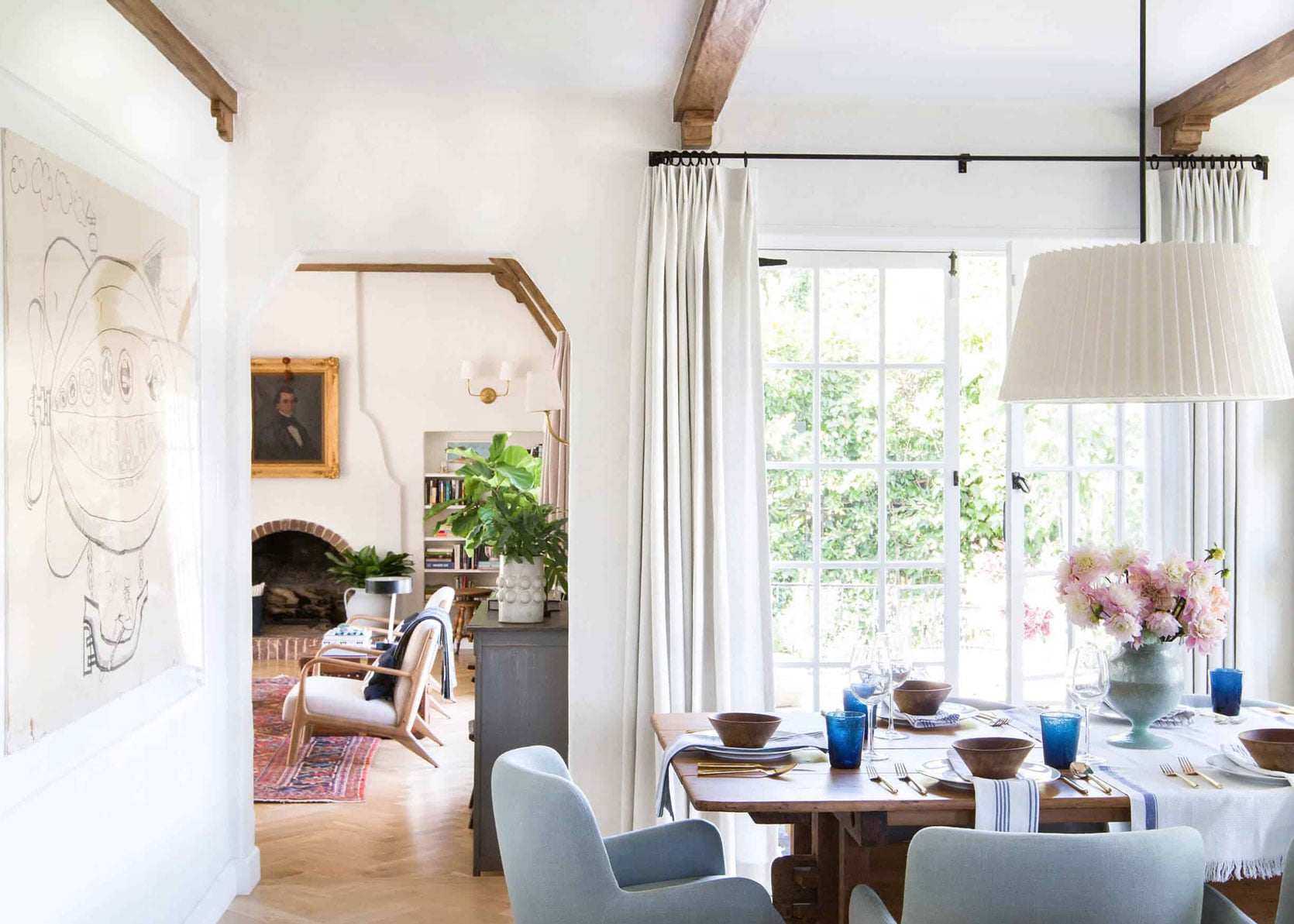
Design
Secondhand Scores: The Transforming & Multi-Functional Vintage Table You’re Probably Overlooking
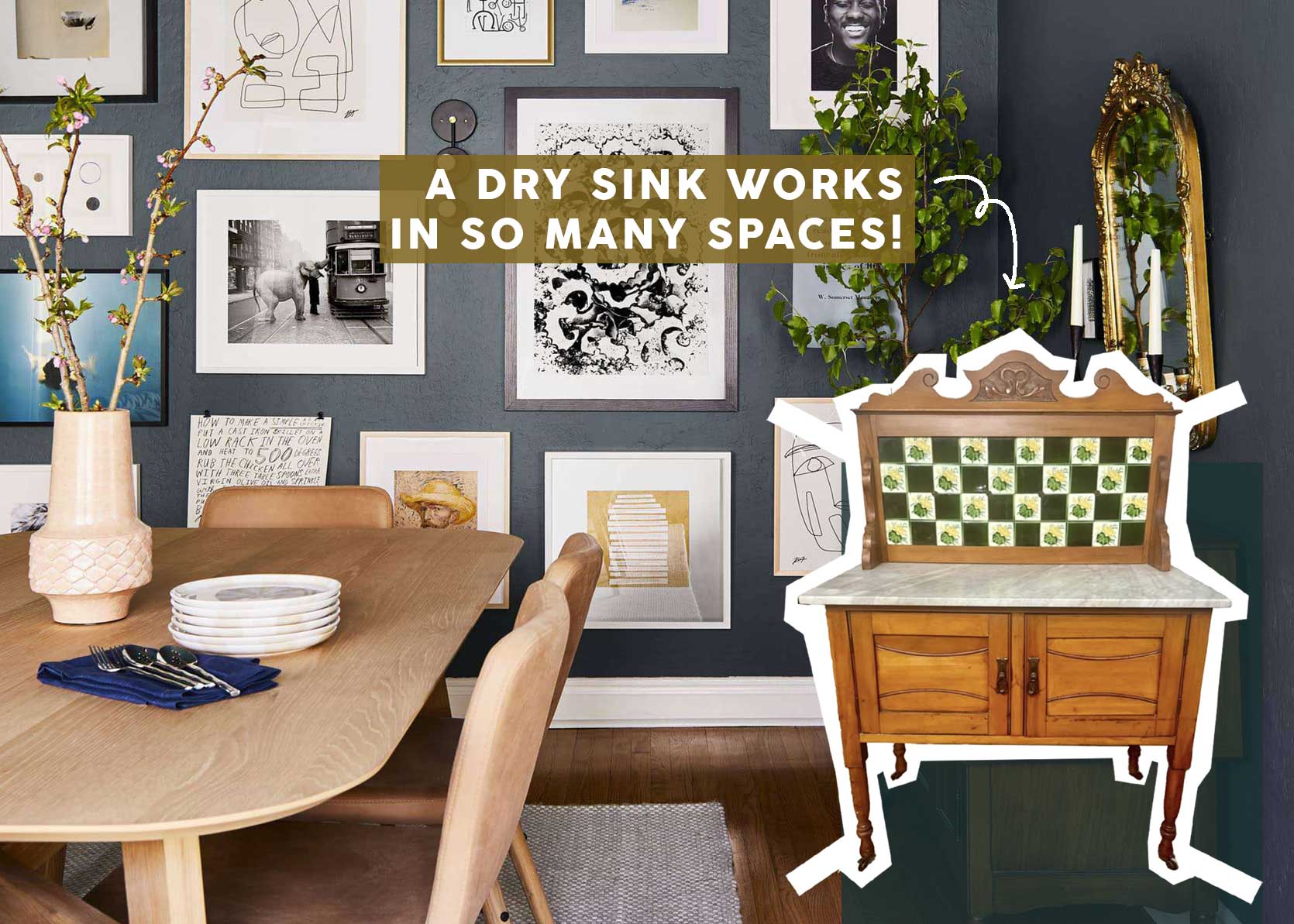
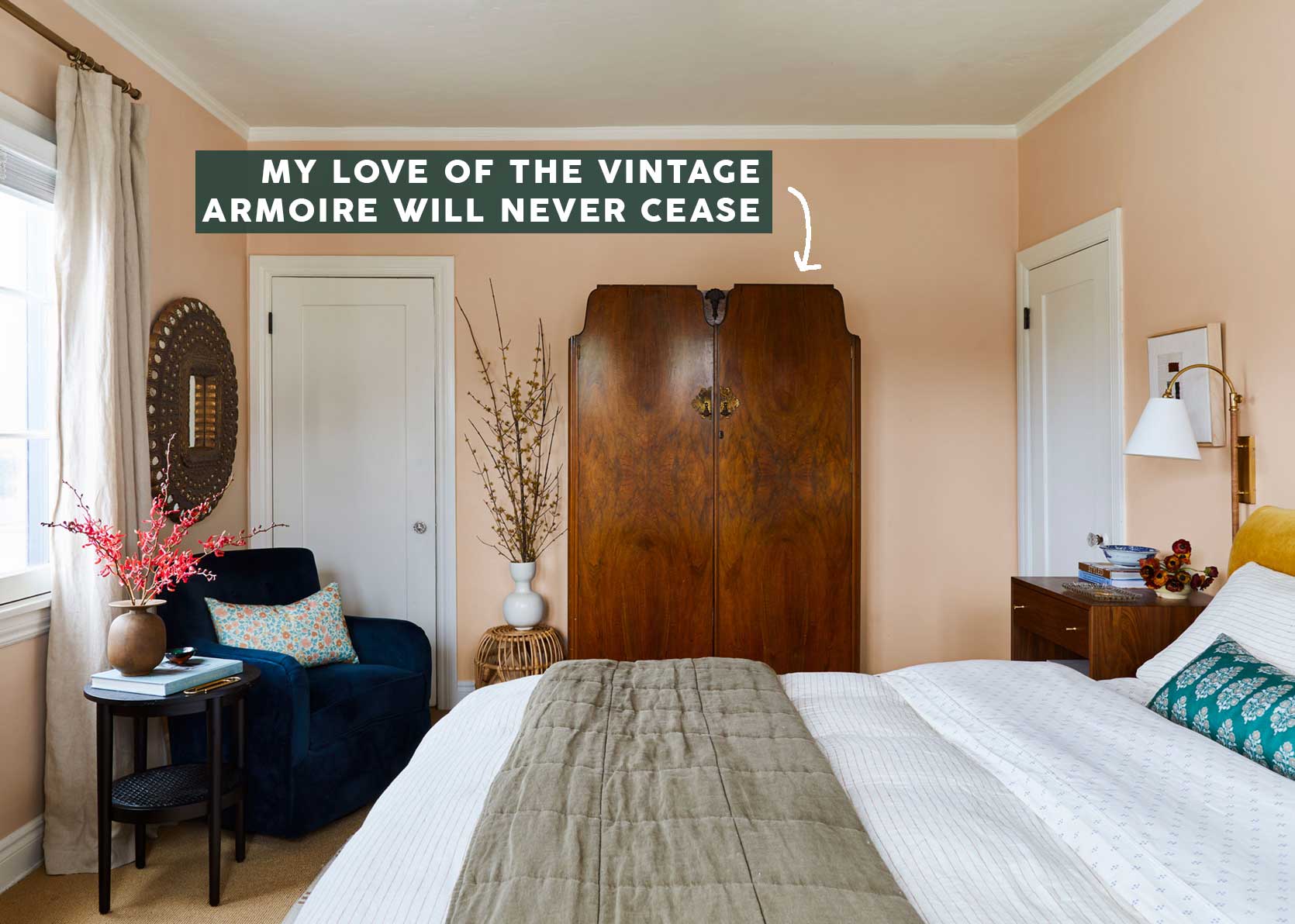
It’s been a while since I’ve ventured into Secondhand Scores territory, but I’m back, baby! The premise here is easy: I find a piece of furniture that’s easy to overlook on places like Facebook Marketplace, and then convince you that it’s worth a second look. In the past, I’ve explored dry sinks, barrister bookcases, and vintage armoires. Today, I’m tackling the gateleg table. As I slowly furnish our new home in North Carolina, I’m trying my hardest to have at least a 50/50 split (maybe more) of secondhand to new, so I’m constantly cruising FBM. And let me tell you, there is a PLETHORA of drop-leaf and gateleg vintage tables available here. In truth, I saw them all the time when I was living in Los Angeles, as well, but I never looked twice. They seemed fuddy-duddy and old, and not the kind of old I liked.
But then…I changed my mind. Not for no reason, though. I kept stumbling across images of rooms that used vintage and antique gateleg tables in ways that made my thumb come to a screeching halt. They were grand, interesting, curious, and a little hard to understand at first glance. On the big dining varieties, there are so many legs in play. As we’ll learn today, they aren’t all like that, including the one I recently added to my home after I started researching for this post. I’m sharing a sneak peek at it at the end of the post. But first, let’s educate ourselves a bit.
What Exactly Is a Gateleg Table?
Alright, so…a gateleg table is a type of drop-leaf table where the leaves are held up by legs or brackets that swing out like a garden gate. This furnishing got its start in England in the late 1500s and really hit its stride in the 1600s Jacobean era, when homes were smaller, rooms did double duty, and furniture had to earn its keep. The idea is pretty genius in its simplicity. A narrow center section holds one or two hinged leaves that drop down when not in use, and when you need more surface, a pair of legs swings out on a hinge, just like a garden gate, to hold the leaves up. Folded, it could slip against a wall or into a corner. Opened, it could seat the whole household for dinner. That flexibility made it a fixture in everything from farmhouse kitchens to taverns and inns, and it’s easy to see why people loved it, since it was basically the original space-saving furniture long before anyone was talking about small-space living.
The earliest versions were made of solid oak and had a sturdy, slightly chunky look, with legs that were often turned on a lathe into bobbin or baluster shapes. By the later 17th century, especially after the Restoration in 1660, the barley twist leg (pictured below this paragraph) became the star of the show. Named for the twisted barley sugar candy it resembles, this spiral-turned leg gave the table a sense of movement and craftsmanship that still feels special today, and it’s probably the detail most people picture when they think of an antique gateleg. Into the 18th century, walnut and then mahogany took over; the shapes got a bit lighter and more refined, and the gateleg eventually shared the stage with cousins like the Pembroke table. The Victorians and later the early 20th-century revival crowd brought the barley twist back in a big way, which is why you’ll see so many of those reproductions at estate sales.
Then came the mid-century Scandinavian designers, who took this centuries-old workhorse and made it feel brand new. Danish and Swedish versions traded oak and turned legs for warm teak and clean, tapered lines, and the leaves often dropped down to a surprisingly slim profile. Some of the cleverest examples even had a little cabinet or drawer tucked into the center section to store folding chairs, so the whole dining setup could disappear when you didn’t need it. It’s the same practical thinking that made the gateleg popular 400 years ago, just with a lighter touch and a lot more polish, which is exactly why it still works so well in apartments and multipurpose rooms today.
They come in varying heights, so they can serve as end tables, dining tables, hall tables, and even desks. And, as it turns out, a small gateleg table is exactly what I needed for my living room. You see, I had my eye on an Emma Chamberlain demilune bookcase end table from West Elm, but I really didn’t want to spend $550 on it. I envisioned a piece that could sit flush to the low and wide side of my sofa but would round out enough to fill some space in my furniture arrangement that I was struggling with. I tried hunting down a secondhand demilune table, but nothing was quite right. I also liked the idea of some flexibility. Could I find something that worked as an end table but also maybe even a low table for my daughter to use for certain activities?
And then I saw this image:
While this table has squared-off edges, it inspired me to pivot my search direction to drop-leaf tables and even gateleg. I kicked myself thinking about all of the pieces I skipped over for months and months because I didn’t see the vision.
How Do You Find One & How Much Do They Cost?
As is common with peer-listed product marketplaces, the titles and descriptions of pieces aren’t always super accurate. Your best bet is to examine the images or see the piece in person to see if it operates as a true gateleg table, but some search terms to consider looking up to see if you can spot one include: Gateleg table, drop-leaf table, Pembroke table, folding wood table, wing table, swing leg table, folding leg table. Don’t forget off spelling variations, such as gaitleg, drop leave, and even something like barely twist instead of barley twist!
I found this website that does a great job of breaking down some of the eras to look for, how to check for authenticity, what to look for in the pieces, and even what they should cost. I pulled some of the pricing information (thank you, Antique Tables Co. for sharing this) so you have something to work from when you’re shopping for one. For most of the ones you’ll find people selling on Facebook Marketplace, they’re likely Colonial reproductions, which are still made super well and highly versatile, but aren’t really worth all that much. These are the ones you can get for a big deal!
- Era & Classification: 17th-Century English Jacobean Oak
- Estimated Market Value: $3,500 – $8,500+
- Key Value Drivers: Original barley-twist legs, intact floor stretchers, unstripped dark brown fumed patina.
- Era & Classification: 18th-Century American Colonial (Maple/Walnut)
- Estimated Market Value: $1,800 – $4,500
- Key Value Drivers: Original rule joint hinges, wide single-board leaves without splits, authentic tool marks.
- Era & Classification: 19th-Century Victorian / Provincial
- Estimated Market Value: $500 – $1,200
- Key Value Drivers: Turned baluster legs, English pine or fruitwood, practical compact dining dimensions.
- Era & Classification: 1920s–1950s Colonial Revival Reproductions
- Estimated Market Value: $200 – $550
- Key Value Drivers: Sturdy everyday decorative condition, factory maker’s stencils (Tell City, Imperial).
Be sure to check out this link for further details on the above if you’re interested in more nitty-gritty!
Local Listings
A typical part of this Secondhand Scores series is to show some actual listings so you can get a sense of what’s out there, how people title the listings, and what they charge. Here are some by me, but I also poked around some of the cities I know we have a lot of readers in, including Los Angeles, Portland, and Dallas.
Here’s what I have near me:
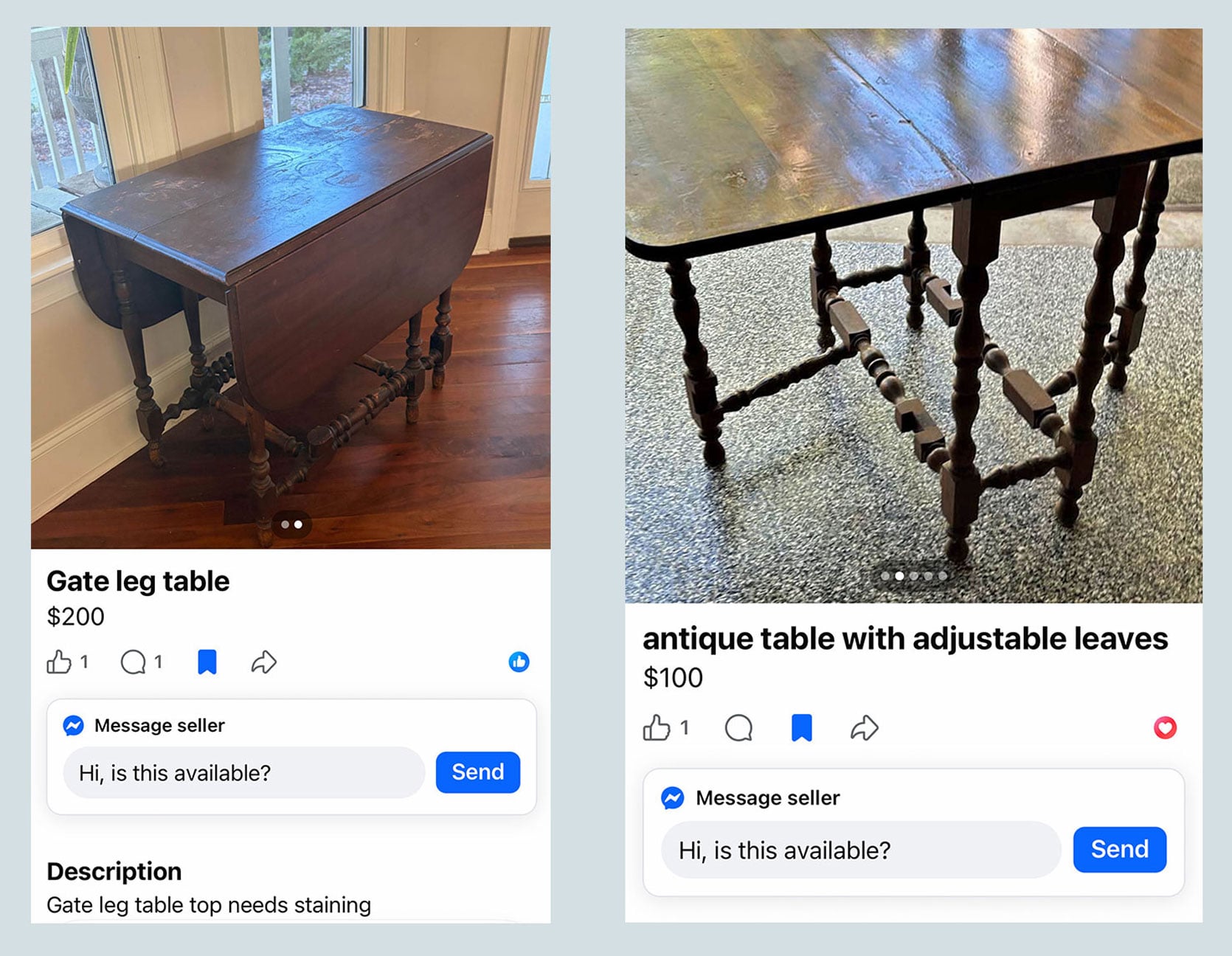
You can see that for around $100-$200, the condition varies. You may have to refinish the top, like the one gate leg table on the left. Also, note the title of the one on the left; no real mention of gateleg, but you can see that the two legs under the table leaves nestle into that little notch in the base (a hallmark of a gateleg table).
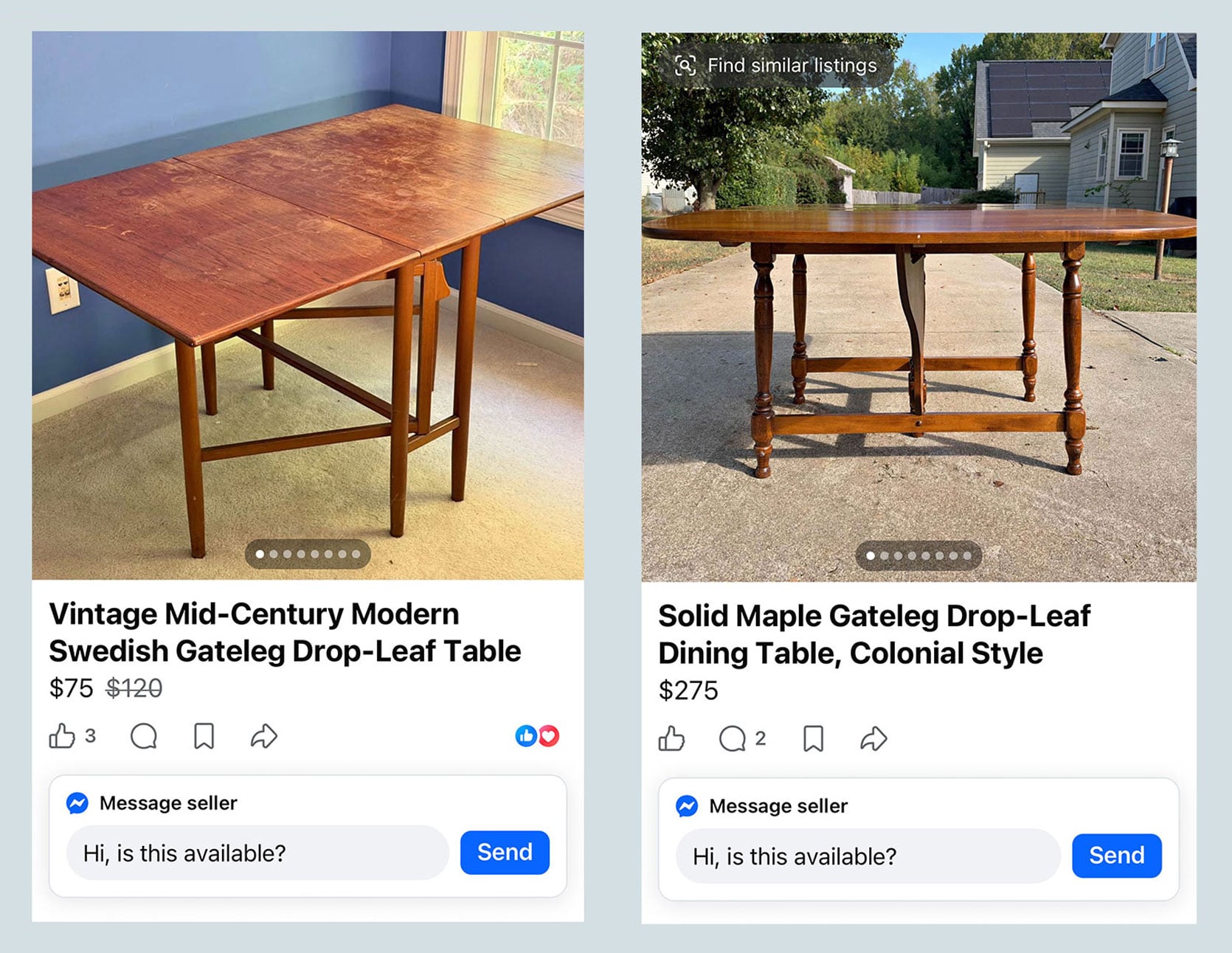
$75!!! For a gorgeous MCM gateleg. The top is in need of some love, of course. It would need sanding and restaining, but what a great project for such a low price. I could see that being used as a dining table if you don’t have a ton of space to always have a dining area set up, or a desk in a guest room that does double and triple duty. And the table on the right is right up my alley. This is a butterfly wing table, rather than a gateleg, but the function is the same. You can see it’s listed as a gateleg, even if it’s not exactly.
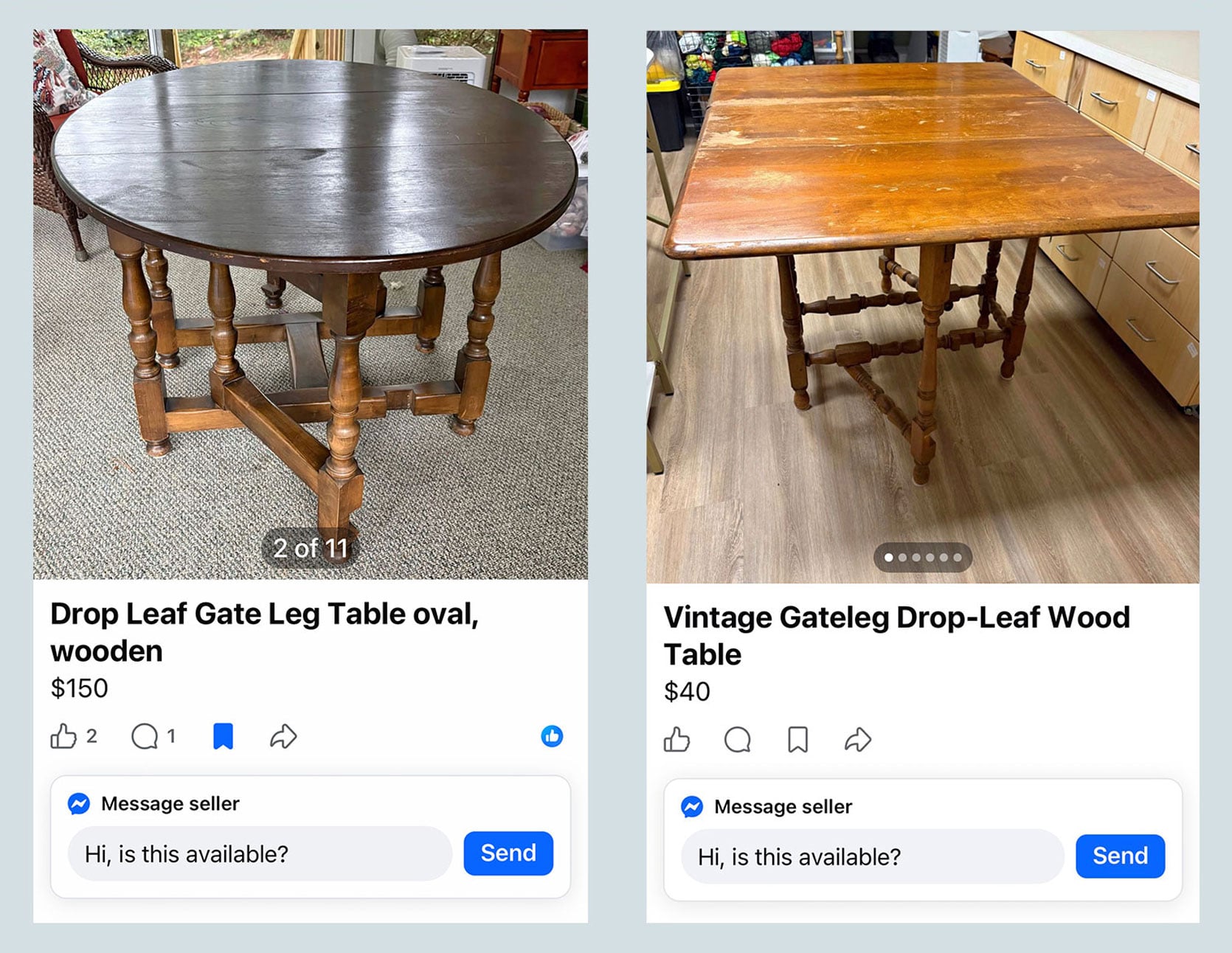
I’d love to see the oval table on the left as an entry table in a large foyer, or even as a center table in a home library (I’ll show you an example of what I mean later on). The $40 table on the right is, again, not in the best finish shape, but a light refinishing and you’ve got yourself a gorgeous console table to use in a hallway, as a bar in your living room, even as a narrow foyer table up against the wall.
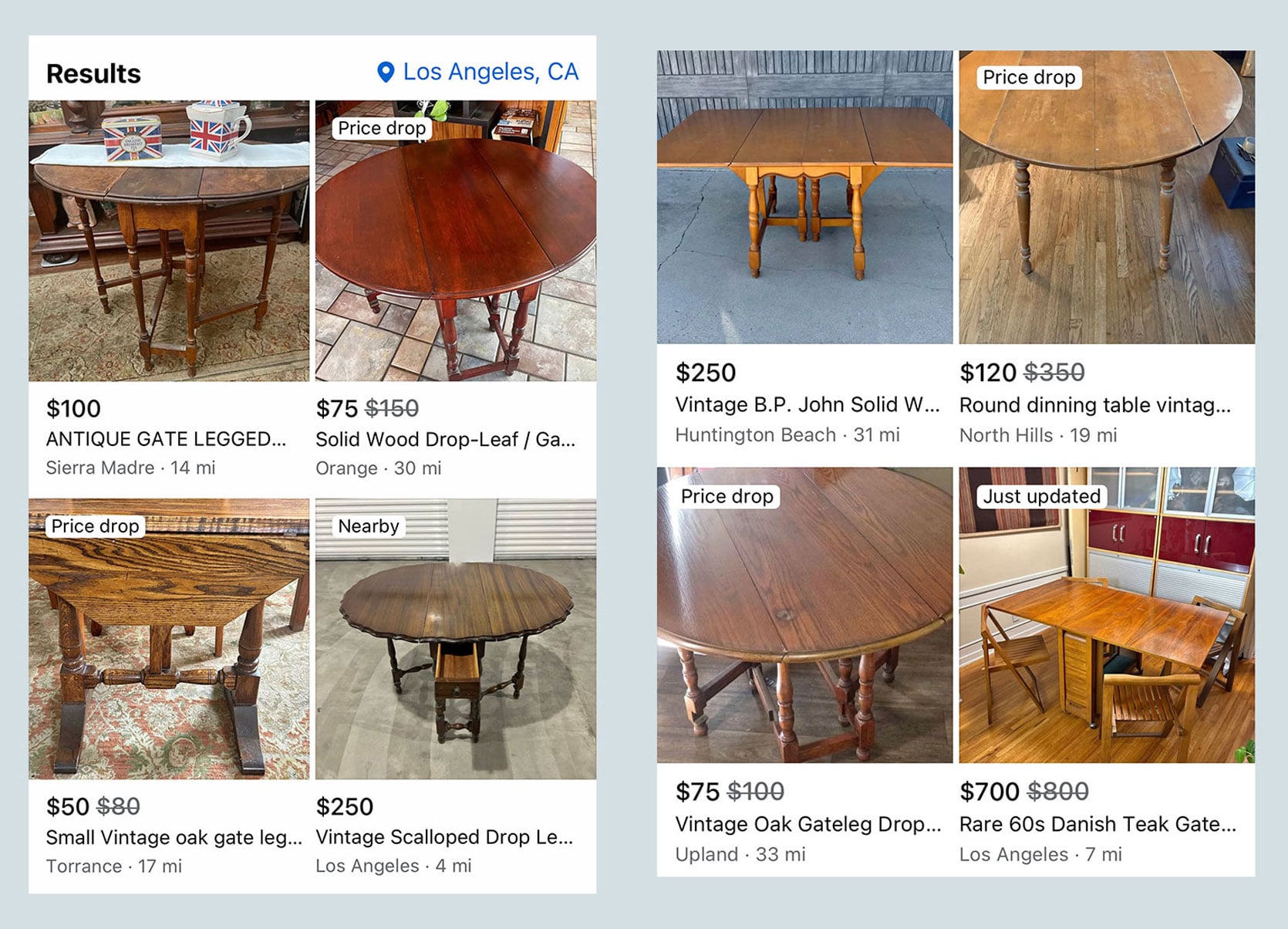
Now, let’s look around the country. Here are some of the top results I found in and around Los Angeles, which feature similar pricing but some more variety in wood finish and design. That little scalloped number is CUTE!!!
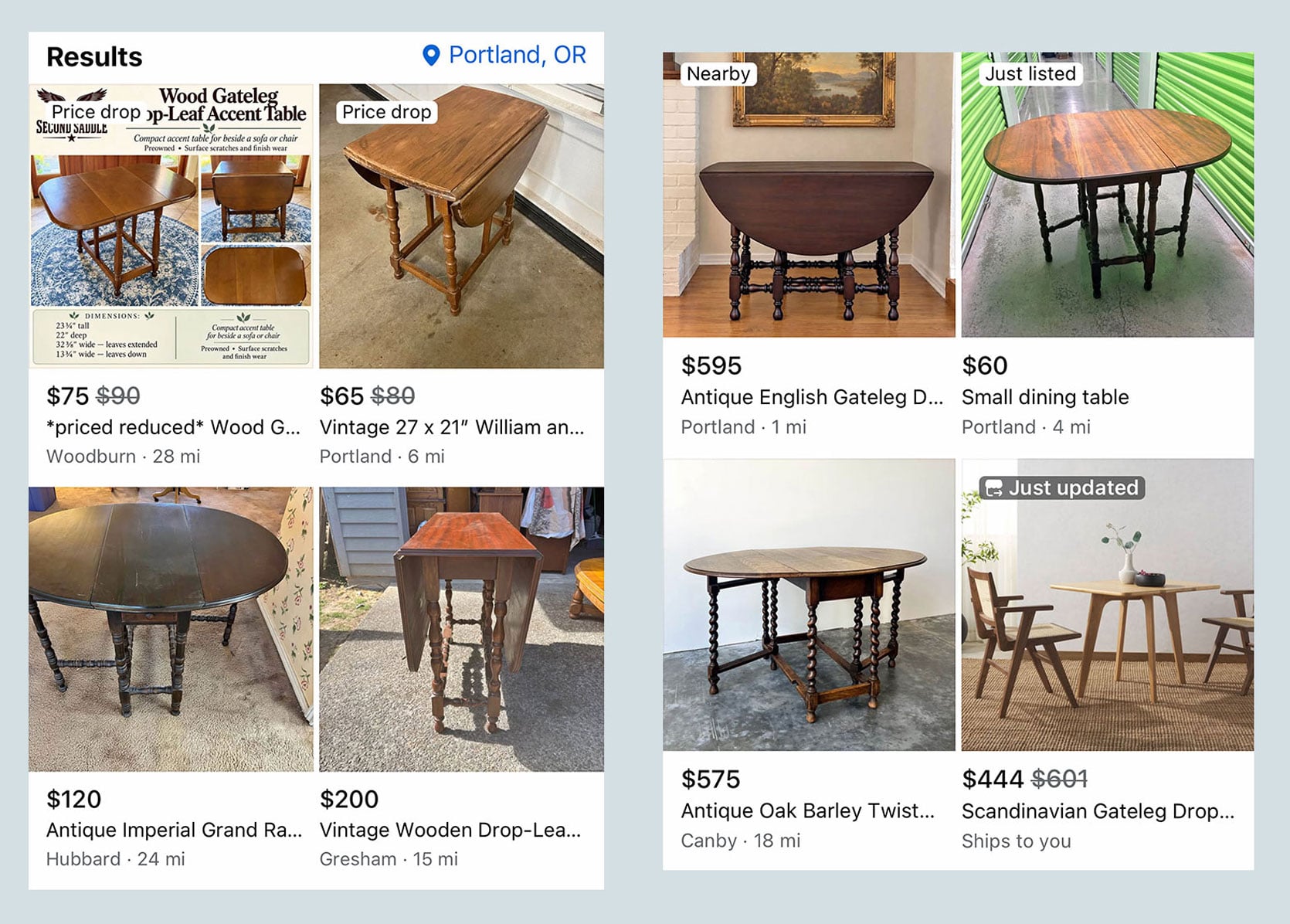
Next up, Portland. A few more antique versions with barley twist legs in a dark mahogany finish.
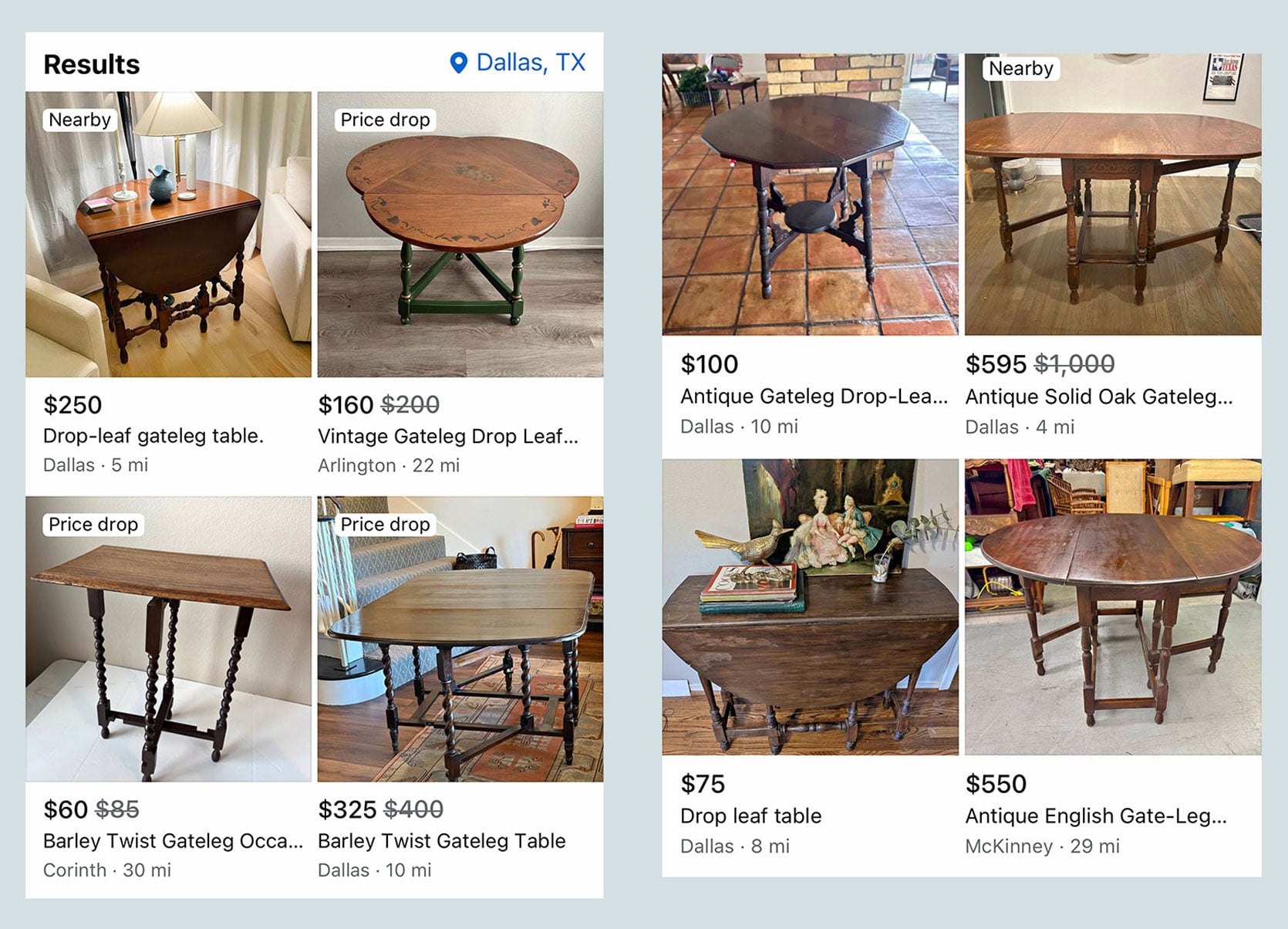
And here is Dallas, with smaller occasional table options from $60 to larger dining table sizes for a few hundred.
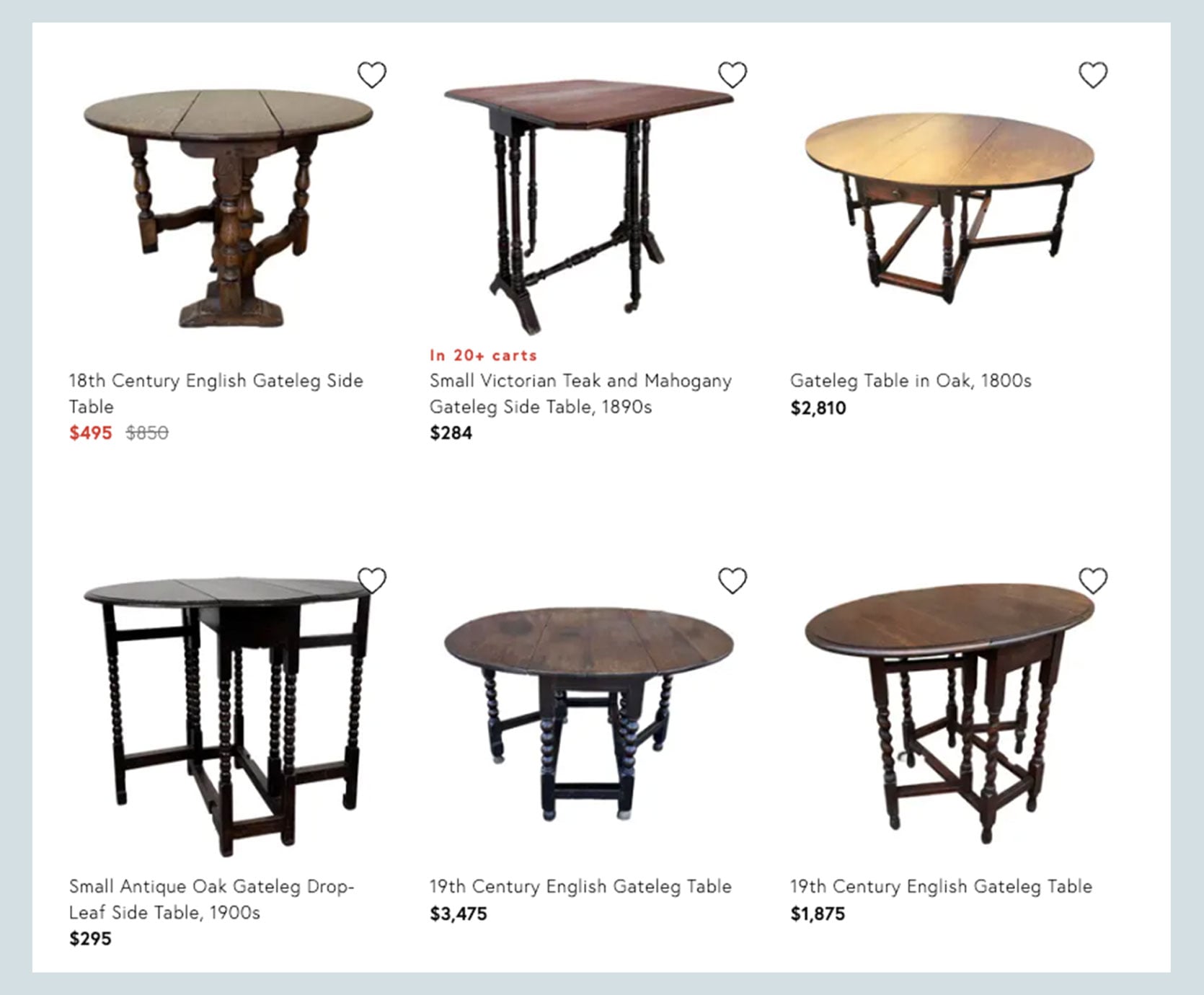
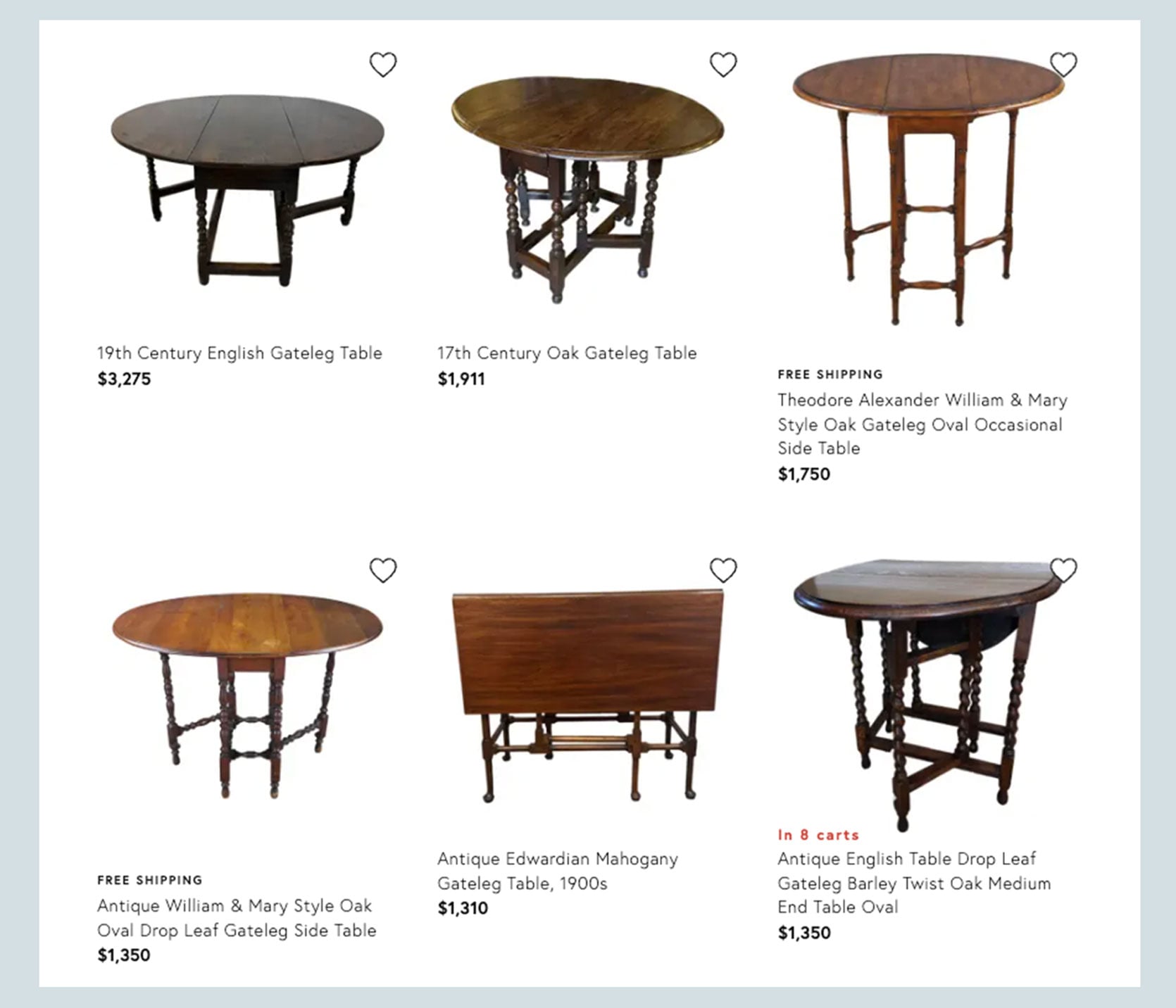
I also poked around Chairish to see what was shakin’ over there in the gateleg table realm. Given that Chairish houses more antique dealers, you can see there are options from the 18th and 19th centuries.
That Edwardian mahogany gateleg table below has my heart and is similar in shape to my original inspiration.
Some Ideas For Where to Use One
Entryway Tables
One of my favorite current uses for a round gateleg table is the grandest: As a center table in a foyer. Trust me, I know this one isn’t going to be the most practical for most of us. I have a split-level entry townhome with a foyer no larger than about 5 feet by 7 feet, but I can dream, can’t I? Let’s dream together:
Above is the home of designer Carlos Garcia. This gateleg table has a little drawer, a common feature in larger and better-made designs from as early as the 17th century.
Technically, the above is a snapshot of an entry hall in a hotel (the Inness Hotel in Accord, New York), but wow wow wow! What a cool surface for displaying some of your own curiosities, collections, or florals.
Here’s one that’s more realistic for most of us. If your foyer features a little alcove next to the staircase, it’s a fantastic spot to put a smaller version of a gateleg. If you click through the above, you can see how it’s used, including on slide four where it’s in the caddy corner of two upholstery pieces.
Head of Dwell Wright Interiors, Kaylyn Wright, stands proudly in a beautiful space she designed. I love the addition of the two fringed stools, which extends my mind to using something like this in a study, as a cute little conversation area of a living room with square footage you don’t know what to do with, or as a breakfast nook table.
If you’re lucky enough to live in a home with a parlor or library-like space in your home (I’m very jealous), get yourself a gateleg table to place in the center STAT.
Hallway or Alcove/Nook Tables
Got a narrow hallway or spot you would love to add a surface to? This is where the gateleg shines! Sure, you could buy a narrow console table, but using something like this instead gives you the flexibility to repurpose it for other uses as they come up at home.
The finish on this one is so lovely. It glows almost gold!
Small-Space Dining Rooms
Click through the images in the post above to see how practical a gateleg dining table can be. This is a more modern version (IKEA even sells something similar—my friends own one!), and I love it for an area in your home you want to leave open to multiple purposes. I could even have seen something like this working really well in my last home where I contemplated using my dining room as a playroom. With a table like this, I could have had both!
Here’s a mid-century modern one. I mentioned it earlier, but these Scandinavian ones fold up super slim. They go from console table to compact desk, to a 2-seater table and all the way up to a 4/6-seater table. Name another piece of furniture that can do this!
Console Tables
Technically, all gateleg tables of a certain height are console tables, but I wanted to show the above because some of them are much smaller occasional tables even when opened up. The barley twist legs here are so gorgeous.
Desks
I can’t understand the Japanese on the above post, but the images speak volumes. What a stunning teak piece! Something like this would be so useful to someone like myself who likes to bop around my house working on my laptop. I don’t have room for a desk in every room, but sometimes I wish I could be downstairs in my living room without the neck-breaking posture of working on the couch. A table like this would be amazing to open up, work on, then close up and move on.
In Conclusion…
We’ve reached the end of my plea to consider the amazing, transformative, versatile, and stylish gateleg table. There are SO many of these out there, all in need of good and beautiful homes. Including mine! Just last week, I found one for $50 in exactly the size I was hoping for, for next to my sofa. The condition is a little worn, and I’m pretty sure someone painted it along the way, but it functions exactly as I hoped it would, and it looks great as-is. Maybe one day, I’ll strip it back to see the true wood grain and restain it, but for now, I’m very happy with my purchase that’s 10x cheaper than what I was originally considering! I haven’t styled it or much of my living room, but here’s a quick iPhone photo because I wanted to share it with you ASAP!
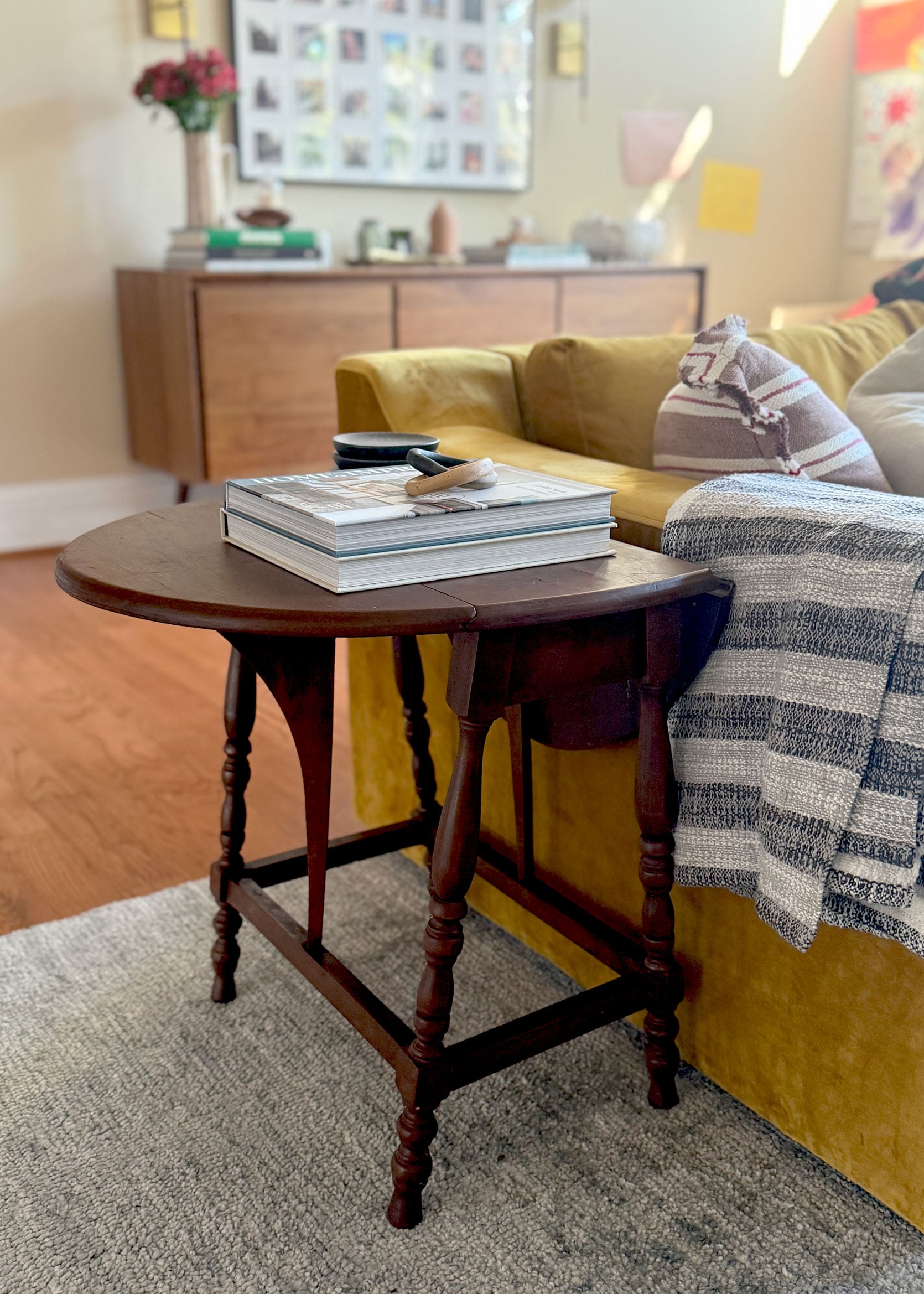
Technically, after writing this post, I learned that my table is a butterfly wing table, not a true gateleg, as the support that comes out is more of a wing that swings around to hold up the leaf rather than a leg. But it was listed as a gateleg, so I’m counting it!
Until next time, friends…
Opening Image Credits: Design by Emily Henderson Design | Photo by Tessa Neustadt | From: Emily’s Kitchen and Dining Room Reveal
Yay! Love that this feature is back.