Design
We’re Banking On These 6 Bathroom Trends Being What’s Next In 2026 (& Beyond)
Bathroom trends (much like kitchen trends) are a funny thing to evaluate on a year-to-year basis because they simply do not move that quickly. If they did, by the time you got through the design process, material selection, permitting, contingencies and snafus, and then final install, your spaces would already be obsolete. That would simply be a ridiculous and wasteful way to live in our homes.
That is not to say there isn’t anything to talk about, though, because there’s always a new idea, color trend (like these I wrote up recently for 2026), or material popping onto our radar that makes us scream YESSSSS, including the six concepts below I’ve been noticing more and more in beautiful, finished bathrooms. Like many renovation-required trends, they tend to begin in luxury spaces, so you’ll see a lot of aspirational homes here, but that doesn’t mean you can’t borrow inspiration for your own homes from them. That, or just sit back and enjoy the show for the sake of design entertainment.
Amber-Colored Tile
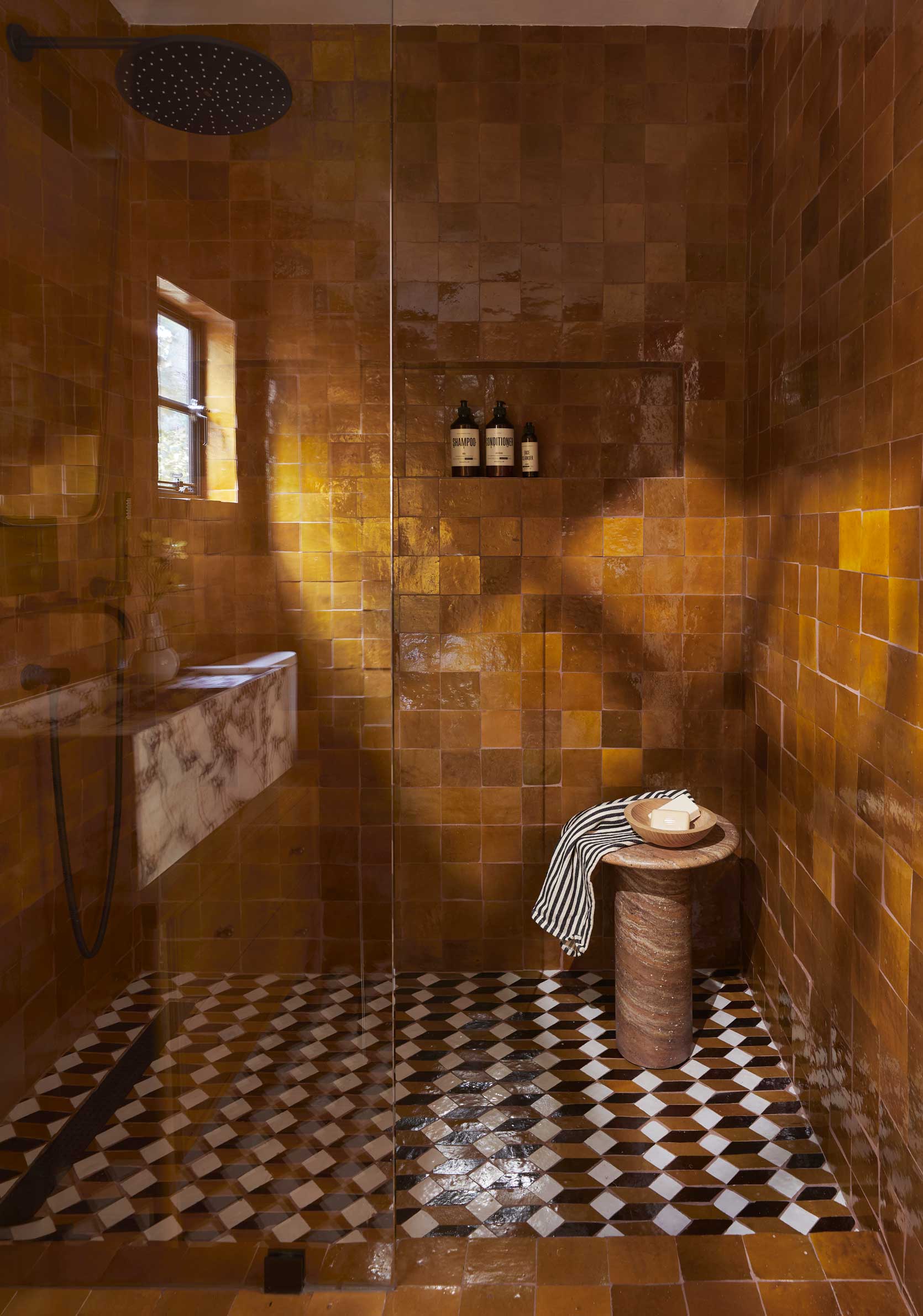
Last year was all about burgundy zellige tiles, but this year? Amber, caramel, and earthy mustard reign supreme. This color tile is absolutely everywhere right now and is so adaptable to many styles. Take a look above at the killer shower stall our friend Brady Tolbert designed in his home; in true Brady style, it’s cool, contemporary, yet warm and graphically neutral.
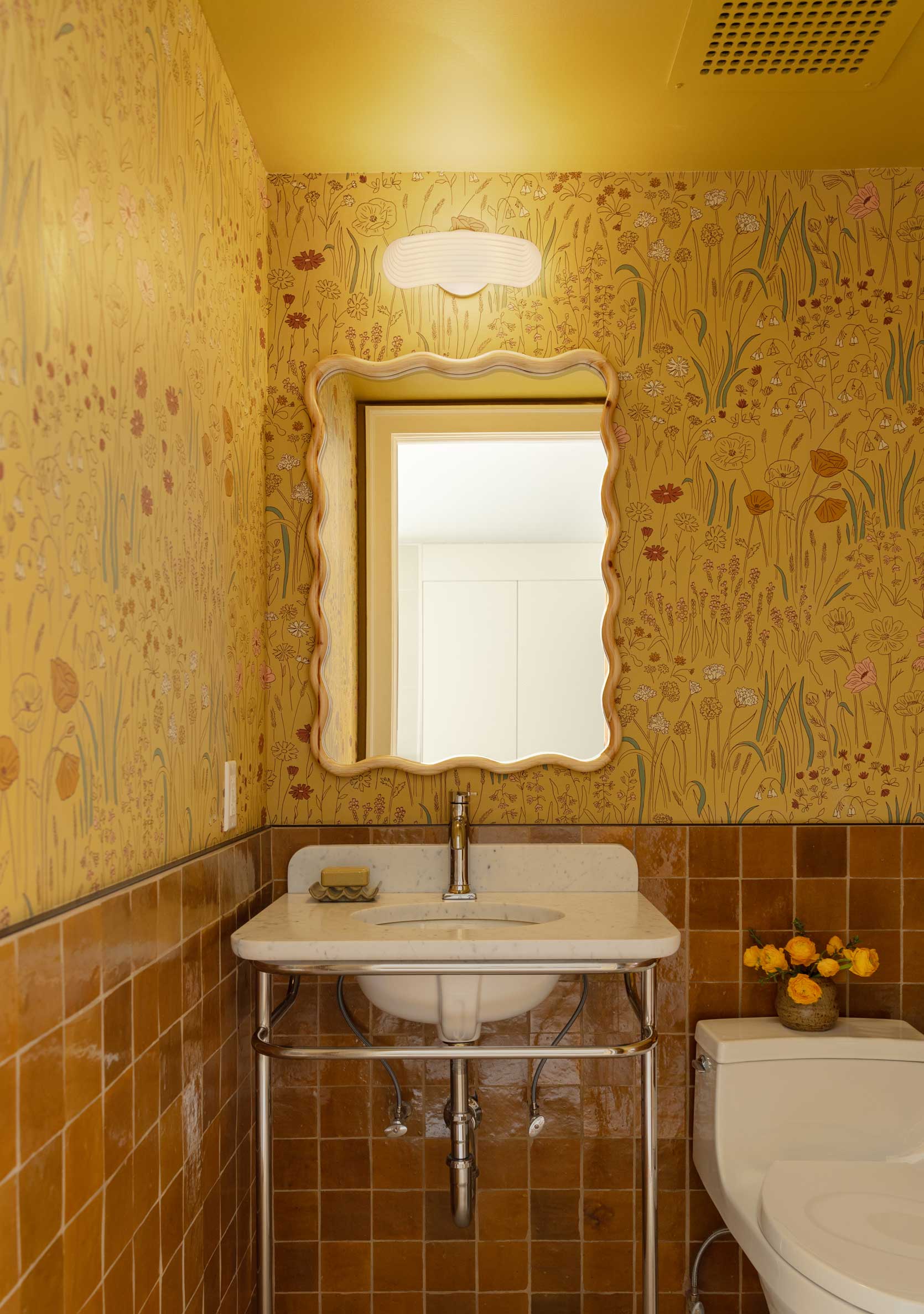
However, here, designed by the team at Dunham Robinson, you can see a more traditional aesthetic with the chrome and stone sink, floral wallpaper, and wavy wood mirror. The turmeric-like hue works well to draw attention away from the white fixtures, which could otherwise appear somewhat sterile.
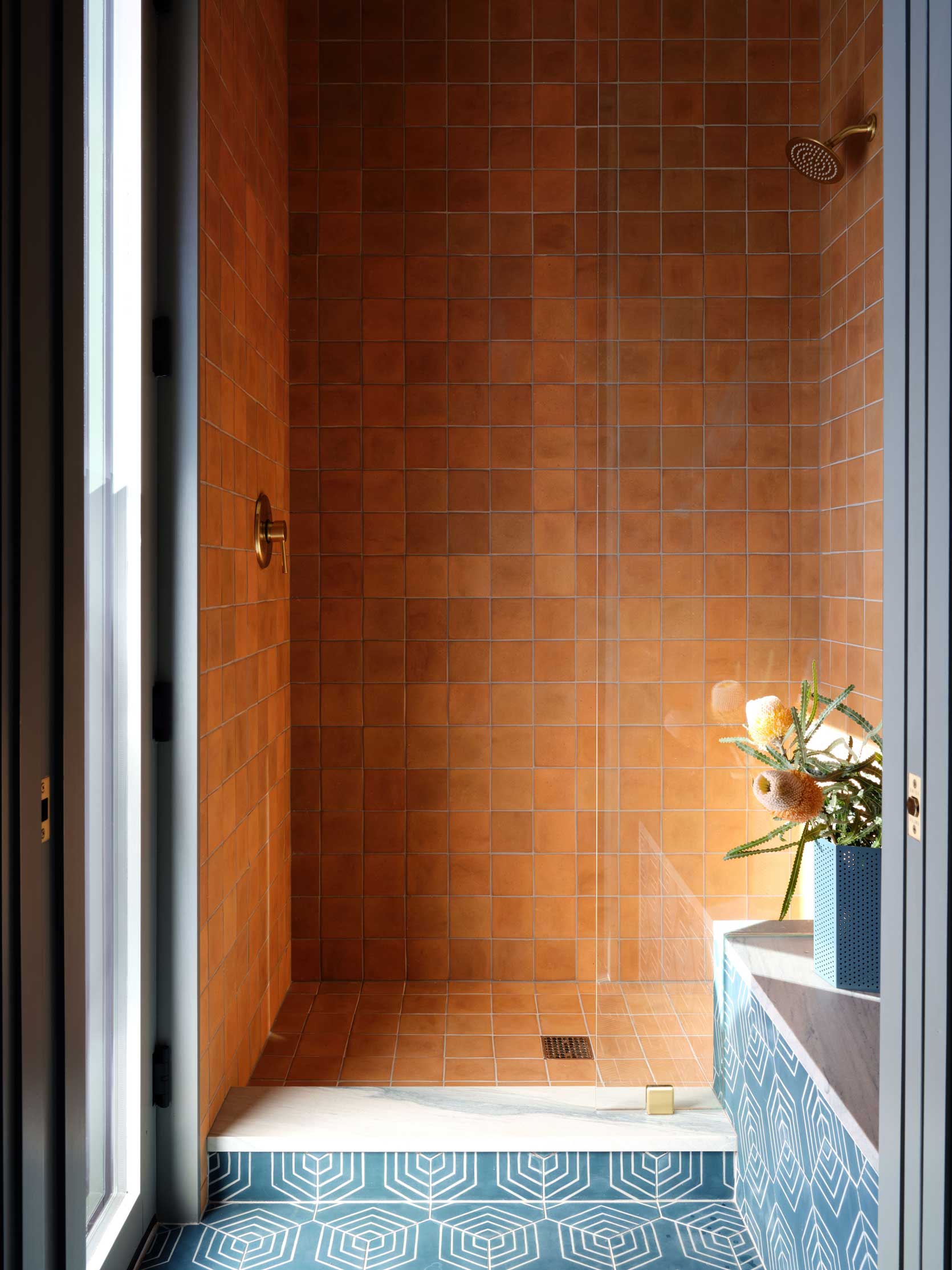
These tiles, in a bathroom by Annie Downing Interiors, are certainly more terracotta than they are amber, but the vibes still hit the same. To me, the takeaway here is how well they play with other jewel tones and saturated shades, such as the deep, chalky blue in the other tile design.
Tiles aren’t getting all the burnt caramel love; designers like Reath Design (who collaborated with Emily Farnham Architecture on this space, shot by Laure Joliet), are using the color in bathrooms via paint, as well. How marvelous does it look here with the oxblood marble on the vanity and shower stall?
So far, we’ve seen amber tiles marry beautifully with mustard, black-and-white, denim blue, and deep red. Next up, courtesy of Pierce & Ward (shot by Michael Clifford Photography), is olive green and aqua. What a stunning way to bring new life to vintage pieces such as that sink.
Colored Fixtures
Two years ago, Caitlin wrote a piece about colored plumbing fixtures in the bathroom as something to keep our eye on (thanks Kohler for bringing these back around more accessibly!), and she was 100-percent right. And look, I know this is fairly niche, but who decided that white porcelain had to be the standard of “safe” choices in a bathroom’s design? “But you might get tired of that pistachio green toilet, Arlyn!” Well, who is to say I wouldn’t get tired of white? We can use the same logic here. If you’re designing a bathroom for home resale, it’s not worth the effort of getting it right, design-wise, but if it’s for you, and you are a fellow color lover, I say GO FOR IT.
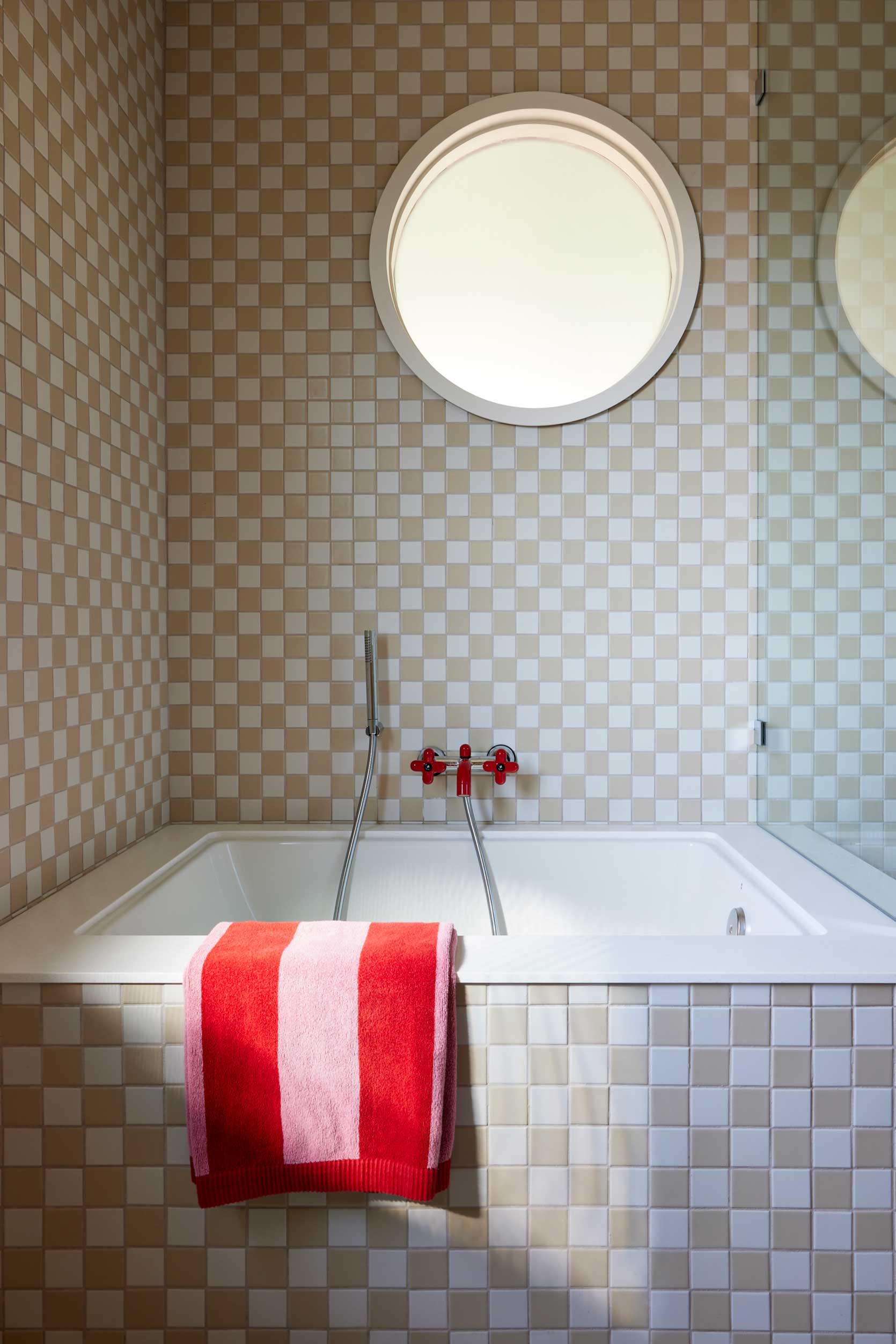
It doesn’t have to be something as large or prominent as a toilet, either. Faucets and faucet handles can do the trick, too. Hannah Go of Studio Hanego selected candy-coated red Fantini fixtures for her client’s bathroom. The slap of color is just the right amount of unexpected pigment to break through the beige-and-white color palette, making it feel playful and youthful instead of overly serene.
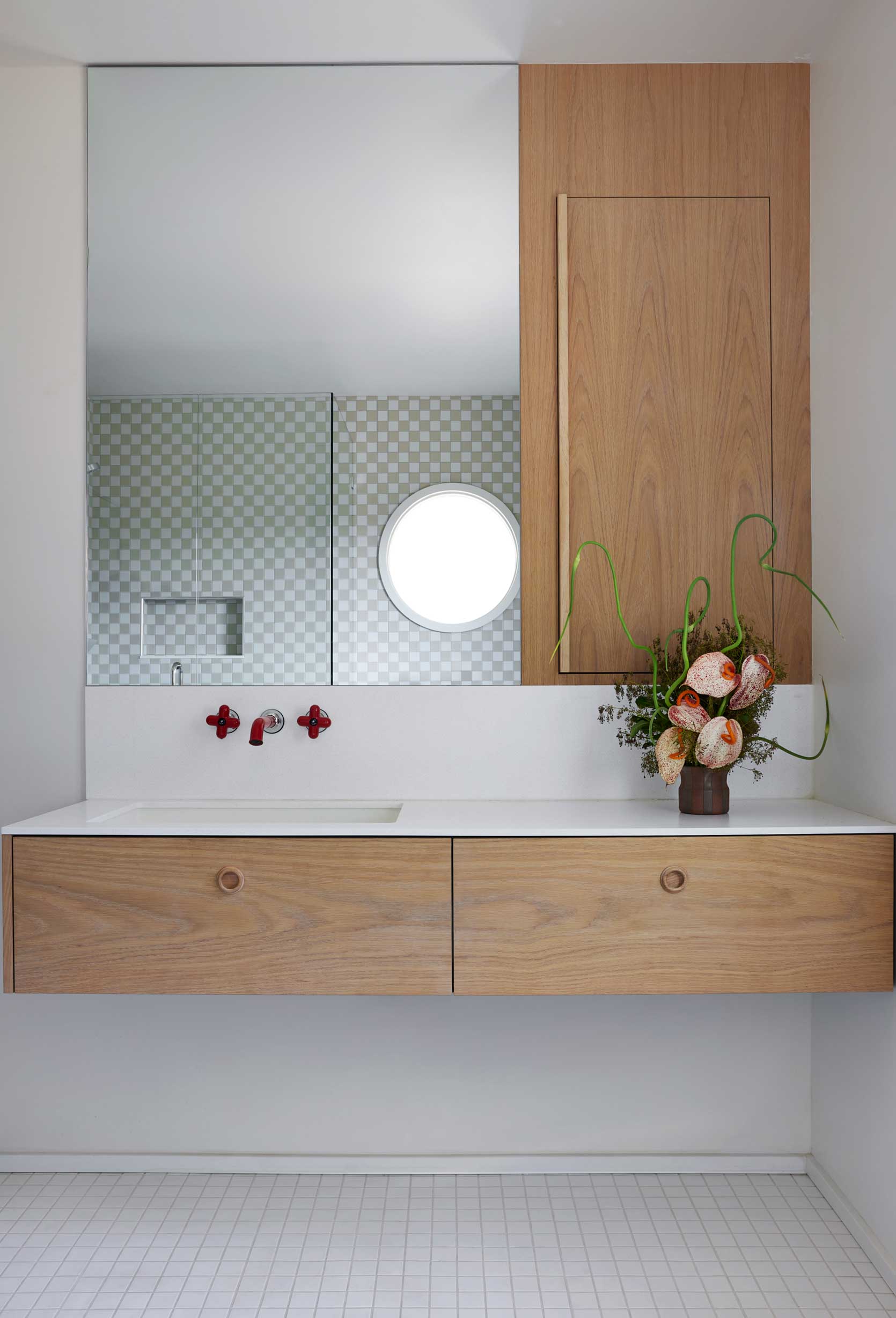
Here’s another angle of the same space, where Go carried the Fantini faucet into the sink area for a cohesive design story. (That sculptural floral arrangement is by Gentle Offerings out of LA, in case anyone is wondering.)
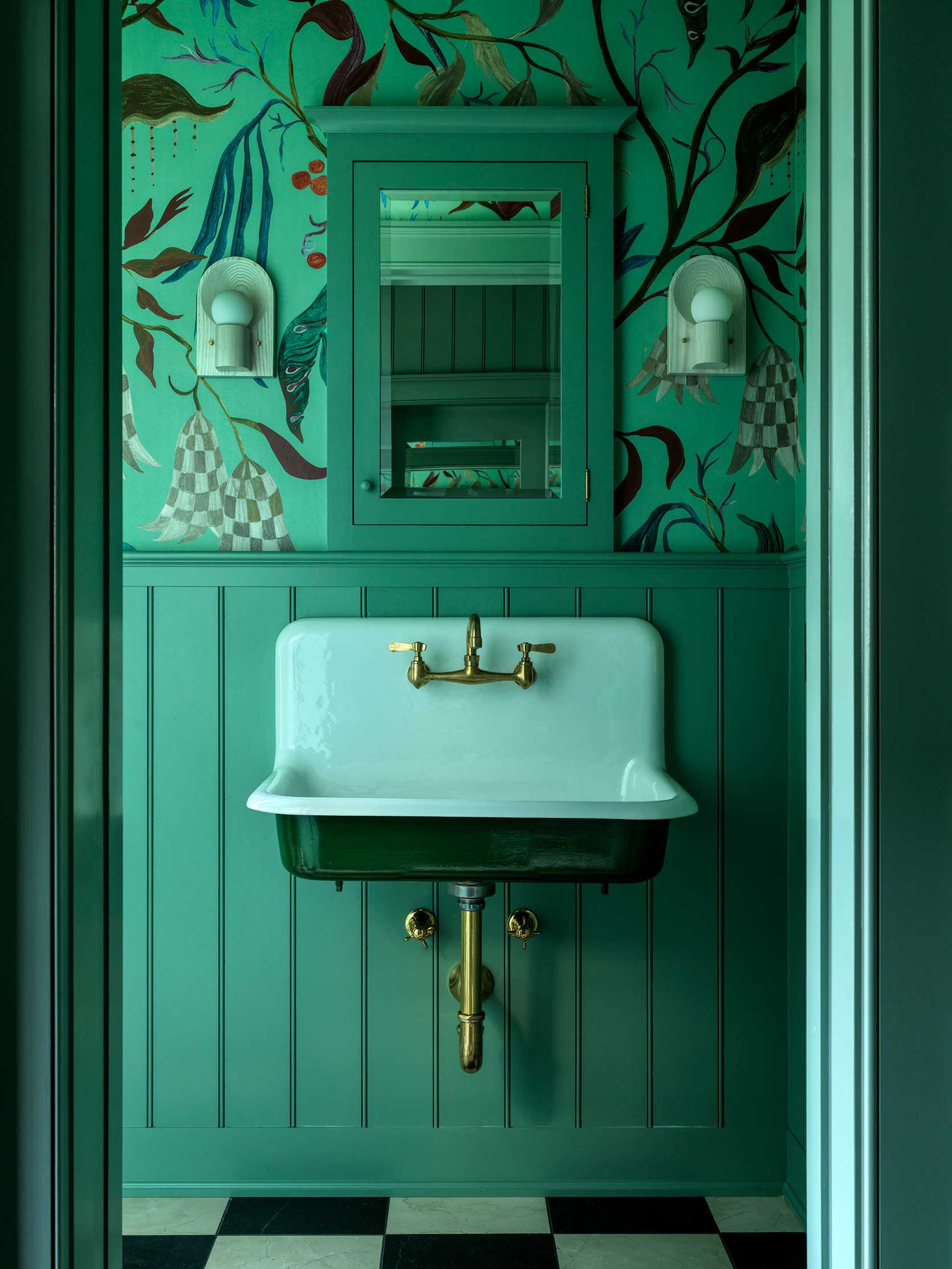
Another tip-toe entrance into the world of lively fixtures is with a partially-colored item, like this cast-iron farmhouse basin in a room by Hendricks Churchill. And the beauty of a sink like this (or anything cast iron, for that matter) is that it can be reglazed should you need to change the color down the line.
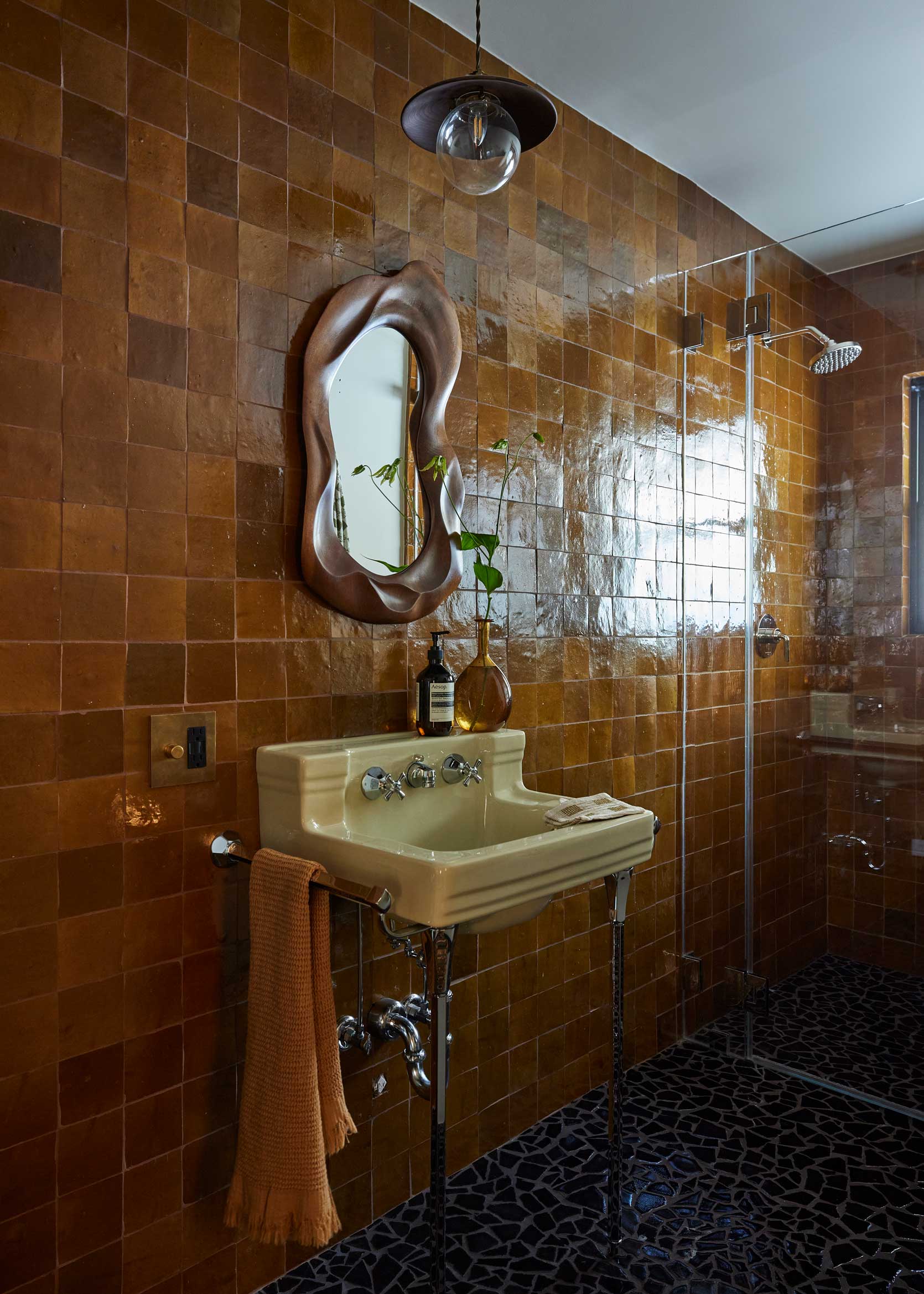
This bathroom by Jamie Haller—shot by Jenna Ohnemus Peffley—highlights two of our favorite bathroom trends so far: amber zellige tiles and a butter yellow vintage sink. The room looks both like a perfectly preserved time capsule from the 1970s but also something that very much could have been designed and installed today (because it was). Good design can be appreciated no matter the decade, in my opinion.
Giving very different vibes, but the same design backbone is this happy little spot by, yet again, Reath Design. Not only is the sink itself an azure I can barely look away from, but the cross handles on the sink are a sky blue.
Built-In Tub Surrounds
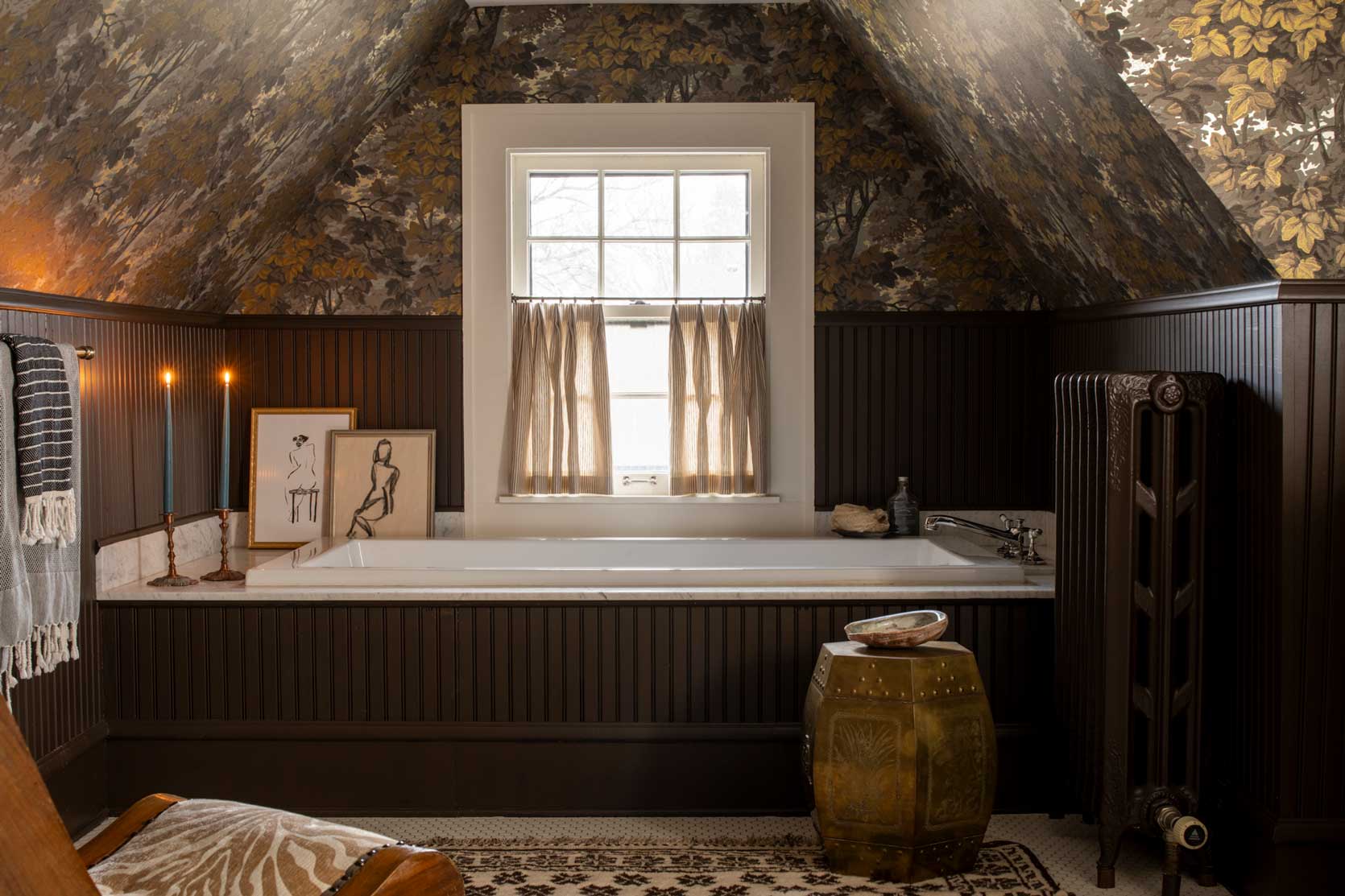
The freestanding tub became the calling card of a luxury bathroom a decade or so ago, but as things happen, that quickly got tired, thanks in great part to property flippers and developers who would shove one into a space even when it didn’t make much sense.
And while a stand-alone tub can still be a wonderful hallmark of a bathing space, of course, don’t underestimate a built-in tub surround. No longer relegated to the second-tier guest bath, they are now being used more and more in primary suites. They have their merits, too: The overhang surface is great storage for bathing supplies, and even decor items like art and candles, as seen above by Heather Peterson Design.
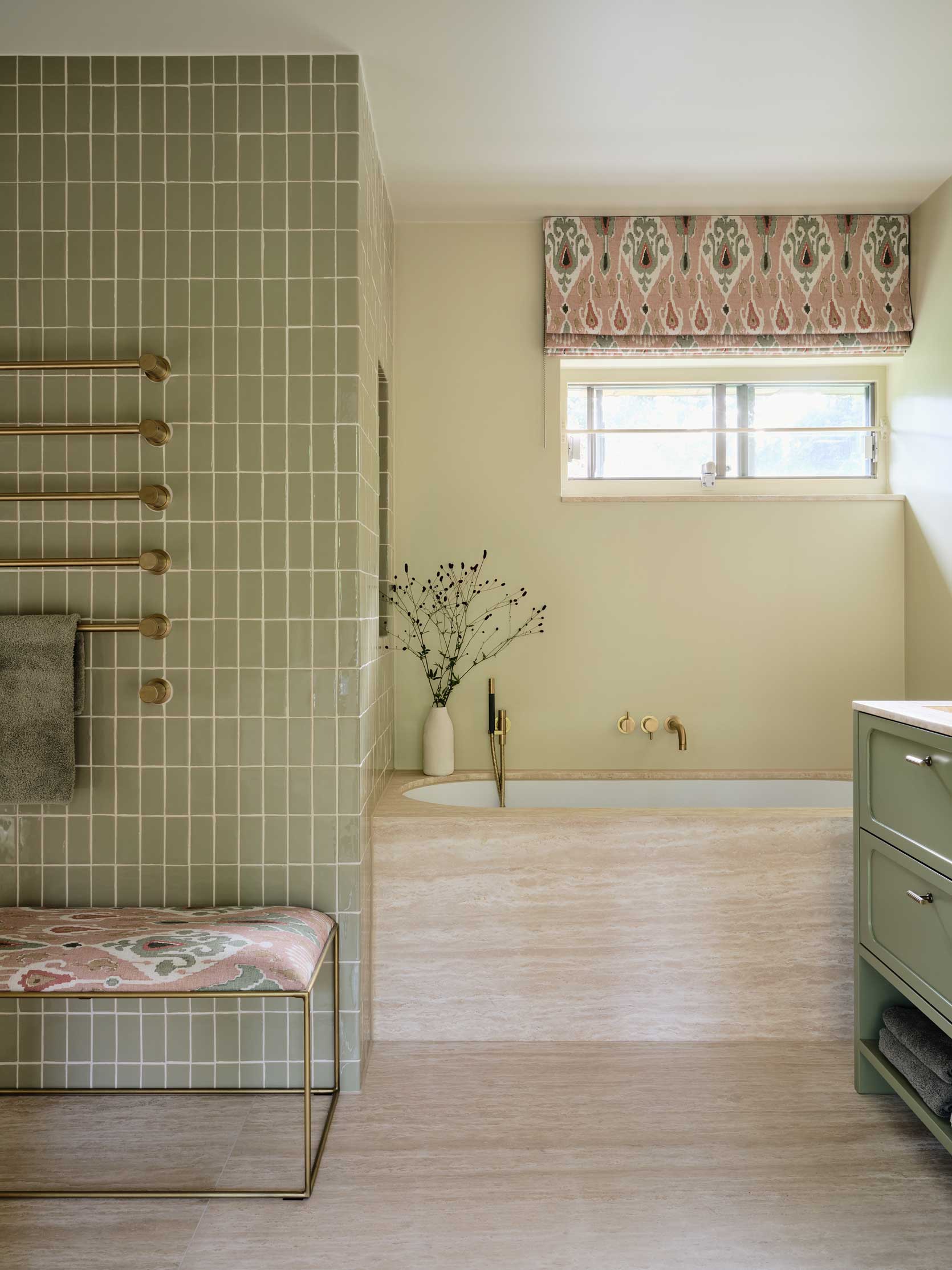
For a bathtub surround worthy of a primary suite, it’s important to be mindful that the surround itself elevates the design, rather than drags it down. Here, designer Nicole Dohmen for Atelier ND Interior brought the large-format stone from the floor up around the tub to create a seamless visual transition.
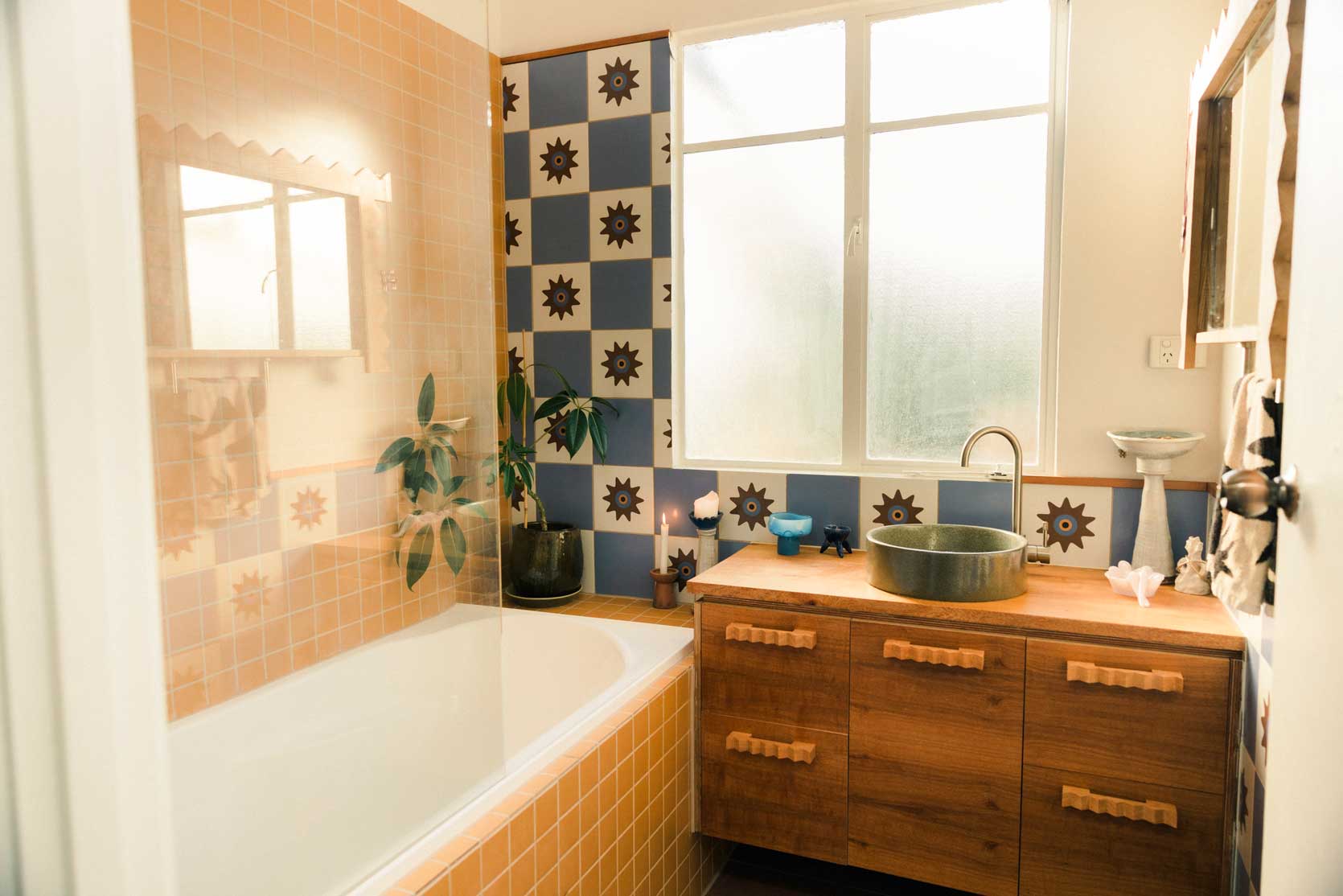
Here, in a bathroom transformed by Trouthouse, the small square yellow tile of the shower walls comes down around the tub insert, as well. This could have easily been a standard white porcelain tub, but the tile surround creates a more intentional design moment.
Would I be nervous to have a wooden top and sides to my bathtub? Yes, but certainly, there’s a way to make it work. Either way, it sure does look serene and spa-like thanks to the minds at Honeyedfigs that dreamt up this muted space.
On the opposite end of muted is this glitz and glam bathroom by Gregory Rockwell. I love how the red marble continues from the bathroom sink basin, tub wall, and floor, and baseboard detailing.
Fluted Glass
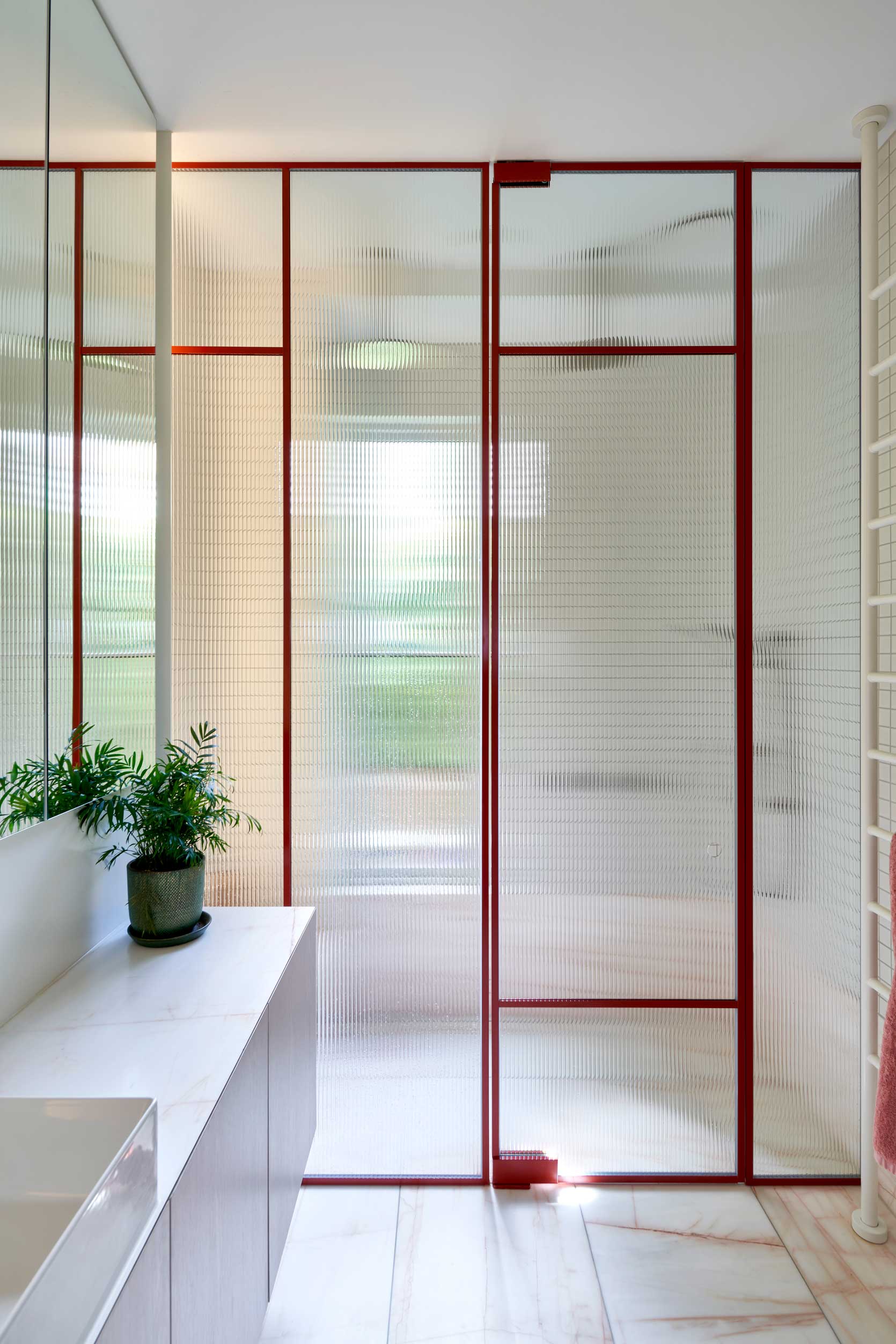
Shower details always make our bathroom trends roundup, and this year, we’re covering glass specifics. Fluted details in general have been everywhere for five-plus years, and now they’re frequently being used in contemporary bathroom spaces. Advantages include moderate privacy while allowing light diffusion, added texture, and limiting the visibility of water spots. Bonus points for a cool red frame to make the wall of glass the protagonist of the room’s design, as Megowan Architectural did here.
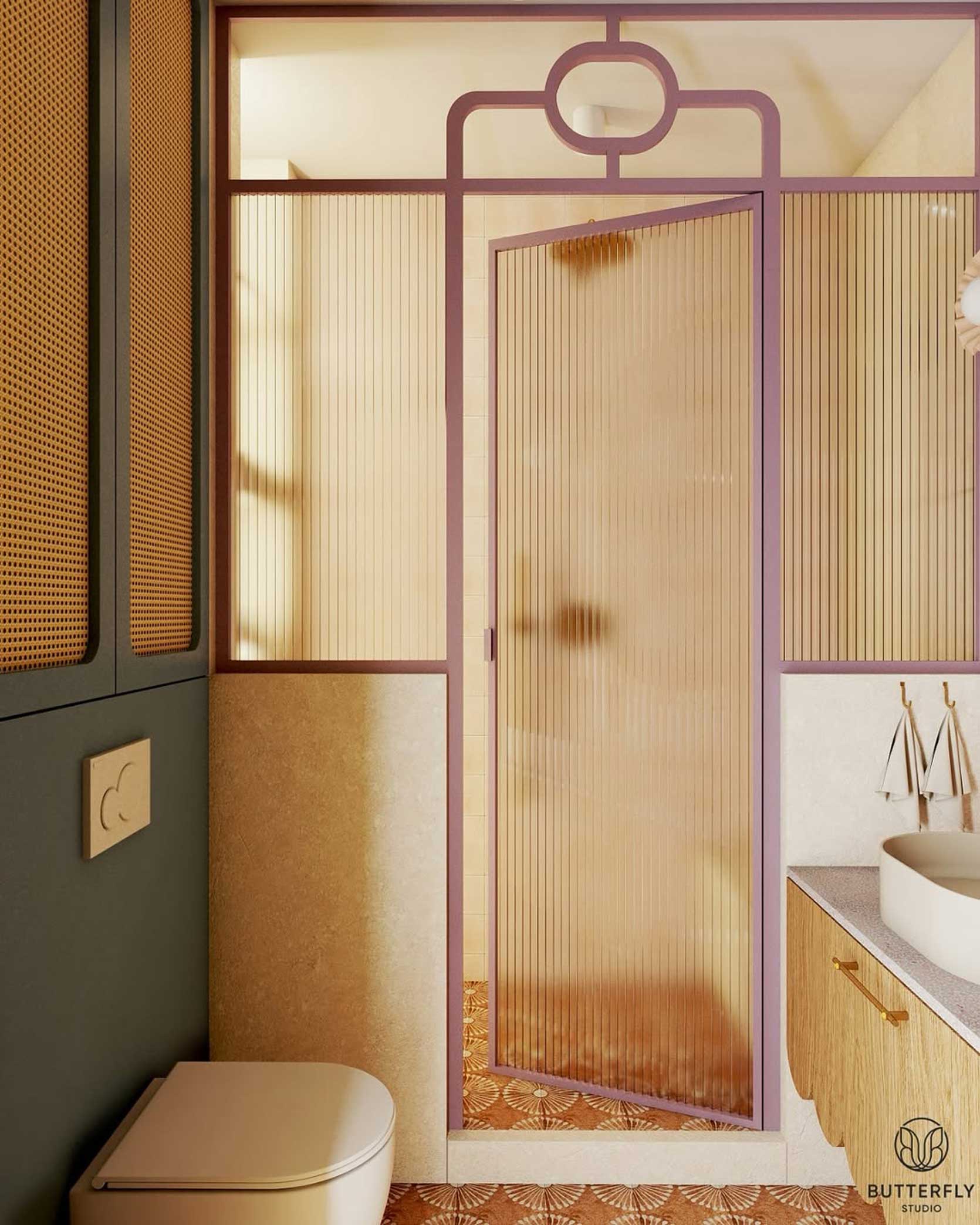
I’m partial to how youthful ribbed glass can come off looking with a colored door frame like in the previous project. Here, the mauve-lilac Butterfly Studio used here is quite eye-catching, don’t you think?
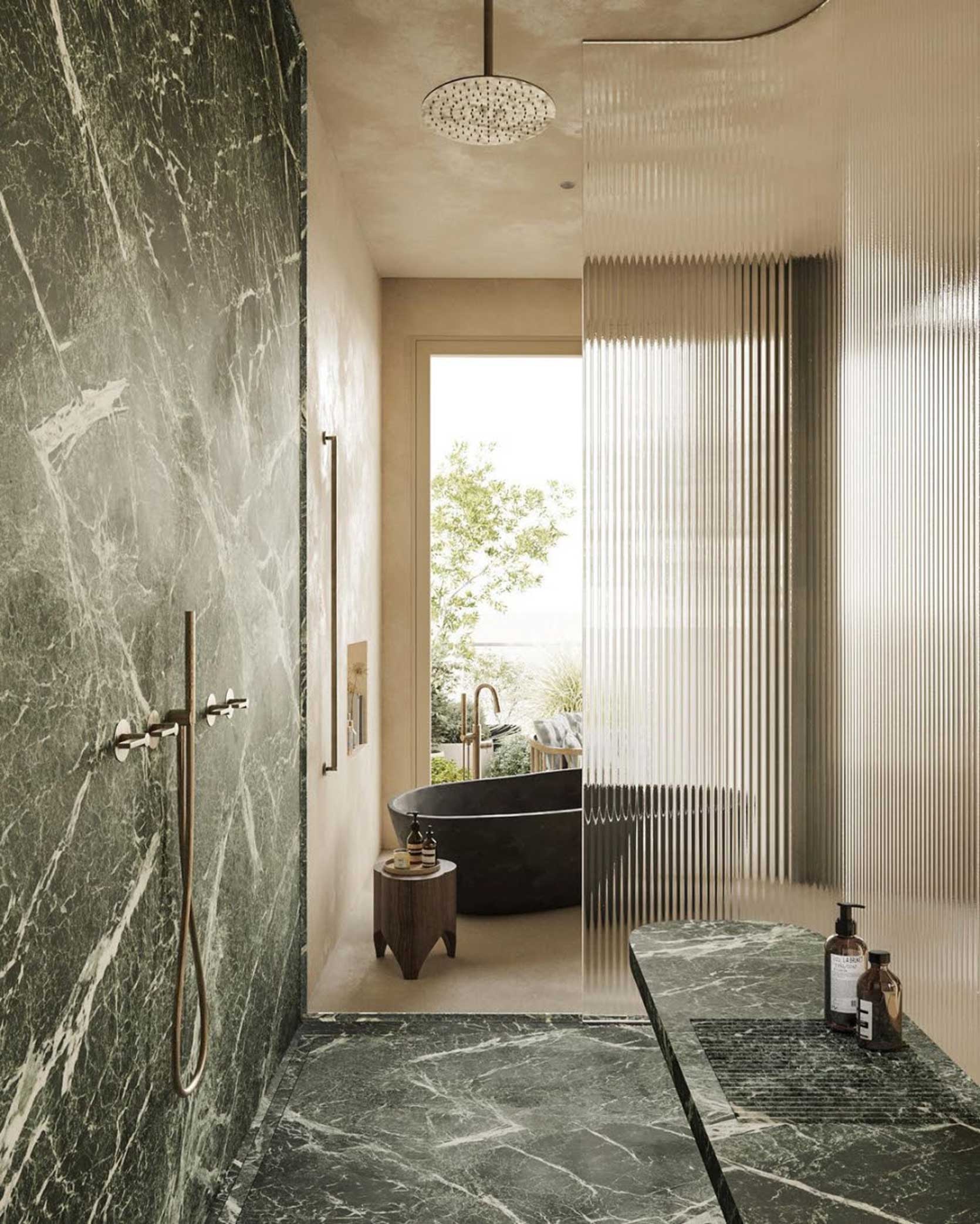
The international design and property acquisition firm Banda Studio kept things sleek and luxurious in this outrageously covetable bathroom with a frameless fluted shower wall. The vertical lines of the glass texture add a nice rigidity to the more organic veining of the marble and Roman clay or limewash walls and floors.
Stop. Scroll to the fourth photo. Okay, now we can talk. I really wanted to show this bathroom, in the home of celeb Rita Ora, designed by Joanna Plant, for anyone thinking fluted glass is simply for contemporary bathrooms. It’s not, and certainly has a place in more traditionally minded areas, too.
Stone Basin Sinks
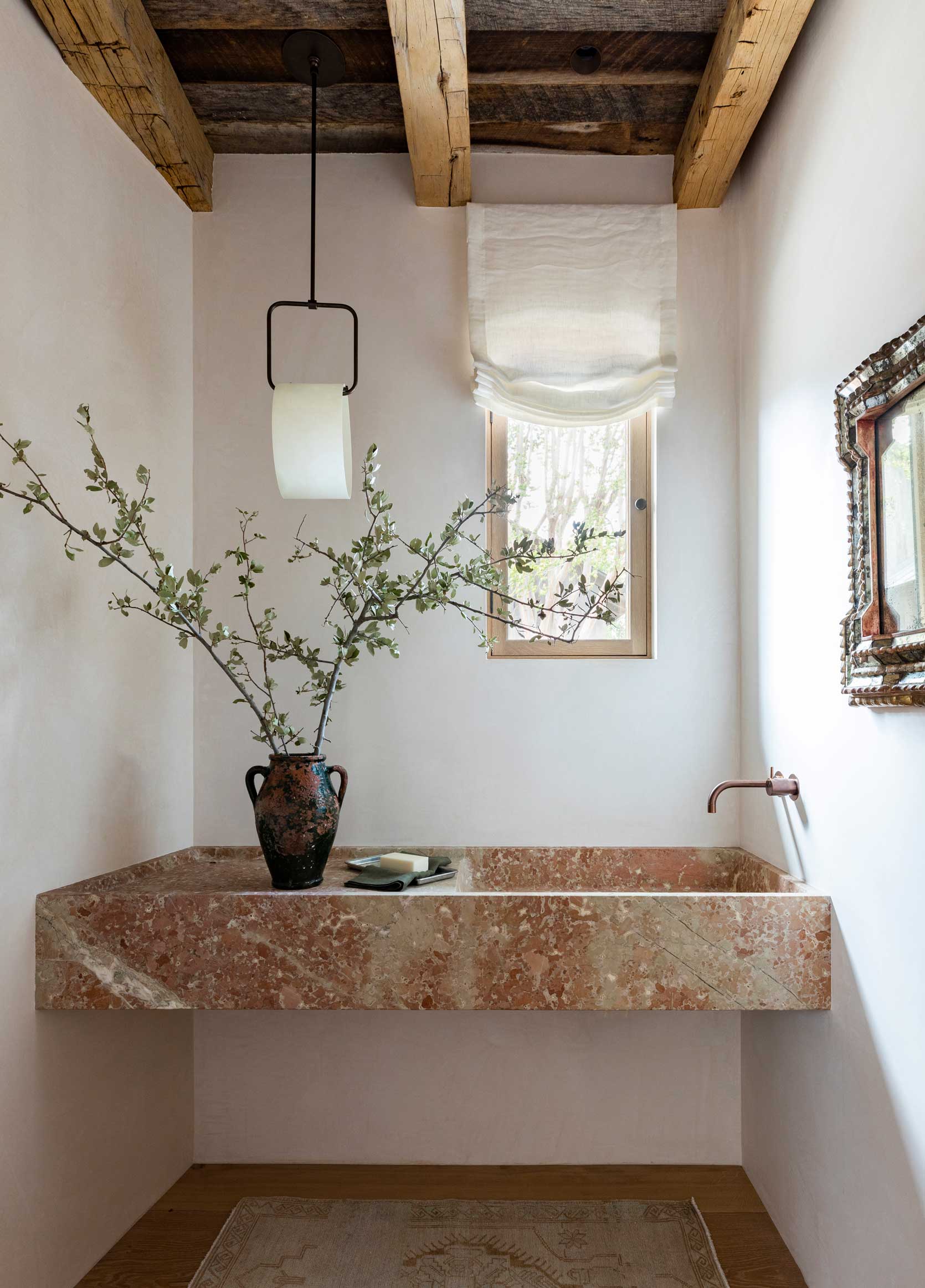
Last year, I presented the idea of raw-edge stone sinks as a trend, and this year, it’s similar but more refined and polished. Full stone sink basins are very popular right now as they strike a balance between simple, clean lines, luxury, and an impactful visual story through dramatic natural stone.
There’s a lot to take note of in this bathroom by Marie Flanigan, including the gorgeous pinkish stone for the sink basin and vanity. The side wall-mounted faucet is a unique approach that, to my eye, keeps the focus on the stone; the pendant light on the left beautifully echoes and balances the small window at right.

Cannes-based firm Caprini & Pellerin designed this elegant luxury bathroom, complete with a deep teal stone basin and countertop. I very much appreciate the slight lip detail (also seen in the Marie Flanigan sink) to limit water spill and run off. The coordinated marble frame around the mirror and lights is a nice touch to mimic the lines of the cabinet and tub in the foreground.
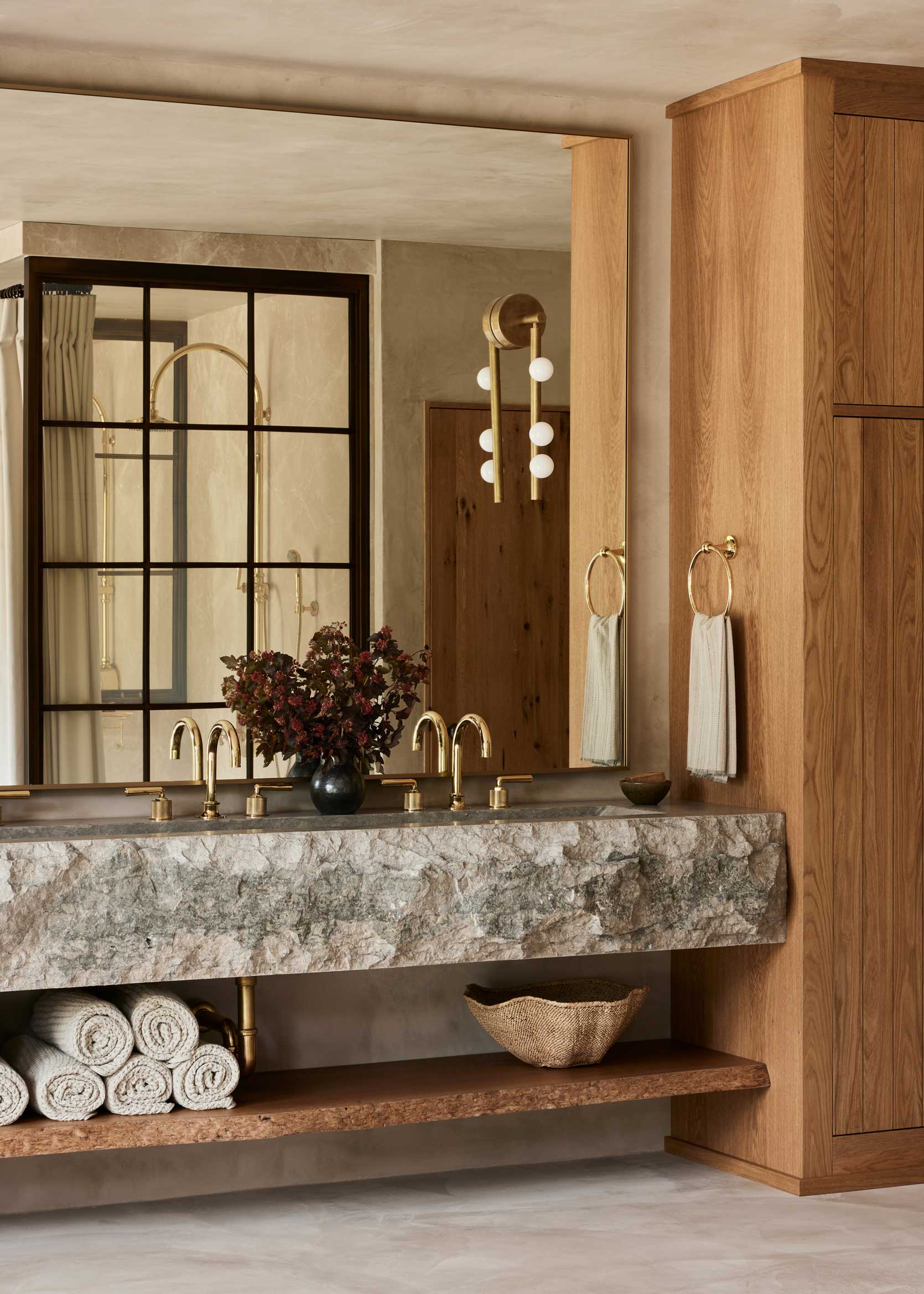
Raw-edge stone is still absolutely appropriate; Ursino Interiors masterfully uses the boulder effect to bring a rustic quality to a luxury space, juxtaposing polished brass and a metal window-frame shower stall.
Another beautiful example of the visual power of the stone basin vanity, this time in a refreshing spearmint, by Benjamin Vandiver.
Wall-to-wall installs don’t get to have all the fun. What a compact yet powerful statement this stone sink makes in a bathroom by Zoe Feldman.
Bathroom “Islands”
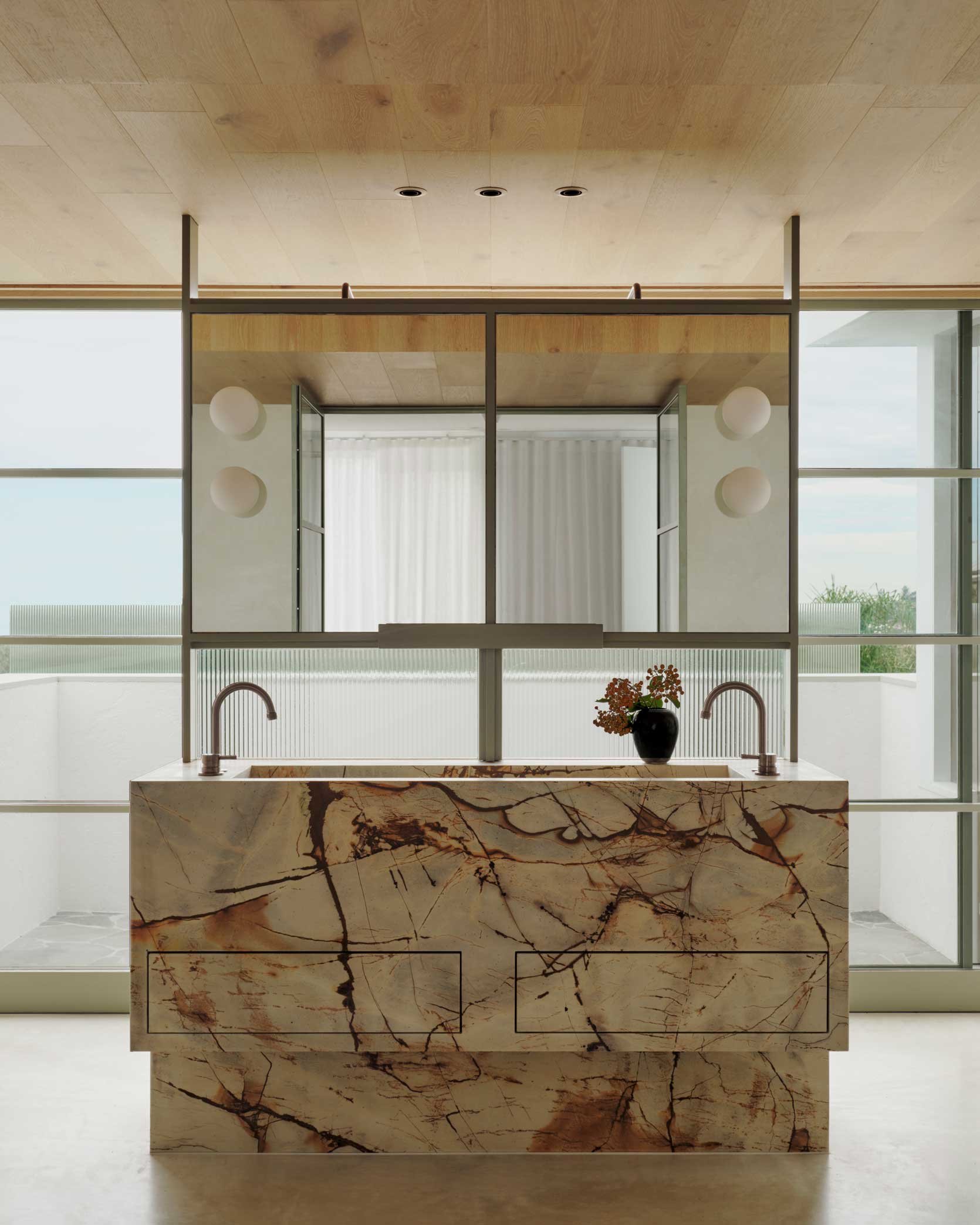
Bringing up the rear of our trends list today is what I’m affectionately coining the bathroom “island.” Perhaps there is a more technical and accurate name for this, but I haven’t found it. Basically, what I mean by bathroom island is a freestanding unit that houses a key bathroom fixture, such as sinks or a shower.
Case in point, this floating vanity (note the fluted glass! and the stone basins!) in a space by Australian firm Se Déa. In these types of installations, the mirror is most often supported by a metal structure attached to both the island and the ceiling, which can free up valuable wall space and take advantage of positioning that otherwise wouldn’t be possible. Of course, you’d need to run plumbing through the middle of the room rather than along the perimeter.
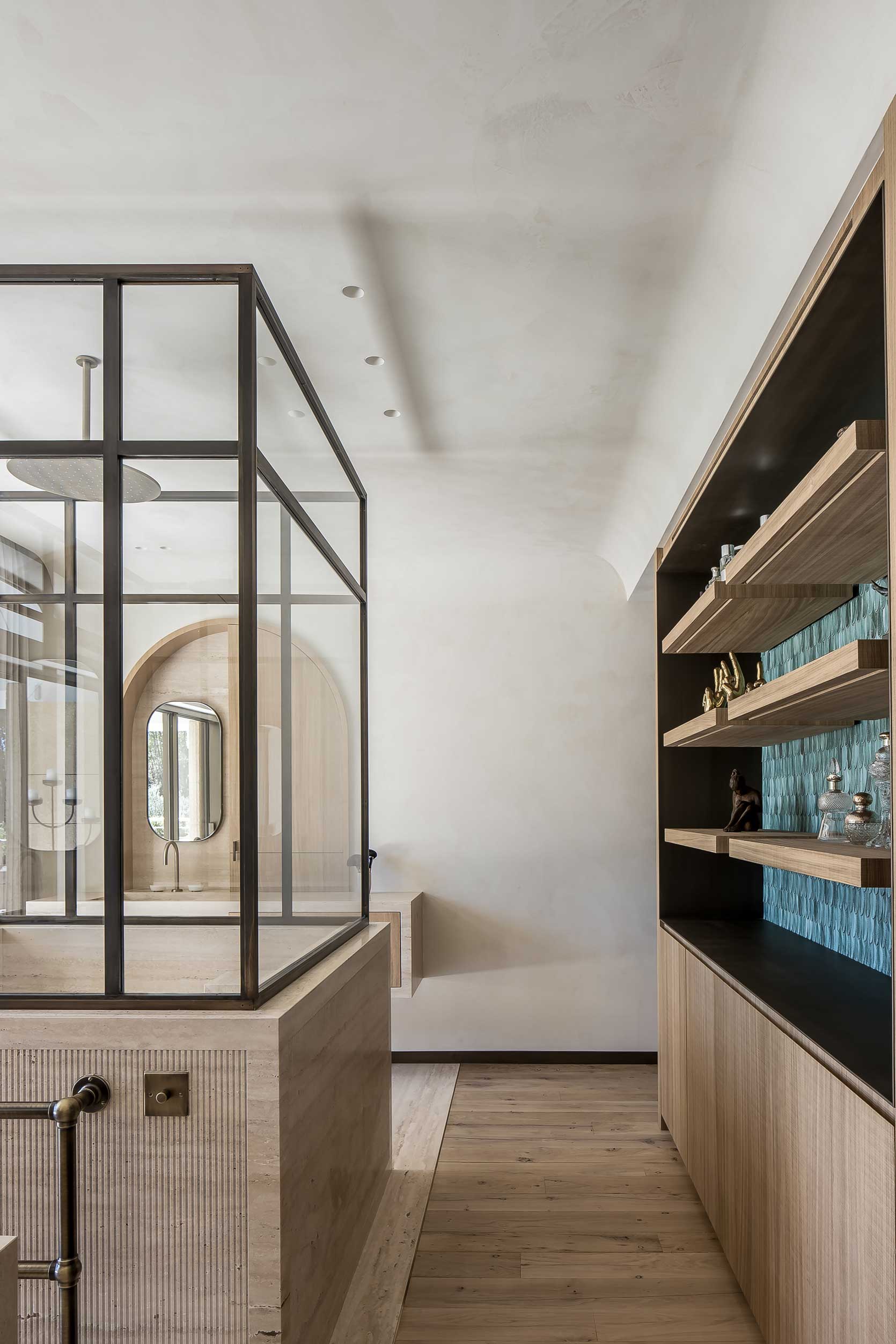
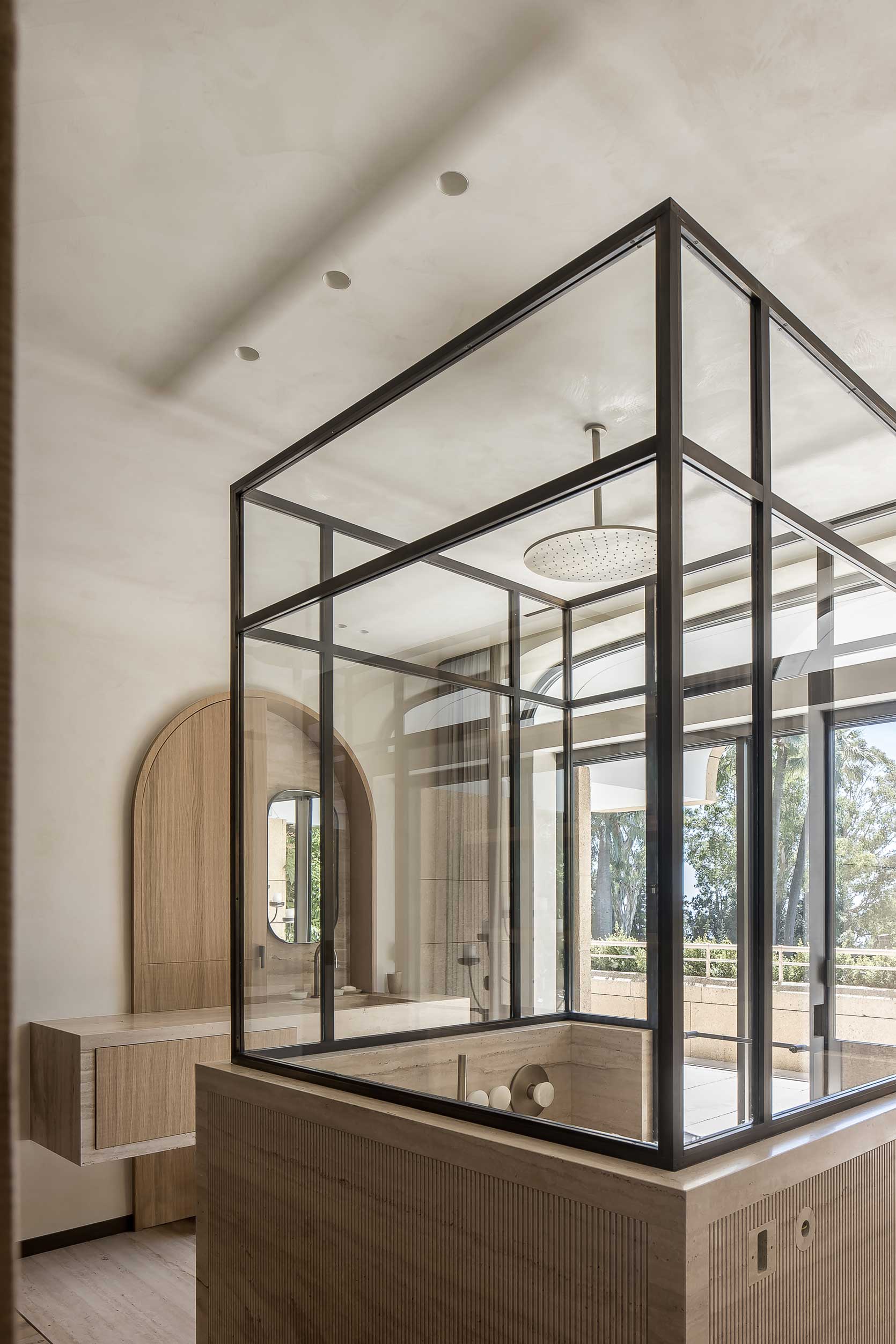
Another one by Caprini & Pellerin that this time showcases an unusual shower island. It’s quite a cool concept, and the center placement in the room opens up the walls to added storage, display space, and a separate vanity space.
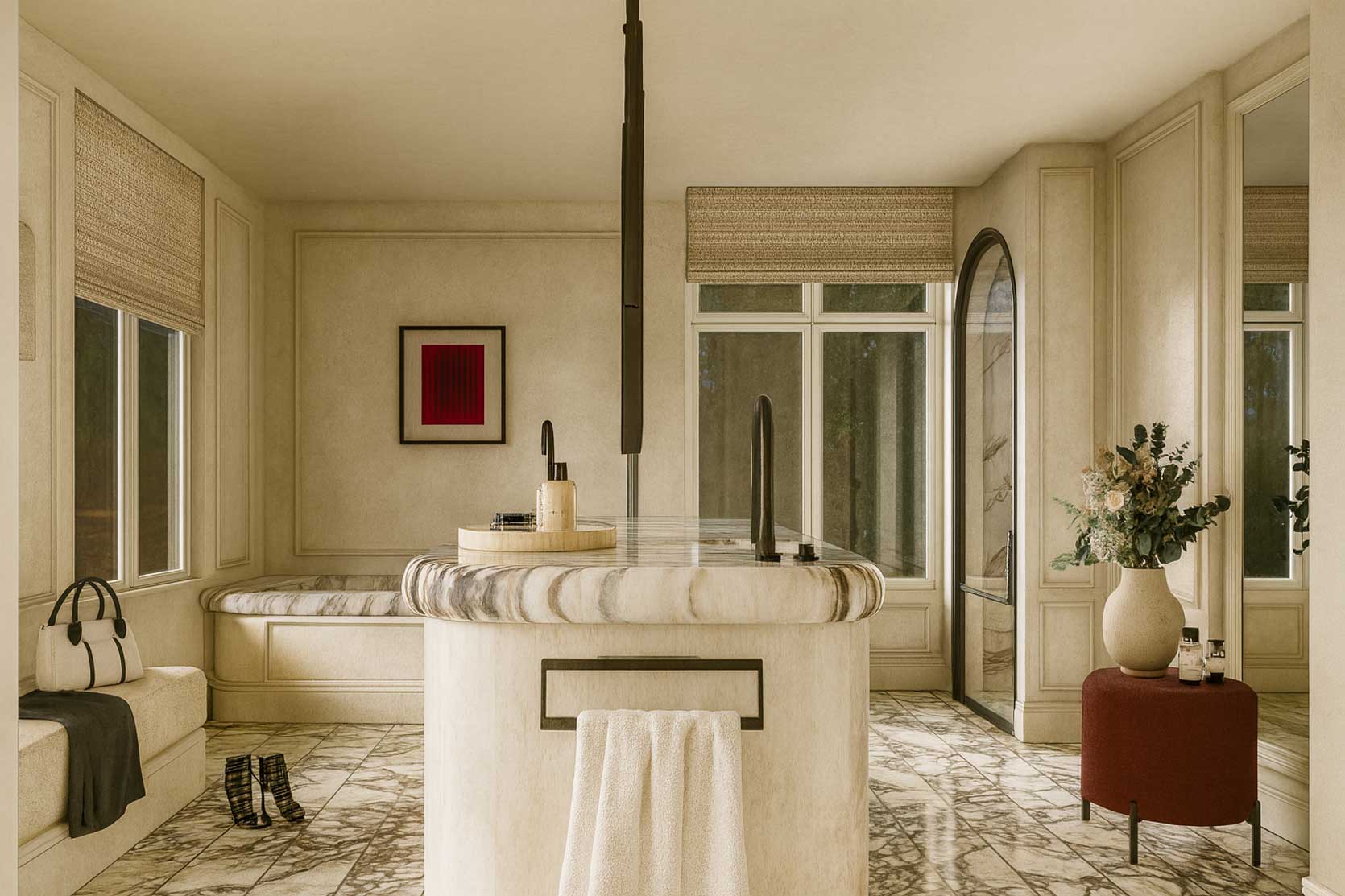
I found this opulent bathroom design via Belgian interior architect Wouter Tousseyn. I’m fairly certain it’s a rendering, but I wanted to include it as another visual study of the sink island, as this angle helps you to see the practicality of a double-sided floating vanity, which can be used from either side by multiple people.
Pierce & Ward show that the use of a floating bathroom fixture doesn’t have to be one-note, either. Here, they’ve adjoined the sinks and cabinetry to a large soaking tub.
And finally, proof that it doesn’t have to be this grand thing, either. By LA. M Studio, back-to-back sinks in a narrow cube-like island turn open floor space into a memorable design moment.
—
So now we’ve reached the end, and I have fully exhausted my ability to say another word about a bathroom. After all, how many synonyms can one find for the words sink, bathroom, tub, tile, and the like? I may have gone against my journalist instincts to say the same thing over and over again, but I hope you’ll forgive me and were too focused on the expertly designed bathing spaces to notice.
Any that stood out to you? Any others you’ve taken note of recently that you want to add to the list? Feel free to party on in the comments. I’ll be there responding.
Until next time, friends…
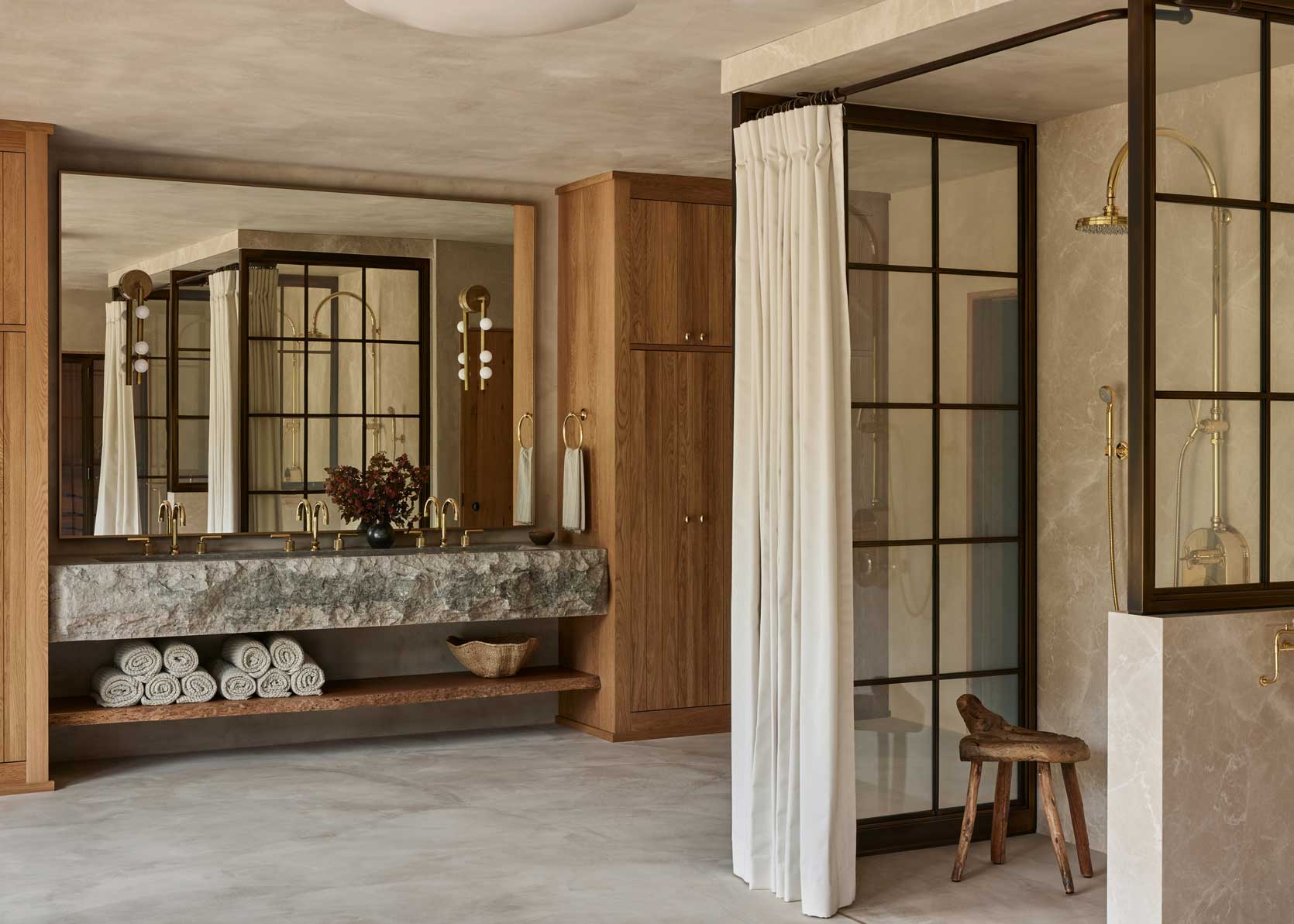
Opening Image Credits: Design by Ursino Interiors, styling by Brittany Albert, photo by Nicole Franzen

Good lord, who cleans these bathrooms?
I was just thinking “luxury = hard to clean”. Haha!
The help.
Such eye candy! I’m particularly drawn to the colored and stone sinks. That azure sink takes the cake for me!
100% in favour of the drop in bath. FAR easier to clean, especially for those of us who hate cleaning and will put off chasing the dust bunnies hiding behind its nooks and crannies till is a problem. But also easier to find a place for your book, your phone and your drink. Plus another opportunity for decorative tiles.
Loving the amber tiles.
I am close to remodeling my primary bathroom which currently has a drop-in tub with tile surround. I have debated over and over again whether to switch to a free-standing tub since I plan to sell within the next 3-6 years. I am so glad to see that a surround is coming back in fashion. We use ours for decor and bath items, but the main use is to sit on while getting dressed, polishing my toenails, etc. I would miss the seating terribly.
In the bathroom by Marie Flanigan the pendant light looks like a toilet paper roll holder. That’s all.
Omg that was my main thought about that bathroom. I tried to see something else but nope. TP roll.
I love all the elements individually but especially how combined, they create the impression that quiet moments of reflection are guaranteed but at first glance, I similarly thought “I won’t be able to reach that hand towel”. : )!
Came here to say the same thing! I do otherwise love that bathroom, but that light fixture made me giggle.
Love this! I am wondering if that “wooden surround” is actually a large piece of matte porcelain or quartz.
I wondered the same thing – is it actually tile made to look like wood?
omg. now adding “shower island” to my dream home wishlist. SO GOOD ARLYN!!!
I just stayed in a hotel with a side mounted faucet on the sink, and it was truly the absolute worst! No way to use it for anything but the quickest handwashing without water completely covering the countertop. It looked very cool but was completely nonfunctional.
Sounds like they need to turn the pressure valve down. I’m not sure that’s the official name, but there’s a little lever on the pipe under the sink that controls how much water comes out. We have a tiny sink in our downstairs bath and had to adjust it to avoid creating a fountain!
I saw a bathroom island with dual sinks and dual sided mirror years ago and vowed to do it the next time I remodeled a house. Thanks for the reminder, if done well I think it could be amazing. The lighting (hanging pendants) might make it feel too busy is my only thought.
It just requires soooo much space. I don’t even have room for an island in my kitchen, let alone in the bathroom!
The first entry in the “Stone Basin Sinks” section had me confused about an item shown at the top left. Then I read “the pendant light on the left”, and I was utterly confused. That pendant looks like a too-high loop of cotton toweling! Anyone remember the *very* old public bathrooms that had a loop of thin toweling that EVERYONE used to dry their hands. I think those things dated from the 1950s.
As for raw-edge-fronted stone sinks, no thanks. Your skin and clothing will get snagged and worn. While beautify, designers frequently forget that form *follows* function.
We have a wooden tub surround for our drop-in tub and we sealed it with a sealer used for boat decks! Installed 8 years ago and the wood still looks the same as the first day we sealed it.
So many gorgeous examples! Thank you for bringing together so much inspo!