Design
Makeover Winner! Designing For The Sweetest Senior With Vision Disabilities (I Need Your Help!)
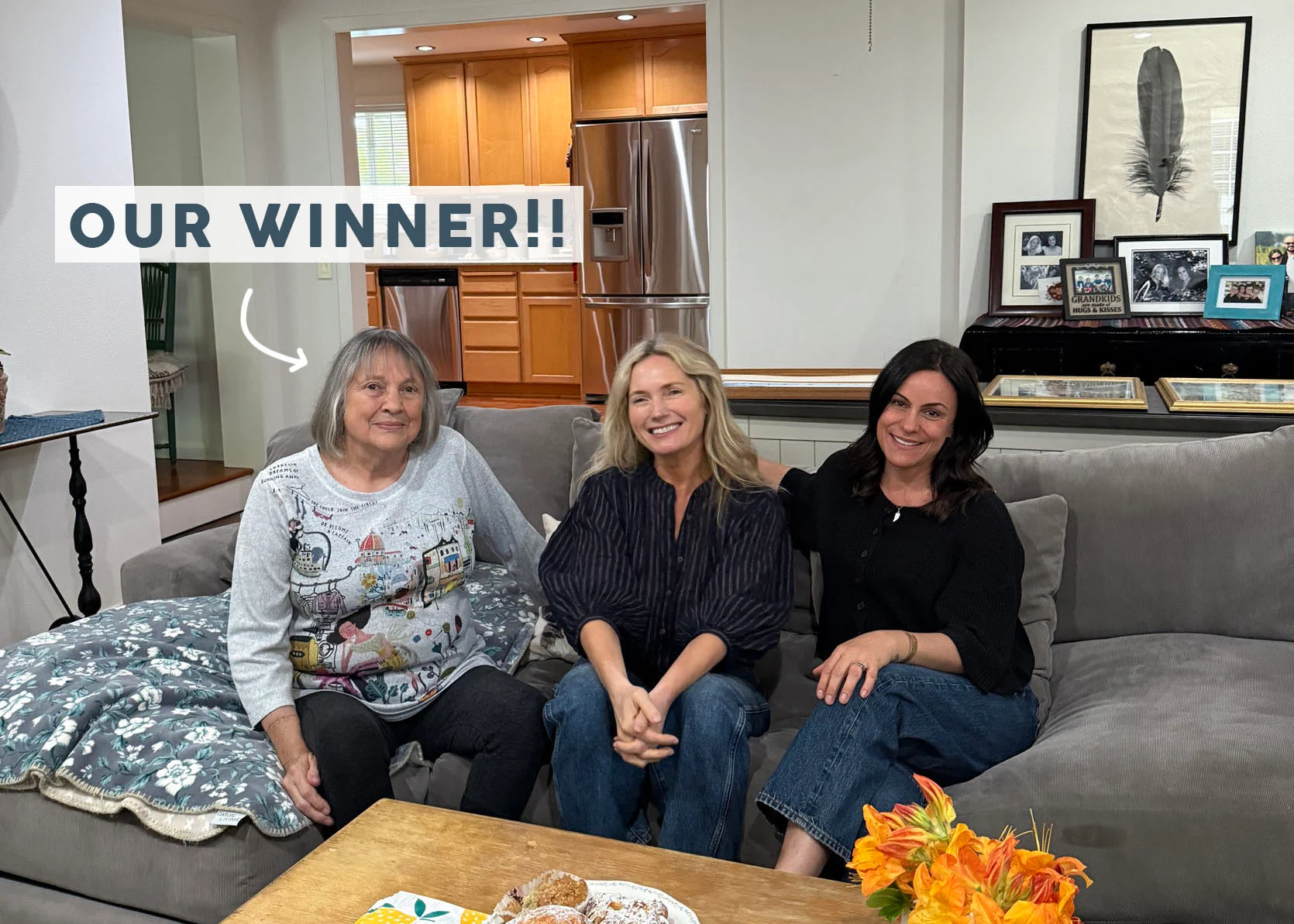
We have begun the most enjoyable makeover that I’m so excited to tell you about. Projects like these are my absolute favorite because one of my trusted partners hires me to help someone deserving to give them a free makeover. It’s a real win/win/win. This is another one for Velux (shout out to their genius marketing team), who wants to brighten up the life of Beth, our beloved winner. Beth’s daughter, Colby, nominated her because Beth has macular degeneration, which means she is losing a lot of her vision, and her living room is so lacking in natural light, making it even harder to see. And it’s going to get worse. She wants to age in place for as long as possible, and it’s my job to design this room to be comfortable and stylish, but most importantly, easy to navigate around and live inside. I’m learning so much already about designing for seniors with vision disabilities, but could really use more help (which is where you come in). Beth, it should be noted, is so delightful to be around, hilarious, fun, and open to any ideas. We feel honestly so grateful to be working with both her and Colby. I look forward to every meeting or shopping session, and once again, I feel so lucky to have this job.
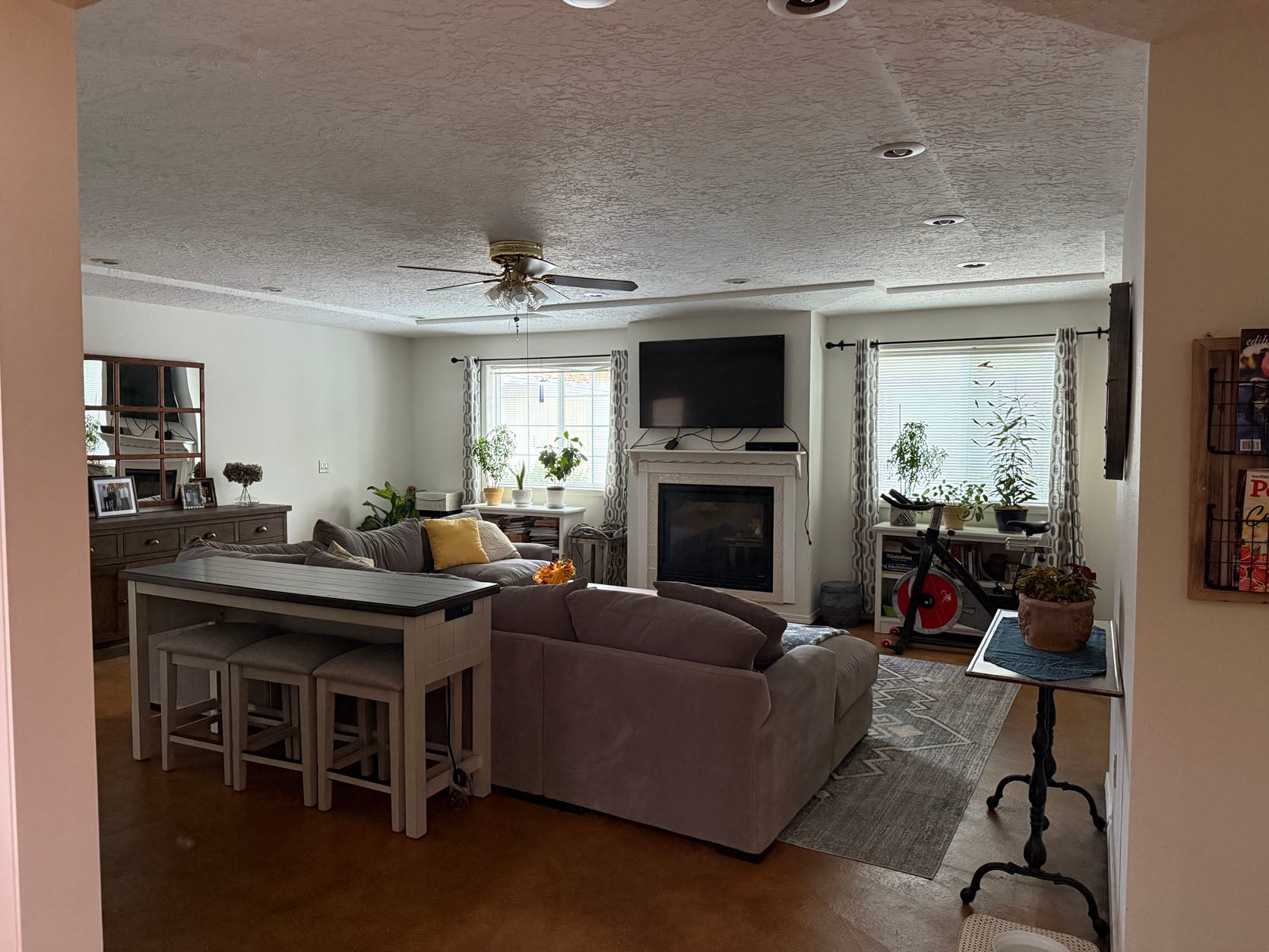
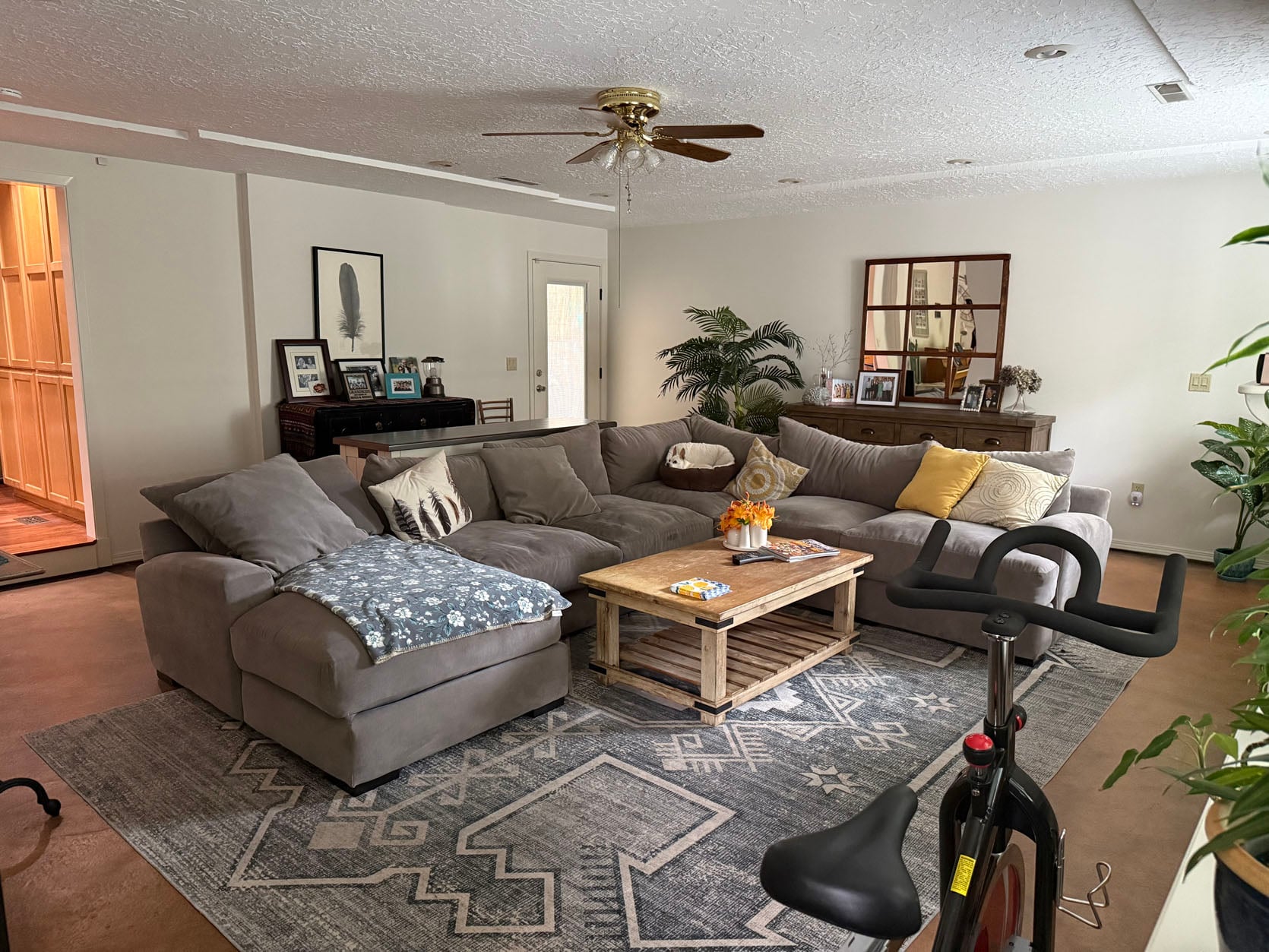
This is Beth’s den/living room, and where she spends the most time. She is in her late 70s and has mostly grown grandkids who visit her, but otherwise doesn’t entertain much. She’s new to Portland, moved up to be near her daughter and granddaughter during Covid. Most of her things are from FBMP (not heirlooms or meaningful pieces), and she is 100% open to anything. She has never really thought about design, never really had new furniture, and is so blown away that she won a makeover. She is outgoing, effusive, and extremely fun to be around and design for. I feel like we could do anything, and she would be so grateful, and yet I really want to nail this one for her needs.
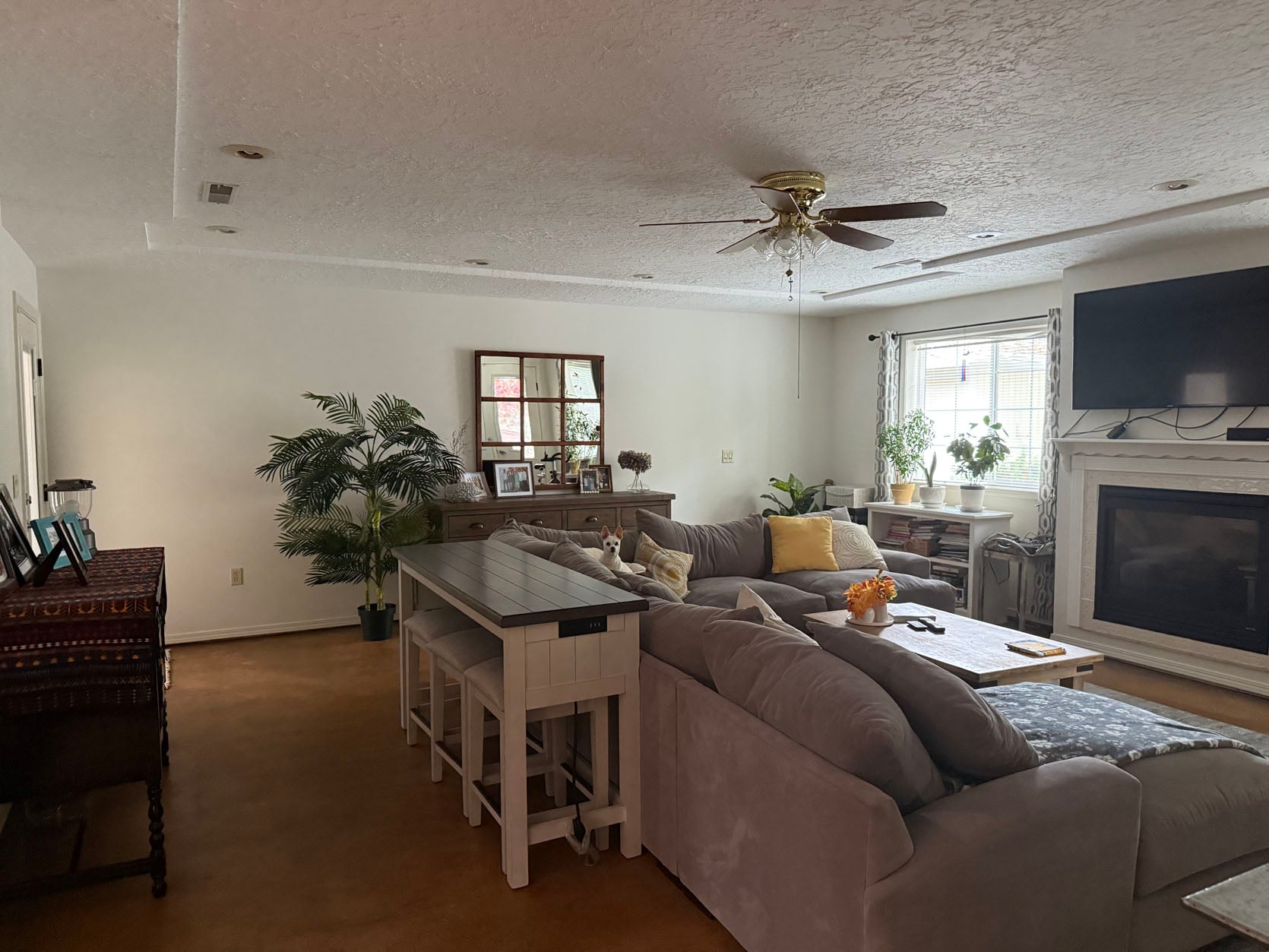
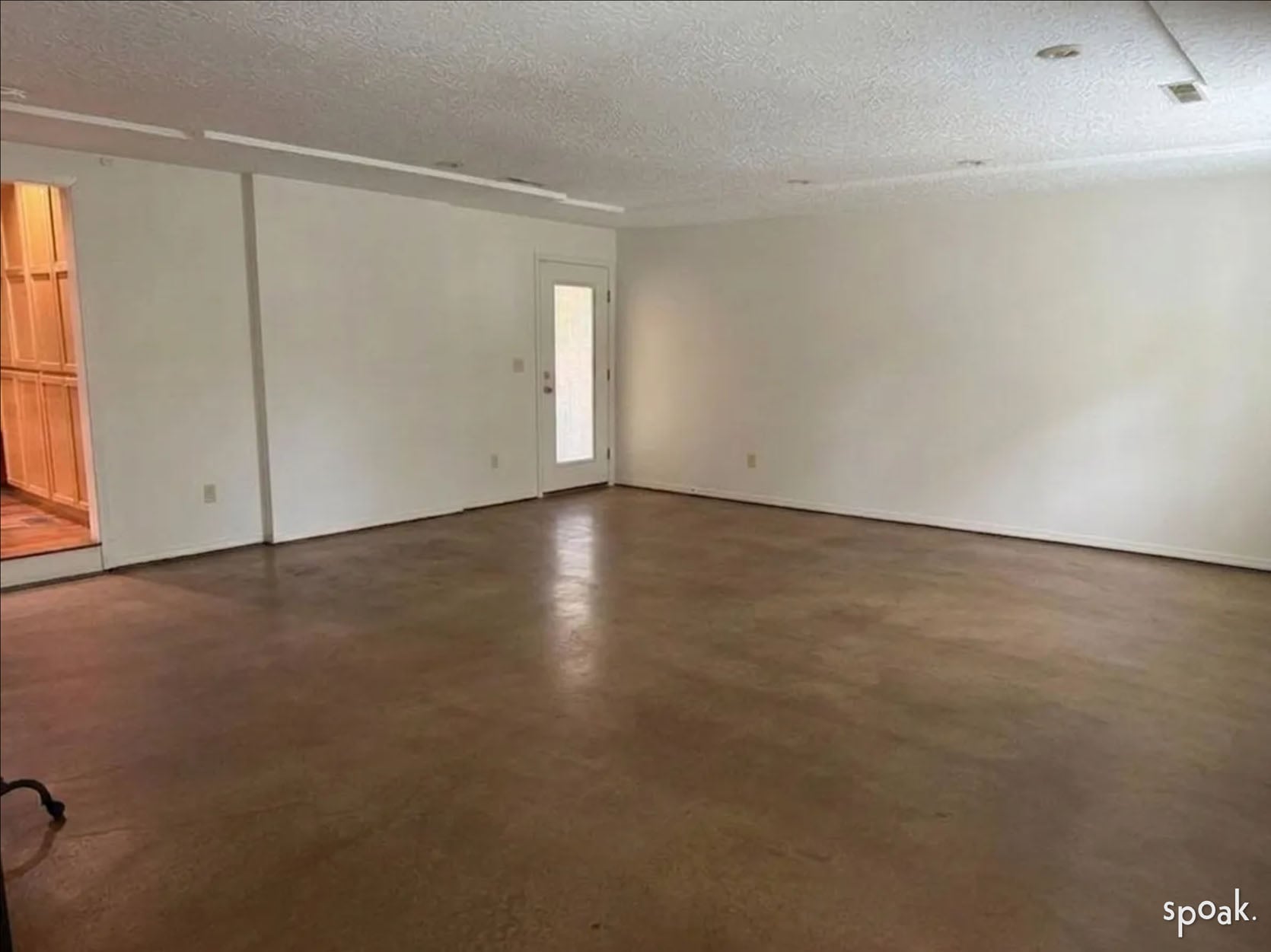
The room is big and dark, likely an add-on with a focal fireplace and furnished with a huge sectional (that actually works scale-wise, but is hard for her to get in and out of). It’s full of opportunities.
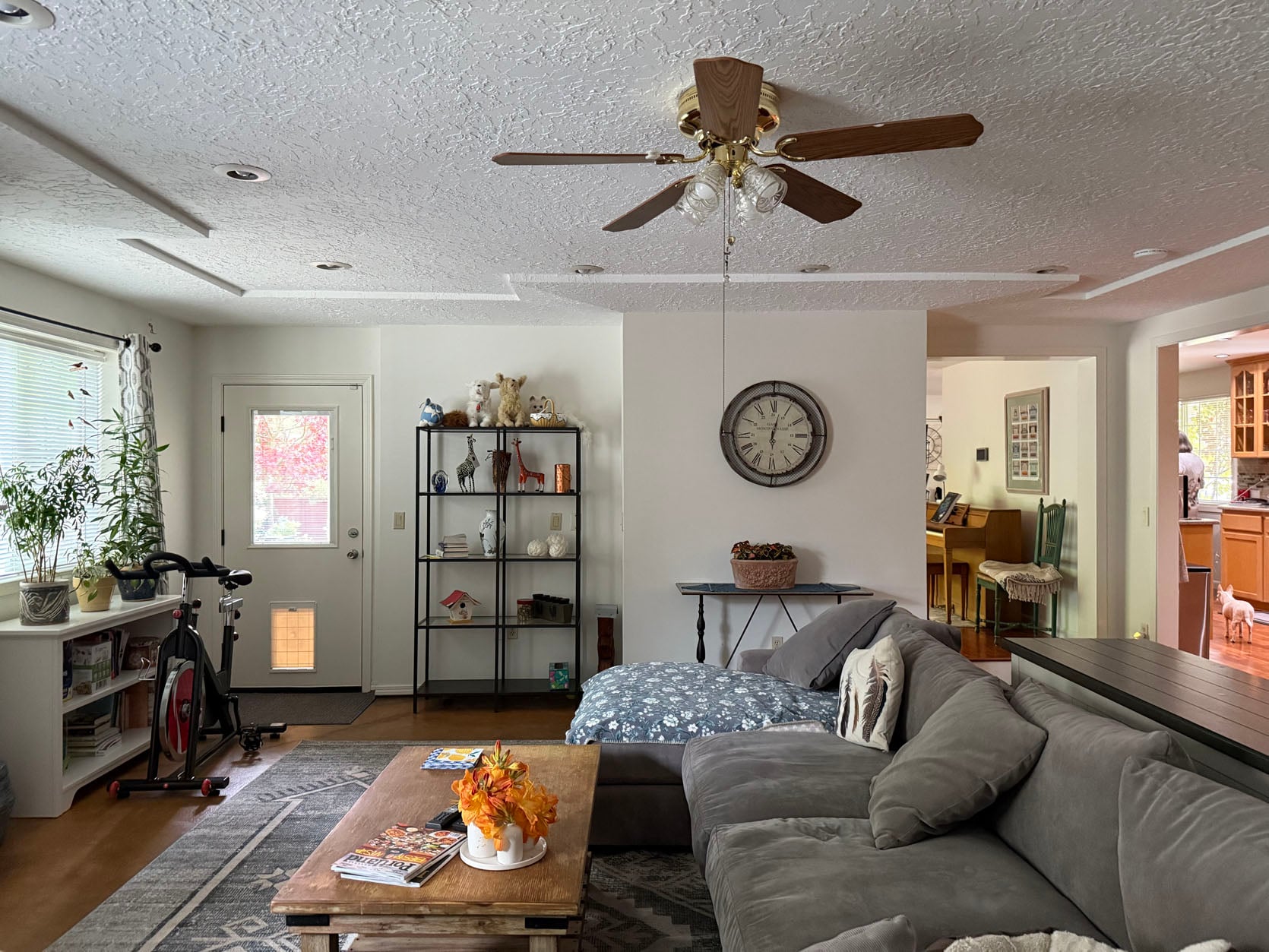
This makeover is mostly cosmetic, besides the addition of the skylights. So we aren’t moving walls or changing windows. We likely aren’t going to even put wood over the cement floor. It’s more about furnishing to be more comfortable, arranging it to suit her needs better, and, of course, making it look really good. I’m pursuing quotes to change out the recessed lighting and to skim coat the ceiling, but TBD on whether or not that happens. A new fan will happen 🙂
The Bones Of The Room
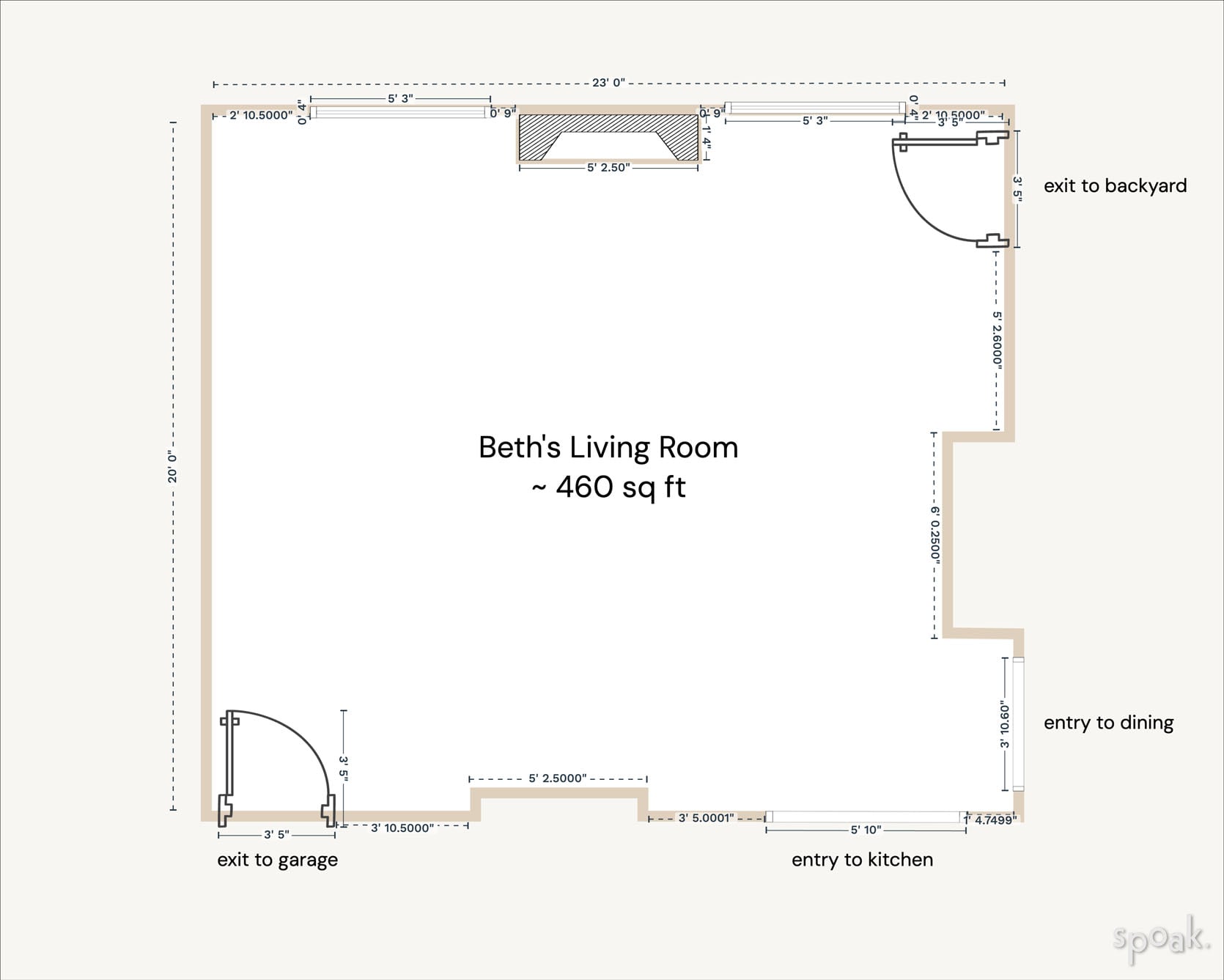
The room has a few cutouts from the adjoining fireplace in the dining room, but otherwise it’s a nice box.
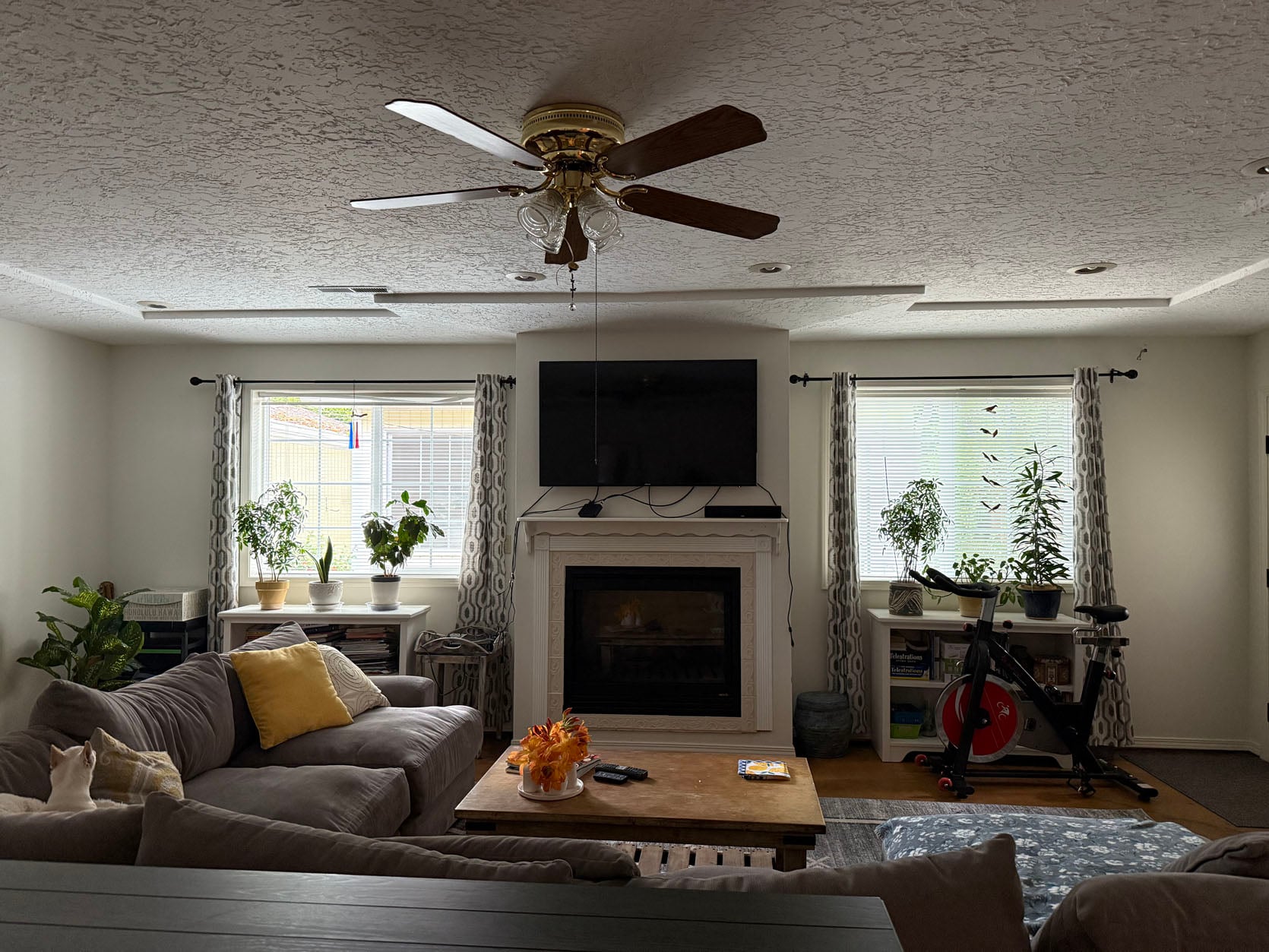
So here is Beth’s wishlist, based on her needs and how she uses the room:
- A bigger TV. Her vision impairment means she can see some in front of her, but sees pretty well peripherally for now. If she had a bigger TV, she would be able to enjoy it so much more. She lives alone, so this falls high on the list.
- More senior-friendly furniture. A sofa that is easy to get in and out of and is more supportive. She is fine in this big cushy one for now, but even I was struggling to get out easily – it’s deep, and you really sink in.
- A recliner. This was my idea, but she lit up so fast when I said they were motorized now. So we are on the hunt.
- Furniture that she can easily see to navigate around. I’ve done some research, and my common sense says that the design of this room needs to be high contrast to make things easier to identify, even as vision gets reduced. But if anyone has experience here, let me know!
- Comfortable, cozy, and warm but not cluttered. She spends most of her time in here. She eats and does all her activities at the coffee table.
- More natural light. While the room has two big windows, they face a covered patio, so there is very little natural light. The new Velux Skylights are going to make a massive difference.
- Keep a ceiling fan (she loves the air flow).
- Easy to clean (clutter-free).
- She doesn’t need it to be loungey. She mostly wants to sit, not curl up.
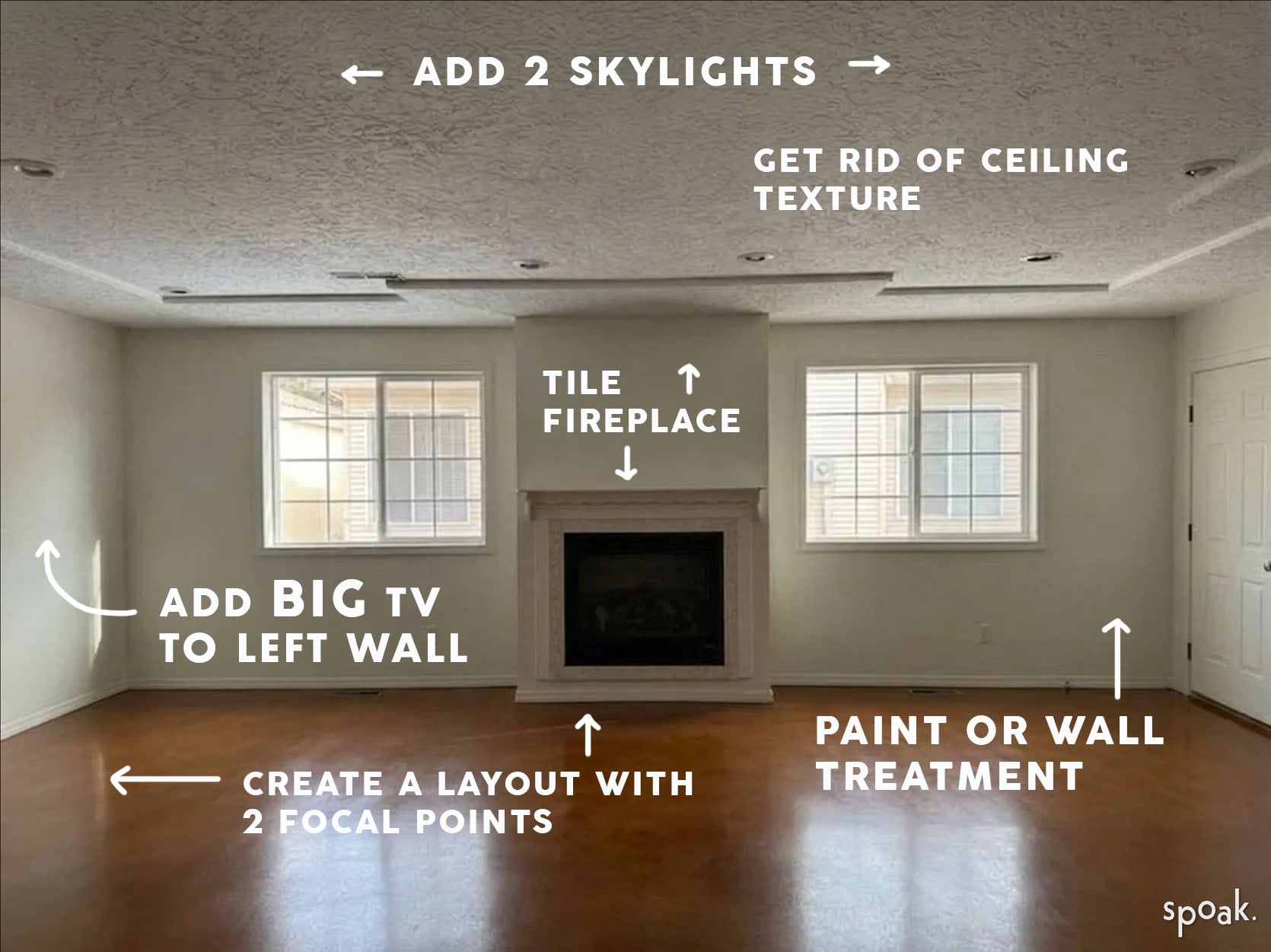
We used Spoak’s AI program to make all of her stuff disappear so we can start envisioning it with fresh eyes. We are still working on the plan, but our hopes are to do the following:
- Add two skylights. The size is still TBD, but they’ll be easily automated.
- Tile the fireplace. This is mostly for the overall design of the room and something that we are going to try to DIY.
- Move the TV to the left wall and buy a much bigger one that is easier for her to see.
- Arrange the furniture to work with both focal points – the TV and the fireplace.
- Paint or add a treatment to the walls.
- Ideally, knock down the ceiling texture.
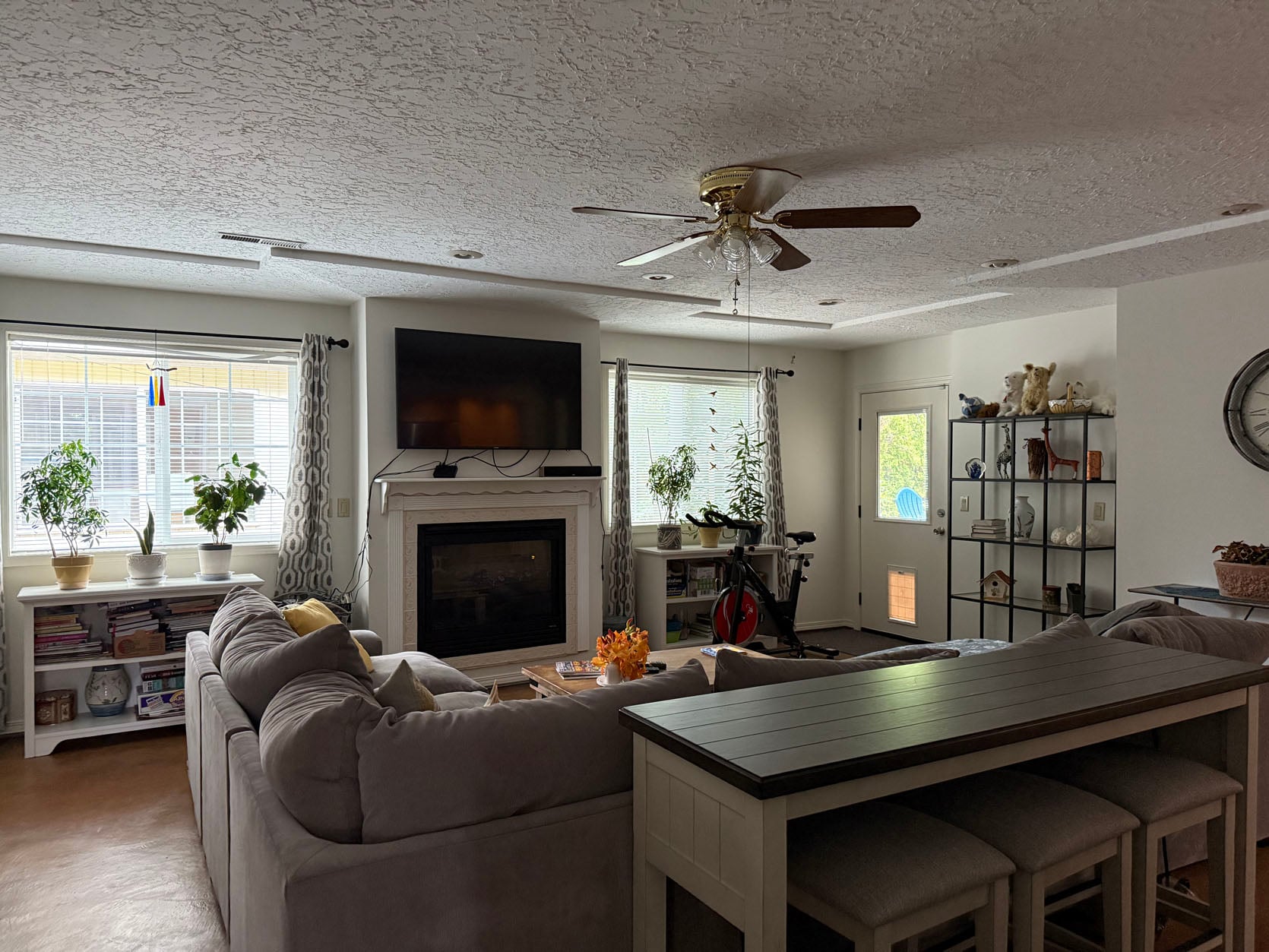
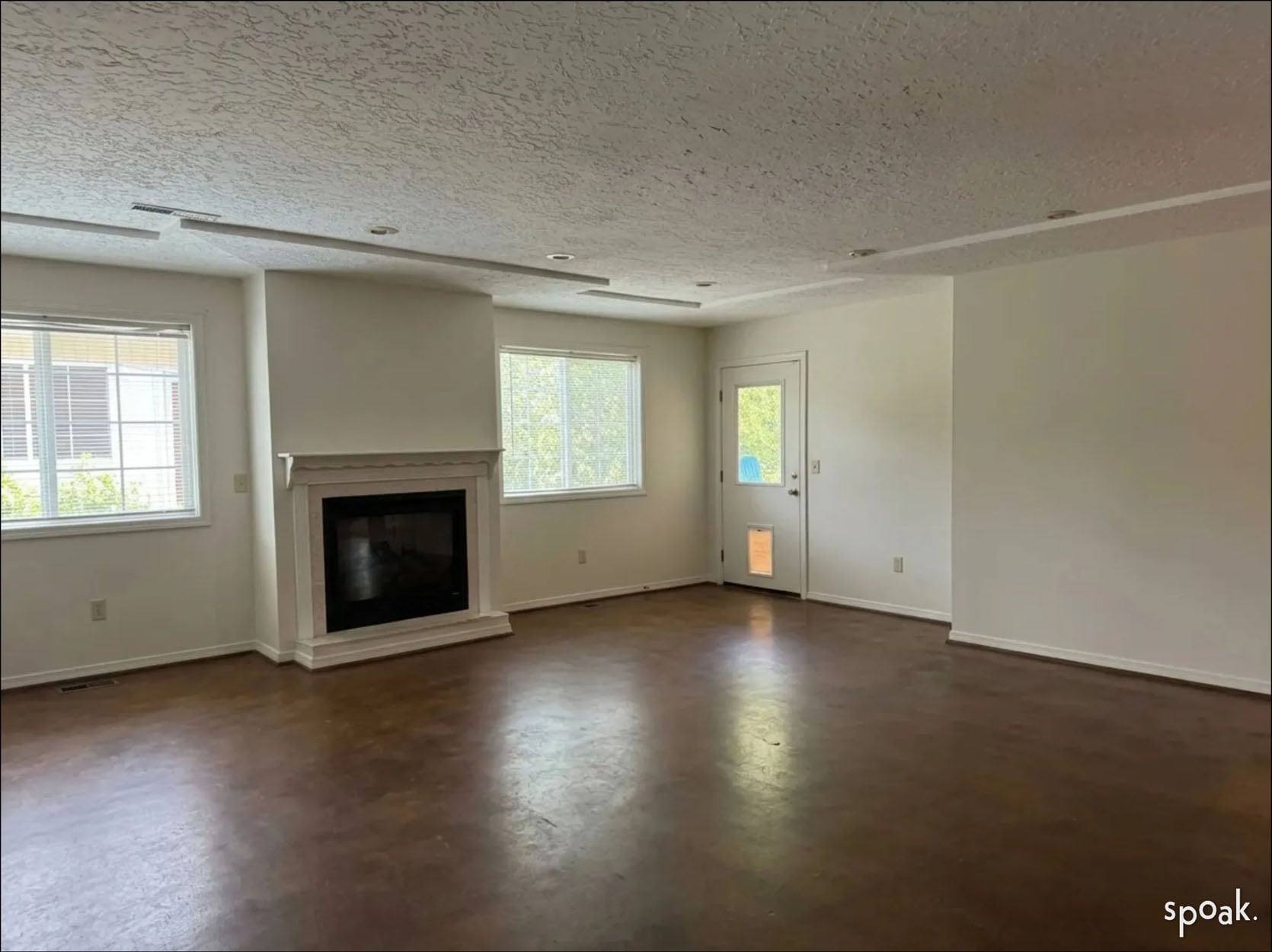
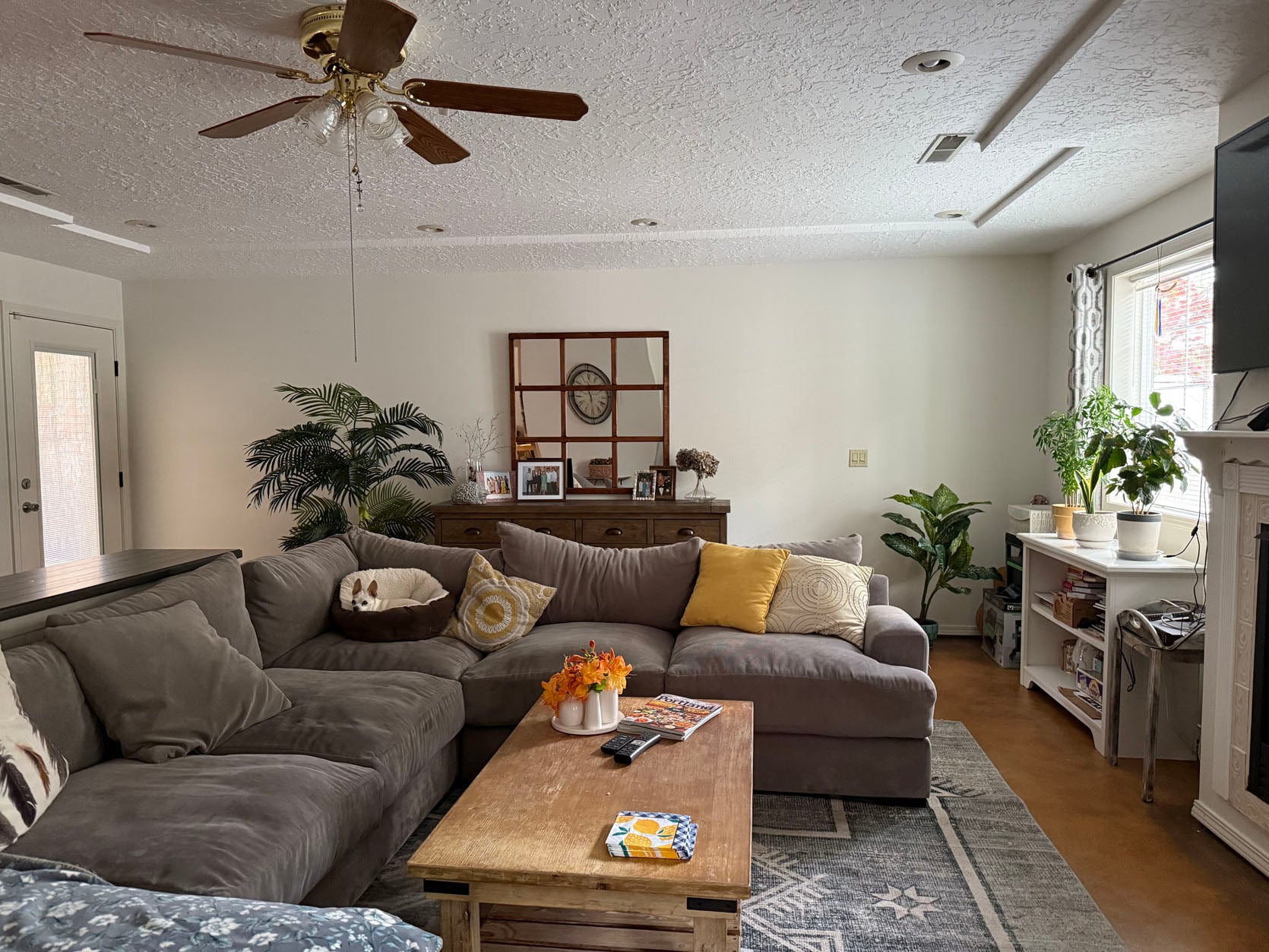
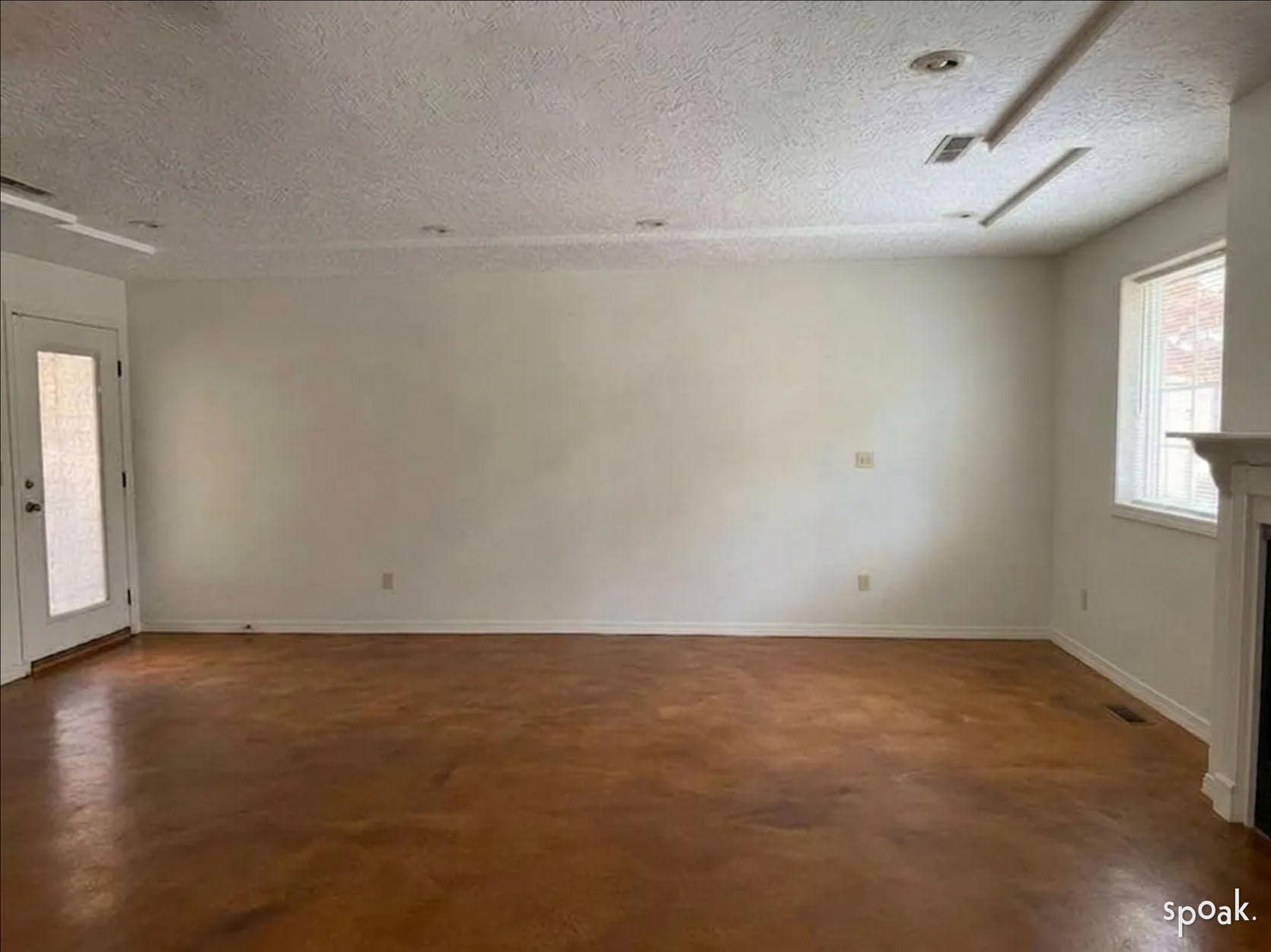
That could be the big TV wall with a huge storage unit underneath. She doesn’t have a lot of books or stuff to go in shelving, but she does have some pretty great paintings that we want to frame and perhaps arrange around the TV, as well as family photos.
So I could really use any anecdotal help from those who have experience needing senior-friendly furniture (whether you are one or you care for one). I know the basics – shallow seat, high back, not too low, and we’ve gone shopping together and found some pretty solid options, but any recs would be great!
- Besides choosing high contrast (dark against light), are there specific patterns or colors that are easier to see as your vision wanes?
- Are big bold patterns a good thing, or are they dizzying? The whole point is to brighten up this room, so I don’t want to paint it dark, so I’m trying to figure out which elements should be dark and which ones lighter while also making it easy to stay clean.
- The only style she says she likes is “farmhouse” and “whimsical,” so what I’m taking away from that is casual and fun, nothing too stuffy, fancy, glam, hard, sterile, or serious. You got it, Beth 🙂
So before I get too deep in the design process, hit me up with any ideas to make her future in this room even better 🙂


I love this! When my grandmother was losing her vision due to macular degeneration, we found several helpful ideas through The Lighthouse for the Blind that helped her remain independent.
I can’t wait to read more about this makeover! We recently got Velux skylights (replacing older ones) and mounted the shade remotes on a wall. I really recommend that, so Beth won’t need to hunt for a remote if the sun shines in too bright at particular times of day.
Yah when the Velux rep was showing her all the impressive tech (how you can set the schedule) she was like ‘I just need it on the wall’ and I was like ‘I got you’. 🙂
Some tips from a person who does research on age friendly environments. Who has parents in their 90s and is no spring chicken myself. Check the arms on all chairs and sofas. Make sure they are high enough and are aligned with the legs, so they provide a solid support for lowering and raising the body. Chairs that aren’t too wide and have good solid arms are better than any other kind of furniture. Also, any chair near a dining or card/activity table should be easy to pull in.. this is a tricky one because they also need to be stable. Lighting needs to be brighter than most designers find attractive. High contrast is an excellent direction. Our research team advocates for changing to a deep colour soap dish, for example, to make seeing light soap easier, and making sure floors are different enough than walls in both tone and colour so that room edges and corners aren’t blurred.knickknacks can be hazards when folks have reduced vision, Further. As we age, we tend to have reduced agility and mobility. So while we need a table beside a chair for coffee, tissues, books etc, wall and floor lamps can be safer… Read more »
THANK YOU!! These ideas are so helpful and I so appreciate the time it took to write them all down.
So many good ideas and love the recommendation to talk to a local university! I’d add occupational therapy to the list of specialists to try to talk to. There are OTs who specialize in low vision and aging in place.
Yes chairs arms are 100% so important. Having cared for aged parents this is the #1 complaint – arms too low to allow you to get up easily
To minimize the risk of a fall/hip (or any) fracture, steer clear of small rugs!
+1
My parents and their spouses are all 75-80yo and I’ve learned a lot about falls.
One thing I see is that older people often fall, may not be injured, but have no way to lift themselves off the ground. They get stuck there on the ground because they’re not strong enough or don’t have anything to lean on. I’m not sure what the solution is — maybe strategically placed furniture or handles that can help older people lift themselves off the ground.
Ideally, I’d take away rugs or at least have very flat rugs. I think FLOR tile rugs are good because they’re extremely flat and don’t bunch up.
I also suggest automating things in a way that will remain accessible to older people. Put curtains, skylights, ceiling fans, and lights on remotes if possible.
I suggest not having any leggy furniture. Older people are likely to trip over furniture legs and things get lost under there.
Or be sure secure rug edges with double-sided tape. Senior falls often happen because of shuffling feet and a foot sliding under the rug often = a fall.
This is the best project. She sounds so deserving as well! I have some thoughts – for recliners, look for dual motor – one to control footrest and the other the lean it back. Sounds complicated but the major recliner brands explain is pretty well on the websites. Single motors tend to raise the footrest AND lean you back at the same time. Not great for watching TV when there are vision problems. Be sure the rugs are low profile and there are some great product for taping corners down to minimize trip hazards. And I found adding visual contrast around doorways/openings to be really helpful. My husband kept clipping his shoulder on the side of the openings. I put red caution tape on the side on the door opening for his dominant eye which is what we needed for his condition… Not pretty but you do whatever is needed at the time but I am sure you could think of something more aesthetically appealing. And Rebekah’s suggestion for the Lighthouse for the Blind is a good one. In our area it was Center for Visually Impaired – just google “low vision resources near me” to see what’s available.
What a meaningful project. And I have a hunch most of us readers will be learning helpful insights for our own families’ future.
We work with a lot of seniors in our design boutique in Salem, OR. We have found that the Louise sofa, by Norwalk, is the best for getting in and out of easily. It also comes in several variations. They also make zero clearance recliners that are motorized. These are great for not needing a lot of wall space.
So excited for your winner! Having an adaptive comfortable space will bring her so much enjoyment. Can’t wait to see what you do!
I dealt with a similar situation when I was furnishing my apartment recently, knowing that my 91 year old mom would be spending time with me. She’s 4’11”. I found that she was able to easily get in and out of sofas and armchairs that had a 19″ seat height. The cushions needed to be a bit firmer than I would normally prefer because it’s hard for her to get out of a chair that “sinks in.” Also, the arm rests needed to be at the right height for her to push herself up. I found that the Pottery Barn Remmy chair was a great chair, even as a swivel chair. She popped right up when I wasn’t looking. Didn’t need my help at all. The classic version of the Axis sofa from Crate and Barrel was also great. I eventually purchased the Sloan sofa from Interior Define, Standard Depth, and that has worked out well. I would recommend checking out Pottery Barn’s collaboration with Michael Graves for ideas as well. The points they made in designing this collection made sense, given how I see my mother navigate a room. She often uses seat backs and the dresser to steady… Read more »
Totally a soapbox – can we move away from the word “sweet” to describe women? In some subcultures it seems to be highest praise, but I find it often to be a stand-in for “compliant.” Drives me nuts when people refer to my kids with that term (maybe it’s the tone of voice used also which I’m sure you aren’t doing here).
Sweet means nice. Men are often also described as sweet. People describe gestures as being sweet.
No rugs!
I was thinking the same. Even sticking them down, the corners always start coming up. I think putting some other, warmer hard flooring over the concrete would be the best option. Marmoleum is great and there are so many awesome colors/patterns.
Retired PT here. Yellow is the color most seen as you age, and you are on the right track with high contrast. No throw rugs and make sure if there is a area rug it is tacked down and high contrast to flooring. Also people use high tactile stick on “bumps” to identify on/off buttons. Maybe some consideration for how far she has to carry the food to get to her eating area?
Hi Emily! What a great project for Beth! Low vision has a high prevaIence among older adults, but gets very little attention in the design world; I’m so pleased you are bringing attention to this need! I’m a low vision therapist with 20+ years of experience. You’re right on track with considering contrast and ergonomics. Since there have been great comments about seating and safety – ie removing area rug, I’ll mention more vision-specific ideas. 1. Glare – Daylight is fantastic quality lighting, but facing windows means looking into glare, which can be hard. It may be that filter glasses (available through a low vision exam) could be the next level soluton for glare; these also can improve contrast. Also, placing the TV on the blank wall away from the windows could be a good option with window covering that allows for reducing glare on the TV screen. Consider this too with the skylights placement in conjuction with the TV. 2. Other TV considerations: Bigger isn’t always better; moving closer to the TV (relative distance magnification) is typically better than getting a much larger TV, but this can be impacted by the location/ type of blind spots (scotomas) characteristic of… Read more »
Eek: the spelling typos in my comment above! But also a PSA. Beth’s story demonstrates the importance of having a low vision team, not just an ophthalmologist. Ophthalmologists focus on managing and preventing disease from getting worse, however mamy eye diseases such as macular degeneration are irreversible, menaing lost vision can’t be regained. That’s why it’s so important to have a low vision exam by a low vision optometrist and then receive training in vision rehabilitation to modify the home environment and receive training in use of technology. A low vision OT or other vision rehabilitation specialist can work with design teams to ensure the environmental modifications are optimized for Beth’s individualized needs. Two people can have the same exact eye condition but be impacted differently. Individiualization is key!
my suggestion would be to get a recliner with a lift. This will allow them to still use it if they lose mobility, or for example injure a hand and are unable to use the armrests to lift/lower themselves into the chair.
My father had mobility more than visual impairments, but the risks of falling either way meant we looked for a recliner that also helped push him into a standing position, that we always needed a place for him to be able to reach out/steady himself that he couldn’t knock over, and wider than usual paths to move through to avoid tripping. If vision loss is also happening, perhaps look into setting up things to enhance the sound (a music player), texture/touch, and smells of the space, which can all serve as cues for the environment. Also might want to research if any alterations/upgrades to any fire suppression/safety systems/entrances and exits for the house can be added if an impaired senior is living alone. Cool project!
What an awesome project, so excited to see how it turns out. I just wanted to mention one factor about the motorized recliner. We got one for our aging relative and it is a huge regret for me. I learned from experience that Having to get out of a seat yourself is a huge part of “exercise” that seniors do. My relative lost a lot of muscle , balance and ability to get from sitting to standing by themselves due to motorized recliner use, which is a huge part of being able to participate in daily life. It is a worthwhile struggle to have to go from sit to stand unassisted, practice for the challenges of having a body moving out in the world.
Yes. Core strength is so important for the elderly. Better to take the “assisted lift recliner” money and hire someone to create and teach an easy-to-do senior strengthening exercise routine. Everyone can also do the AARP online exercise programs for free, no need to be a member.
My mum is 89 and won’t accept help to get out of chairs because she’s keeping up her core muscles. It’s extra important to have chairs that don’t move across the floor so it’s stable for the oomph energy of standing.
Also, concrete is hard to fall on. If you did something like floor tiles, you could use a contrast colour for the pathways, kind of like the lines on the floor in hospitals that show you where to go. If all furniture is on the light carpet and pathways are dark (or vice versa), less likely to bump into things.
Thank you for working on such a worthy project! And congratulations to Beth! We recently made some furniture modifications after my husband’s knee surgery (chair with a firm seat and higher arms). We have a small TV, but my husband is having a hard time with captions lately, so I agree with a larger screen even though I dislike it being prominent.
What a great opportunity you have here to include adaptive and accessible furniture in your next sofa drop!
Great post and what an important topic to feature! Love the tips from the therapists. They could also seek an Occupational Therapy home evaluation through a home health agency for additional recommendations/environmental modifications. This would require a Primary Care Provider to make a referral/write the order but could prove beneficial.
First time commenter…my mother had macular degeneration and eventually ended up using a walker to get around. The first thing I noticed in the photos was there is a step into the kitchen and into the dining area. Would there be a way to make the floor in the larger room even with the kitchen and dining room floors? As Beth ages navigating even one step will become more difficult and if she will need a walker later on, the stair will become a problem. I believe the sky lights will be very helpful in bringing in more light and mounting controls on the wall will be helpful, but if sitting and then needing to change the lighting in the room, having a remote on a table next to where you are sitting would be helpful rather than having to get up and walk to controls on the wall. My mother, even at age 90, was able to get out of her motorized recliner with her walker in front of her to then steady herself. My sister used to have a coffee table that the top was on hinges and could be pulled up to act as a table when… Read more »
I love these suggestions. Also, bringing the floor up to be level with the kitchen would give you a chance to do a warmer material (wood, cork, etc.), especially if you end up not laying down a rug.
something to consider, that we have had for years, is a coffee table that rises up to table height to eat dinner on a sofa. They also make end table versions.
It looks like the floor is lower than the adjacent room so ideally you would eliminate this step or make sure there is high contrast at that transition.
My mom had Macular Degeneration as well. A big TV is a MUST, but almost as important is a remote control with BIG Buttons that (hopefully)LIGHT UP! It’s been awhile, but I think we found a universal remote that worked pretty well. I also think the most important thing to have big contrast on is a rug (if using). The edges of the rug should be very easy to see, or else they become even more of a trip hazard than they already are. Because of this (and how important “safe falling” is) my mom preferred wall to wall carpet. Coffee tables and side tables should not have sharp corners and should not be glass at all. We created a logical spot for a hand held magnifying glass which mom used, but she did not like a floor standing lighted magnifying glass because when not in use it was in the way and had a cord that was a trip hazard. For obvious reasons cord and cable control are big issues as well. I will watch this makeover with much interest! And I can say an unequivocal YES to VELUX skylights. I’ve had great personal experience with their expert installers… Read more »
Not room design but if you can pass this on to Colby – see if her insurance will cover a visit with a retinal specialist who can inject anti-VEGF injections – my father in law(89) is being helped by these.
This is a wonderful plan you have and I see that you’ve got lots of really good suggestions to help Beth navigate safely. If the budget is there I think that the ceiling is the only thing really crying for help. It would be a great time to do it if it’s getting altered for the skylights. I can’t wait to see how it progresses!
Love this! My 87-year-old mother has AMD, and her vision is dimming more and more with each passing month. One thing I’d weigh in on is to keep paths between furniture wide enough for a walker and a wheelchair, including a turn radius. Can’t wait to see what y’all come up with!
Also is there possibility to put down a softer flooring like luxury vinyl plank to assist in vase of falls. You can also create ramping under the plank to avoid small steps (that said I don’t know if for fall risk it’s better to have a small step or a shallow slope). I would strongly recommend getting an OT or accessibility expert to advise
As I age, my pet peeve is pale gray labels on dark touch pads. It can be almost impossible to tell “high” from “off” from “low”. An old fashioned dial is so much better for the visually challenged.
If there is a step (like sunken living areas often have) be sure the step is labeled in a high contrast way and there is a way to grab something for balance assistance, like a grab bar, or a chair back that is right at the step.
Any remote should light up to make reading it easier.
No patterned rugs- as vision deteriorates they can throw off depth perception/appear as steps. Or the pattern can be mistaken for objects/spills.
Maybe obvious but no glass top / clear acrylic surfaces for same reason.
As vision deteriorates it is important for things like reading glasses/keys/TV remote/pen and paper to be kept in the same places all the time. So things with nooks/compartments/spaces are more functional than open/flat surfaces.
My mom has gone through this w a different diagnosis and that’s what I’ve learned.
Lovely project and brilliant comments! I would also add that open shelving (like the black thing by the garden door) is not only hard to clean but is likely not very sturdy. When people fall they tend to grab anything they can get their hands on. I would consider replacing the various sharp edged storage units with a wooden cupboard which could be solid enough for Beth to support herself with if required and also to hold all her things. The bottom shelves are quite hard to get to as one ages, so perhaps drawers there if possible? Good luck, excited to follow along!
I know you mentioned leaving the flooring the same, but maybe you could get a donation of cork flooring or some other resilient flooring that would be softer than concrete in a fall. Would love to see it!
There are already similar suggestions to what I was going to say: high and FIRM arms that can be pushed against to help with standing. For longer/wider sofas where you can’t reach both arms, there are these metal frames called “stand assist” that you can tuck under the sofa seat cushions which my family members find useful.
Have you thought about partnering with a non-profit that work with people with vision changes? They would have excellent expertise and it would give them (and their work) a valuable boost in profile.
Hey Emily,
I worked on senior housing projects for several years. Here are a few thoughts for you:
Since the room is an add on, it may be perfect for investing in a couple SolaTubes. They cost about $2K apiece, installed, don’t leak and work to bring a lot of enhanced daylight into the room. I often think I’ve left the lights on in my bathroom during the day because they allow so much light in.
I’m a biomedical engineer, and I strongly recommend designing for fall prevention. Falls are a huge risk, especially when vision is compromised. Besides good lighting, it’s important that the rug be thin and very well secured around the whole perimeter.
Some thoughts on Beth’s space based on my background in occupational therapy and low vision rehab. To help Beth stay independent and comfortable, keep the focus on creating high contrast, reducing glare, and incorporating texture/tactile cues. Seeing Beth’s exercise bike, I’m less concerned about her needing assisted mobility. Placing furniture within arm’s reach creates landmarks for her to map her path. Furniture should be sturdy and have grounded bases, similar to a rock. A light-colored, low-pile rug against the dark floors provides high contrast and a helpful textural cue. For safety, a high-contrast extra-long handrail by the kitchen doorway will help with orientation, fall prevention and a possible help if she were to fall. Matte finishes (tiles) and solid colors will help keep everything visually distinct and reduce glare. Motorized shades and voice-activated technology (lighting) are great for maintaining independence, safely. Use lots of task lighting: museum putty will keep lamps from toppling. Lighting should be from slightly behind and over the non-dominant shoulder/hand. Since Beth uses her peripheral vision to see, an adjustable base for the TV and stable chairs might offer more flexibility than a couch. Consider keypads for exterior locks. Tactile identifiers make daily tasks much smoother. I noticed the kitchen wood tones are quite similar, so adding some contrast there would be a big… Read more »
I’m such a huge fan of this project! 💖 Not sure if she already uses a walker, but she might likely end up using one at some point. Consider leaving enough space amongst the furniture arrangement for maneuvering one.