Design
“Wait, Why Don’t We Do That?” 5 Great Kitchen Design Ideas From Around The World
While I’m awaiting my big summer trip to explore a place I’ve never been before, I stumbled upon a different kind of international experience on Instagram the other day…a kitchen design idea I had somehow missed that was extremely popular in its country of origin. That is one very cool thing about the internet: just when you think you’ve been exposed to most things (well, in my case, design things), something simple, practical, and genius pops up and blows your mind. I then decided to see what other awesome kitchen design ideas I hadn’t really been exposed to from around the world. A design hunt, if you will. So, unlike Caitlin’s awesome 2026 home innovations post, this is going to be about kitchen ideas other countries have been using for a while, that I think should be more popular in the US. Let’s start with the idea that inspired this post…
Kitchen Design Ideas: Finish Drying Cabinet
I saw this creator on Instagram install a Finish dish drying cabinet into her new kitchen, and I immediately loved it/couldn’t believe I hadn’t seen it before. So it’s not a new idea, but it was somehow new to me, and now I desperately wish I had one. This amazing space-saving design element was invented by Maiju Gebhard in the 1940s to eliminate hand-drying dishes (my dream with someone who doesn’t have a dishwasher). The idea is that this cabinet sits above the sink, with dish racks installed into the sides so that the bottom of the cabinet can be open for the water to drip into the sink (or another waterproof surface). And this is where they are/can be permanently stored, too! See? A GREAT kitchen design idea.
So simple yet an incredible option to not only save on counterspace but also eliminates A LOT of visual clutter! As someone who does not want a drying rack on her countertop (personal preference), I can feel my heart racing in my chest from pure excitement. The one that I saw on Instagram is a little on the smaller side, but others are bigger and can hold pots, pans, you name it.
The only cons I see are that you have to deal with water dripping onto your sink, which might be annoying if you want a perfectly wiped-down and dry area at all times. Second, you potentially aren’t maximizing storage space with things like plates, since they won’t be stacked/very close together. I don’t think that this really is an issue, given that it seems these cabinets are mostly used in smaller homes/kitchens that don’t require the need for tons of items…like plates. For instance, I have 6 dinner plates, not 12.
Kitchen Design Ideas: Elevating Countertop Outlets
This product/kitchen design idea is commonly used in the Netherlands. Outlets are generally not the most beloved item in a kitchen, so the fact that these give you the option to use and then hide them is pretty great. They are put into countertops and then, with the option of a manual lift, push down, or easy button, it raises up.
With this one, I’m of two minds. There are some where the tops are the same material as the counters, which is my favorite version. There are others that are brass or silver but still good looking, then there are the ones that to me are equally as much of an eyesore as ones on the wall…actually, maybe worse. So to do this in a way that enhances the look of your kitchen, not detracts from it, it will likely be a pretty penny.
Here are some shoppable ones!
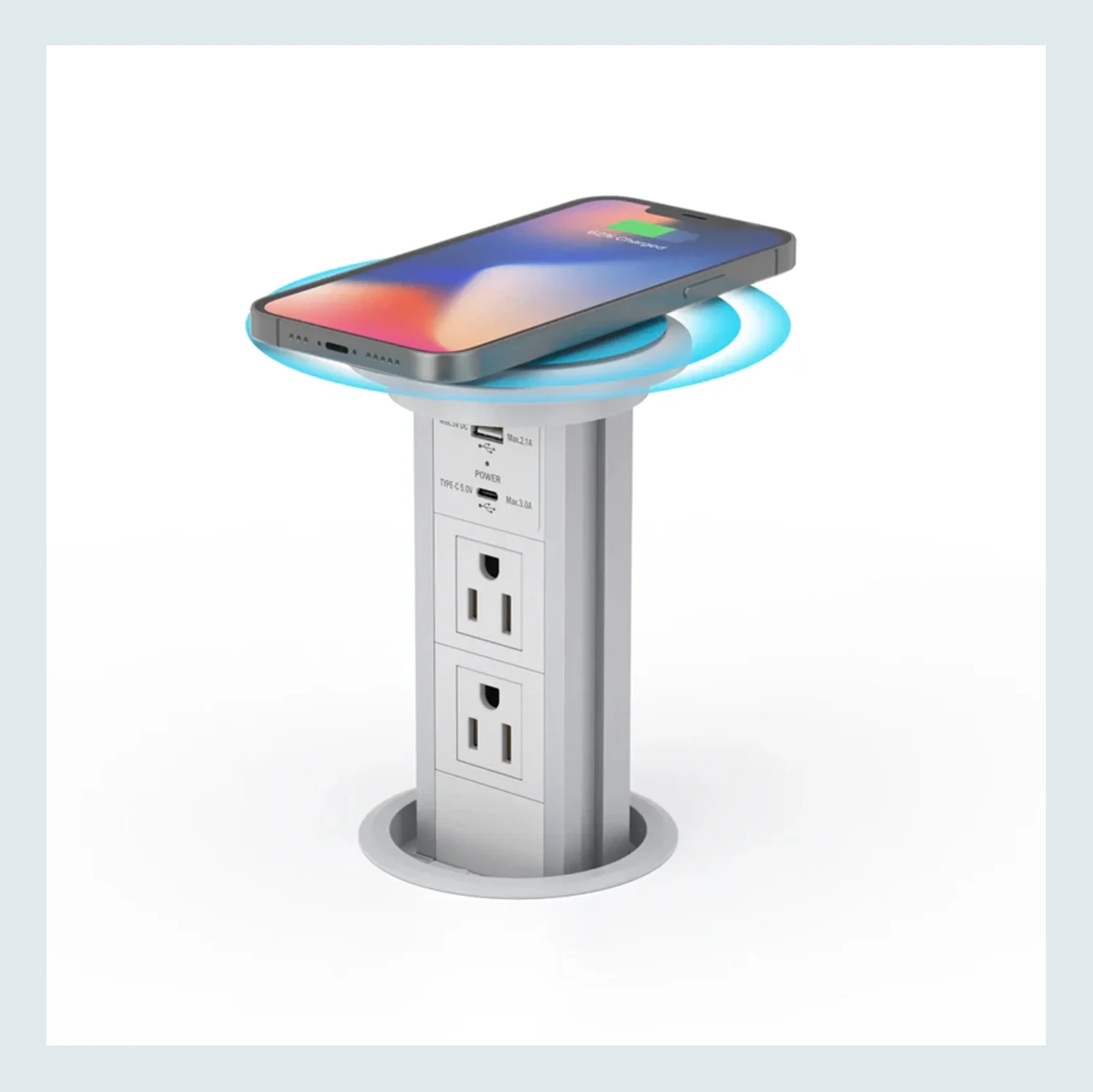
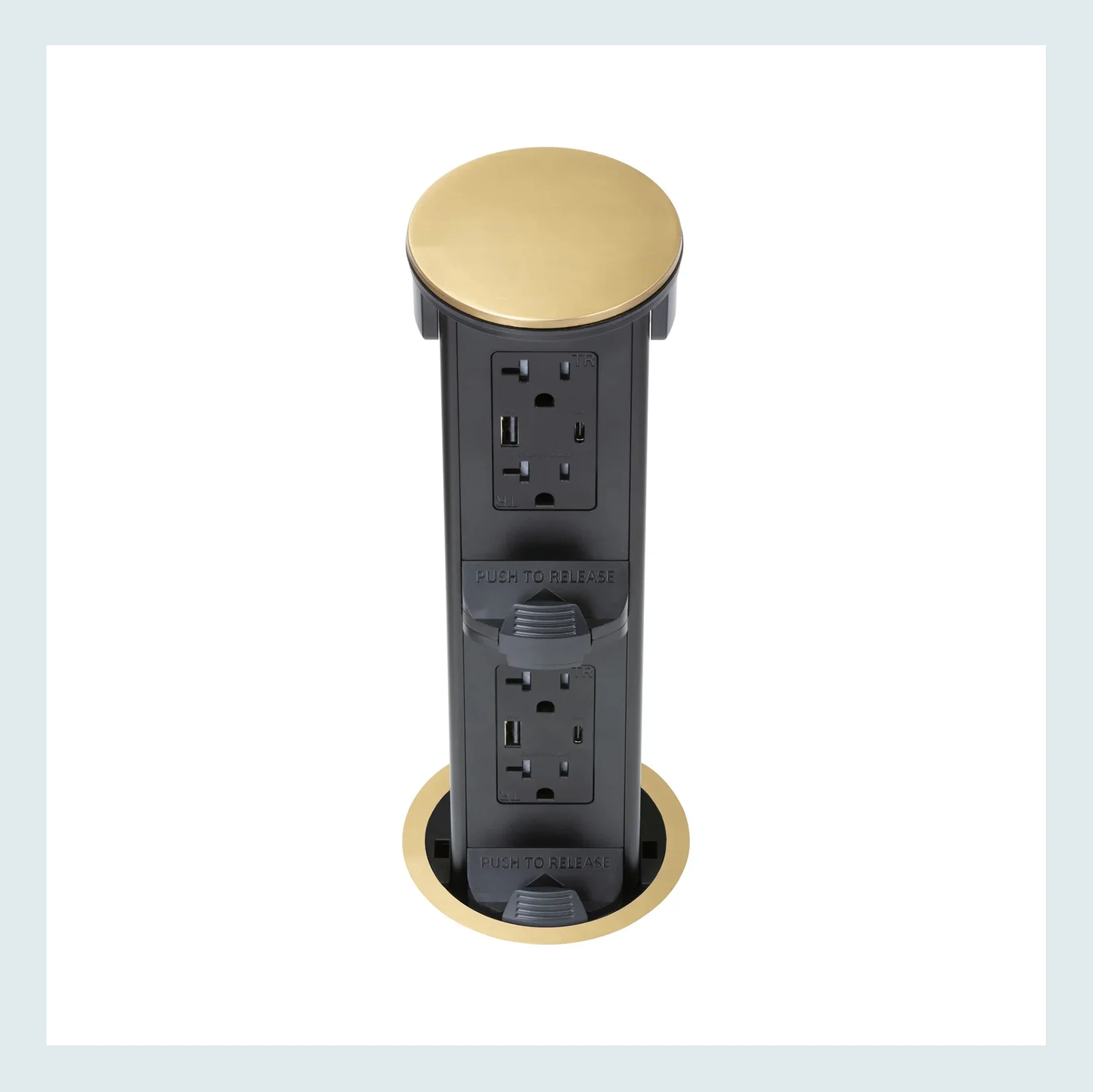
White Motorized Pop Up Outlet with USB | Brass Round Kitchen Pop Up GFCI Outlet
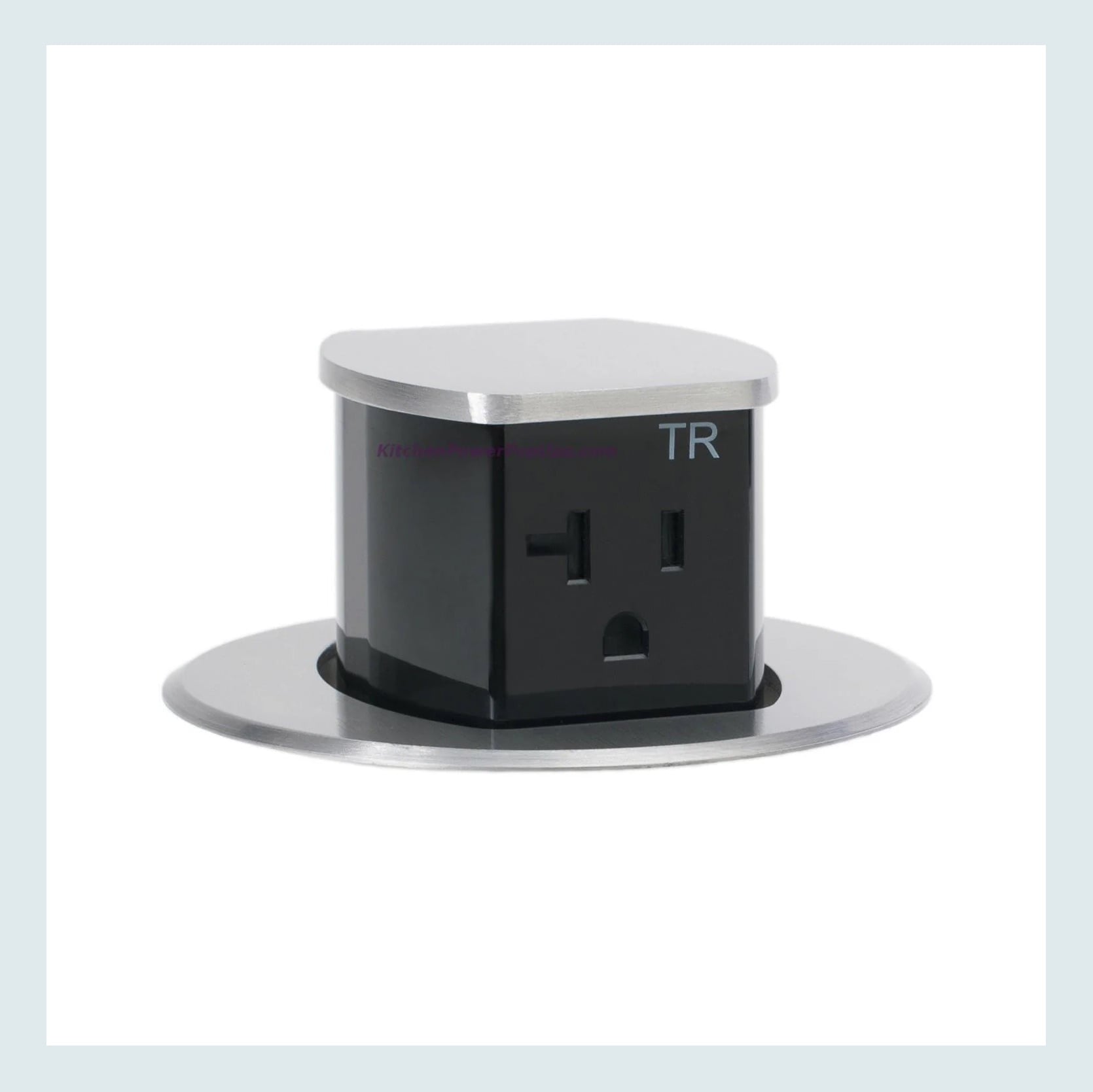
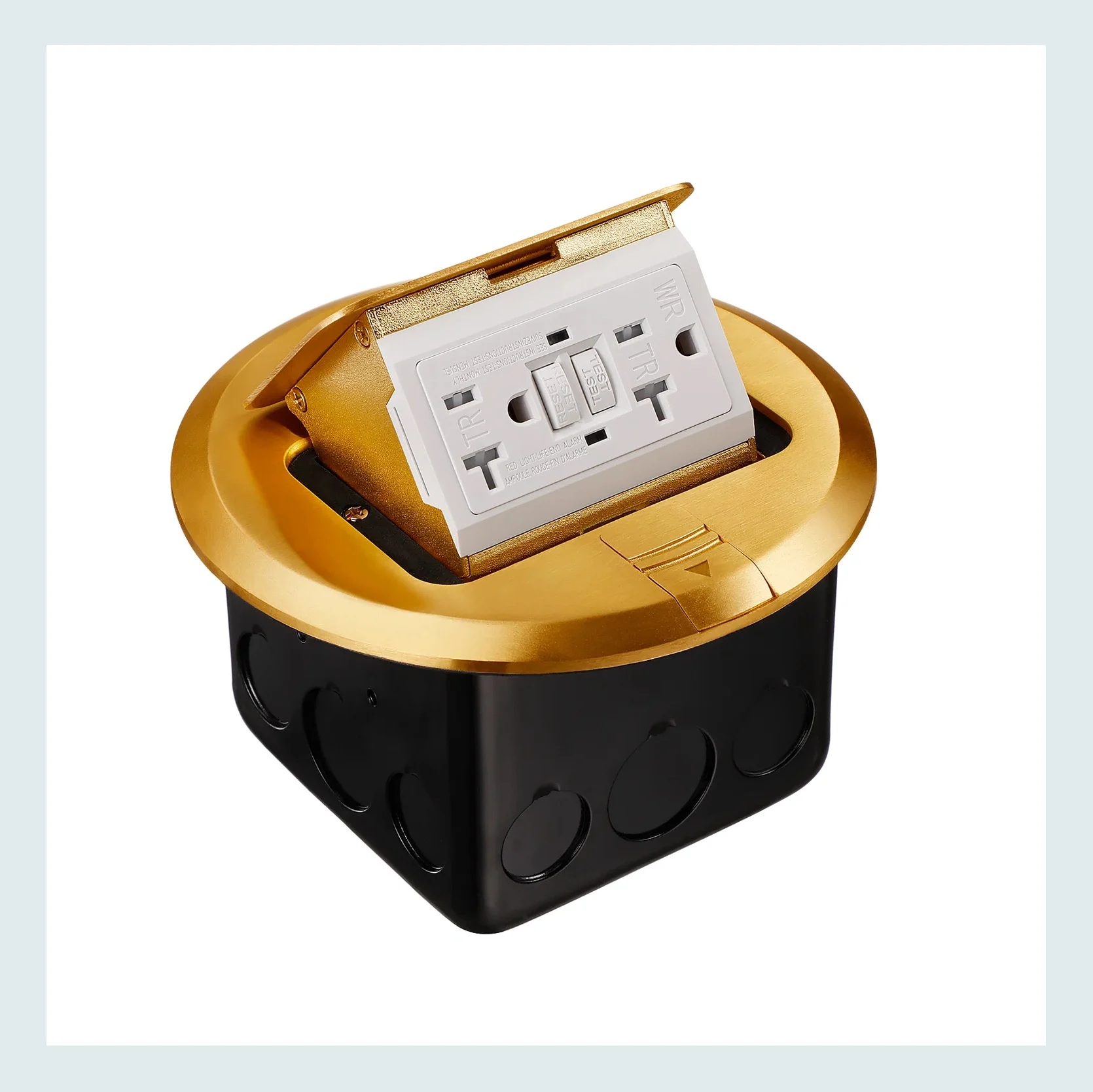
Dual Sided Pop Up Counter Power Outlet | Tamper Resistant Combination Outlet
Kitchen Design Ideas: Fish Grill Drawers
These fish grills, to my understanding, originated in Japan and are built into their ranges! It’s such a cool way to grill that came out of a need for being able to cook fish in clean more contained way, especially if you don’t have an outdoor grill. Of course, since fish is such a staple in the Japanese diet, this feature is very important and so useful. But also, it’s not necessarily only for fish – you can cook vegetables, small amounts of other meats, like chicken or beef.
@allstarsteven Random Things in Japan That Make Sense 🇯🇵🐟 Did you know stoves in Japan have built-in fish ovens? Genius or overkill? Would you use one at home? #travel #japan #japon #japantrip #japantravel #japanlife #japanculture ♬ Carmen Habanera, classical opera(1283412) – perfectpanda
Here’s the issue for the US. Japanese versions aren’t easy to get here and are usually always imported. Also, given that there are different regulations for different countries, they also tend not to be certified and are hard to install with US sizes and standards. If anything, I just wanted to include this to maybe create a demand for US-compliant versions:)
Kitchen Design Ideas: Toe-Kick Drawers Or Plinth Drawers
Another really smart storage idea! Especially if you are short on storage, why not maximize every inch of your kitchen and make thin low drawers out of your cabinet’s toe kicks? The interwebs told me this comes to us via Europe (places like Italy, Germany, Denmark, etc). Especially in cities, where there are so many apartments with likely not huge kitchens, smart storage is of the utmost importance.
This is, of course, an idea if you’re renovating or building out a kitchen. Probably a pretty hard DIY with preexisting cabinets. Another thing to consider is how much the cabinets protrude past the front of the plinth drawer. The last thing you want is for your feet to be so close to the drawer that you are constantly accidentally hitting it open. When we were at our Airbnb in Palm Springs for our retreat, alllll of the drawers (of which there were mannnny), we kept accidentally hitting them with our bodies and constantly having to close them. I know it sounds like a silly problem, but it was annoying.
You can do handles or finger pulls, but just make sure it doesn’t look too busy.
Kitchen Design Ideas: Dishwasher Drawers
Ok, these are definitely used in the US, but not on the scale that I think they should be! They were created in New Zealand by Fisher & Paykel and are much more common there and in Australia, as well as the UK. I first saw them in my ex’s parents’ home back in 2016 (in Australia). I was shook in the best way. I knew on that day I would have my own pair if I were to ever have the chance to revovate a kitchen. You have the flexibility to do smaller loads more quickly, as well as get to do two different types of washes at the same time. If you are a family that has a truly enormous amount of dishes each night, then maybe these aren’t the best fit for you, but aside from that, I love all of the benefits. Also, if you are only using the top drawer, you don’t have to bend down as far:)
So what do you think? Are you intrigued by any of these? What are some other kitchen design ideas from other parts of the world that I missed??
Love you, mean it.
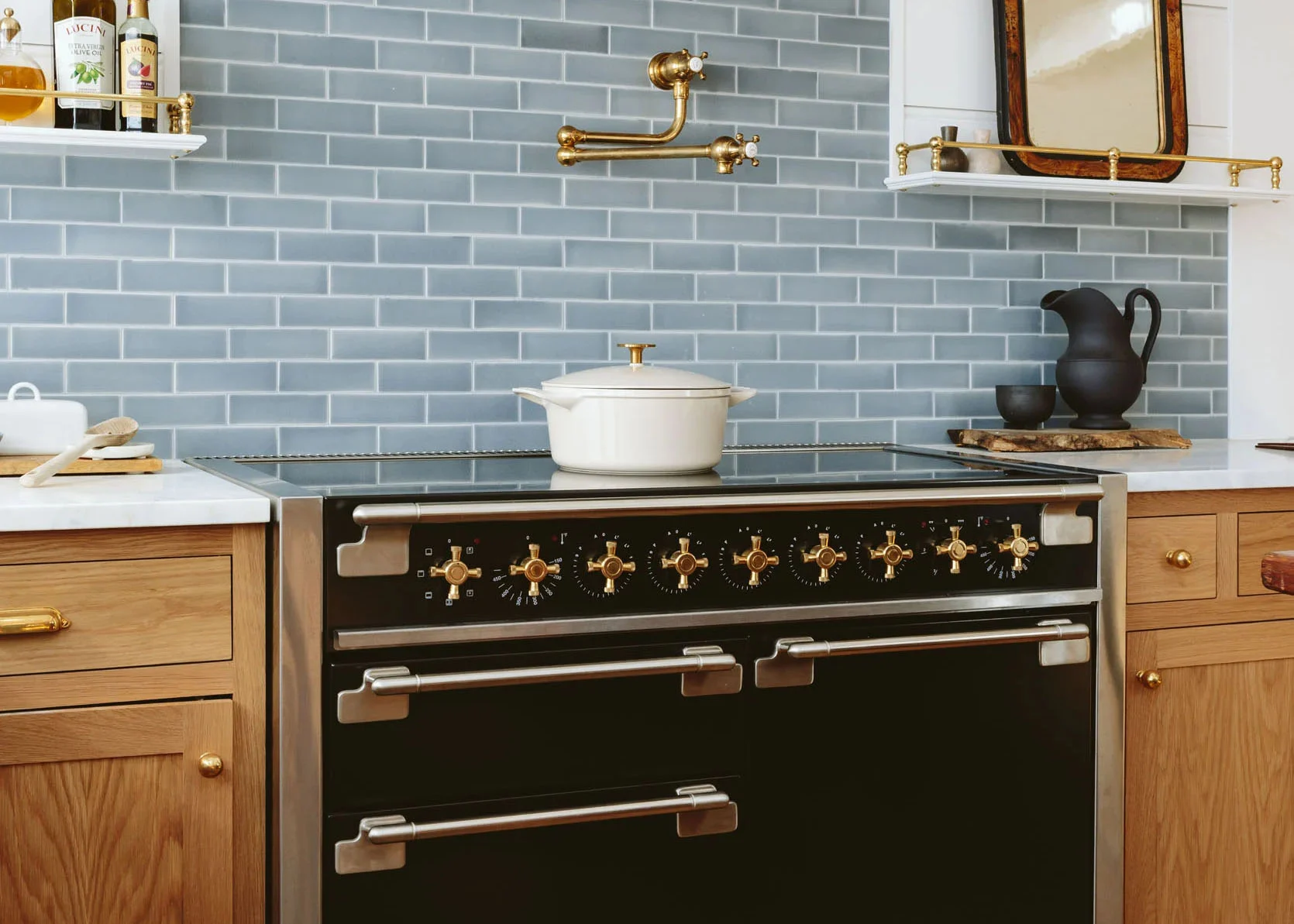
Opening Image Credits: Photo by Kaitlin Green | From: A Review Of Our New Induction Range – All The Details On Our Beautiful Aga Elise (And How Cooking With Induction And Convection Is Different Than Gas)



My in-laws have a collapsible stool built in to their toe kick – it pulls out by a handle. Their kitchen footprint is smaller and there’s no other space for a stool, collapsible or otherwise. It’s one of the many clever things my mother-in-law did when they renovated!
Photo, please! That is such a great idea for shorties like me!
Nobody needs to invent this, it’s another thing many cabinet companies already sell.
When I was pumping after my son was born, I somehow fell into a YouTube rabbit hole of woodworker/creator “Fix This, Build That.” I can’t explain why I spent hours watching this random guys build a shed in TN while pumping, but I knew I for sure was not gonna spend that time working! ANYWAY, he posted a recent video of creating a toe kick drawer! Definitely seems tough, but possible, with enough patience.
Every time I watch the Great British Baking Show I wonder why we don’t all have ovens with doors that slide in. It’s so smart!
Oooh, that sounds amazing. I’m always I’mm afraid I’m going to burn some random dog, kid, stray item when I open the door. And then not having to make sure that the dishwasher is closed and all other kitchen work has stopped so I can check the roasting temp would be the dream. I honestly did not even know that was a thing!
I came here to say just this! In fact, I was sure Jess would include this fabulous idea! I want one so bad!
Fun! The doubt I always have about the cabinet dish drying racks is that it seems like it would lead to warping on the bottom edges of the cabinet, where water is likely to touch. Maybe if the cabinet edges were (are?) stainless steel…
In the US, kitchen sinks are often placed under a window or overlooking a family room with no upper cabinet above. Wonder if that’s why the drying cabinets are less popular?
I’ve had the dishwasher drawers since 2009. Still working fine and I still love them!
Not to be published.
title is Finish drying rack
body of post says Finnish drying rack
:-))))
It’s both!
When we moved into our current home, the prior owners had dishwasher drawers and we thought it was so cool. They were an older couple so it made sense. Our family of three small kids (including newborn twins) needed way more space so we had to replace the drawers after trying to make it work for a few months. I can see the use case but it didn’t work for our family!
We’ve had dryer racks above sinks in the entire post-soviet world and I’ve seen them in Italy too. Sad that US is behind on so many things, this included
Many major US cabinet manufacturers provide these. Jess isn’t a kitchen designer and likely hasn’t been exposed and isn’t aware of all the available options.
These are all clever. I wish there was more diversity in kitchen design and appliances in the US, especially for small spaces. I don’t know if it’s still possible to buy Fisher Paykel appliances in the US, but when we remodeled a very small kitchen in 2011-12 we got their double dishwashing drawers, a small but incredibly well designed refrigerator, and a no agitator clothes washer all by them and they were so well designed and efficient to run. I was so sad when we had to leave those appliances behind!
There is a metal dish drying wall rack that IKEA sells but you’d have to place it just right for the water to run into the sink.
We bought our Fisher & Paykel 17 cu. ft. refrigerator in the US last year. We absolutely love its simplicity and thoughtful design. We can fit way more in the refrigerator compartment than in our old 22 cu. ft. Kenmore Elite. Frozen pizzas are a challenge but not a big deal.
The pop-up outlets will become more standard in the US now with a recent code change.
Nah, the cheapest thing has always been to build them into the backsplash. That’s where builders will still start and few buyers will question if there’s another option. And, frankly, the pop-up option isn’t as robust. The only place builders will select them is for an island.
Emily’s fridge drawers blew my mind the first time I saw them.
I’m trying to think about an example from my country, but I guess when you’re used to something it’s not very noticeable. Maybe kitchen faucets with boiling and sparkling water? Wall mounted toilets? We have the elevating outlets as well here.
Mental notes being made for the future! Love these innovative posts.
In 1997, my mother bought a house that had a finishing drying cabinet and I thought it was a genius idea, because just like you, I don’t like drying racks
Just read in The Kitchen by John Ota that the scullery in the Point Ellice House (1890) in British Columbia had a scullery with a wood plate rack over the scullery sink for drying dishes – what’s old is new again!
We visited my cousin in Sweden and his dishwasher was elevated in a cabinet like this. It was so much easier to load and unload, not having to bend over for the bottom rack!
It’s a Finnish drying rack, two Ns. From Finland. I have seen these in Europe for a long time and love the concept.
I get the appeal of the dish racks, but IMHO, it is just simpler to hand-dry the dishes and be done with it, then wait for them to dry and then have to wipe of all the water spots. YMMV.
Did you mean a Finnish drying rack? Or are you suggesting the drying rack be finished?